Ireland
Ireland’s cryptids, legendary creatures, and ghost stories come from regional folklore associated with lakes, farmland, ancient ringforts, and ruined castles. Accounts describe shape-changing animals, death-warning spirits, dangerous water creatures, and hauntings along roads and around old houses. Many stories belong to particular families and communities, with different traditions surrounding the same kinds of places.
Supernatural encounters often begin with familiar events, such as hearing a cry, meeting an animal, or disturbing an old earthwork. The banshee warns particular families of approaching death, while the shape-changing Púca sometimes carries travelers through the night. Around Glenade Lough in County Leitrim, stories describe the fierce water creature known as the Dobharchú. Fairy fort traditions also tell of mysterious music, disappearances, and misfortune following disturbances at ancient ringforts.
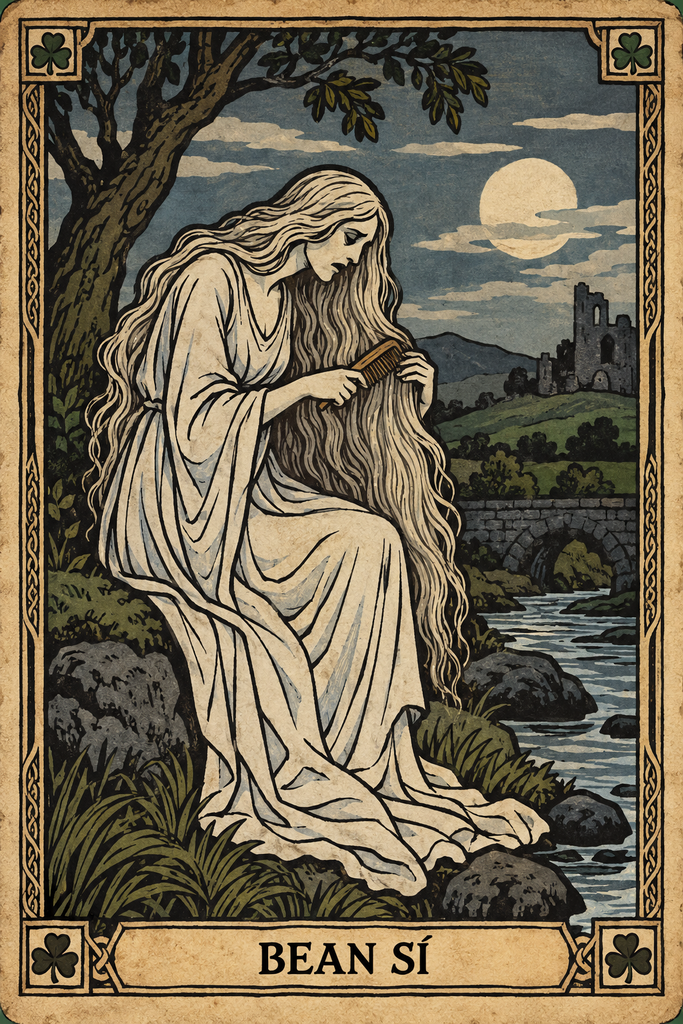
Bean Sí / Banshee (Ireland)
The Bean Sí, or banshee, is a supernatural woman whose cries warn that death is approaching. Folklore records often link her to particular families rather than to every household. She may appear in white, with long hair, crying, keening, or combing beside roads and houses. One Mulhuddart account names witnesses who heard her cries before several deaths.
Some stories make her warnings stranger than a simple cry in the night. A Galway tradition describes her washing clothes beside a river and singing mournfully before a death. In Kilkenny, she combed her hair while keening before a death. One boy reportedly kept her comb, prompting the banshee to visit his window and demand it back. He offered it on a red-hot shovel. She took a piece from the shovel and nearly took his hand with it.
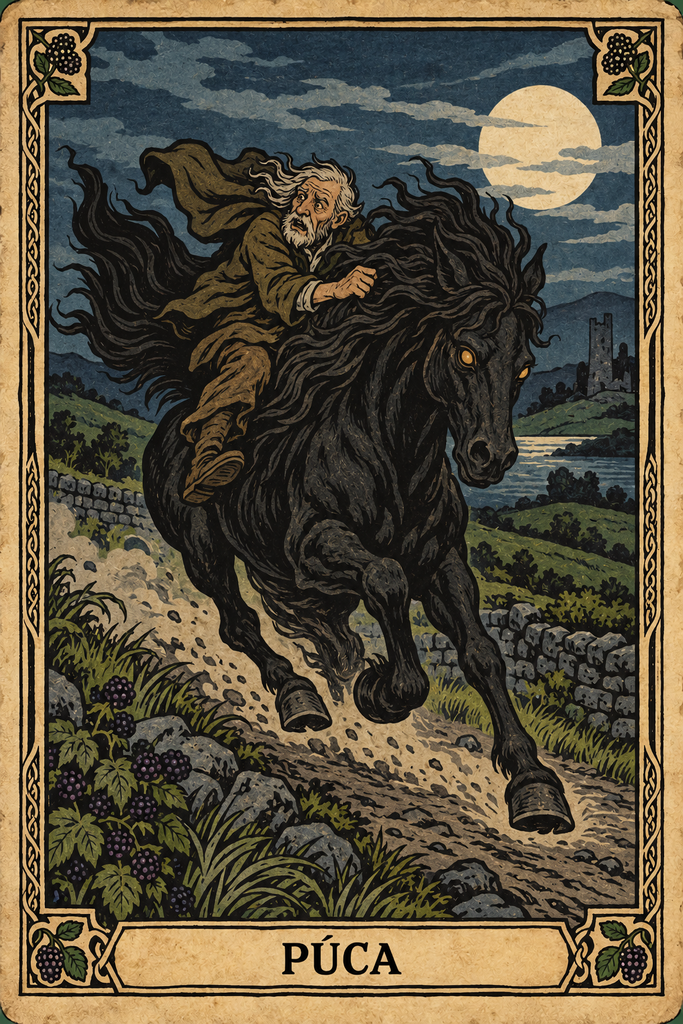
Púca (Ireland)
The Púca is a shape-changing supernatural being found throughout Irish folklore, often appearing as a dark horse. Other stories give it stranger animal forms, including a goat with an unnatural appearance. A Wexford account from 1939 describes a horse-shaped Púca racing silently through the countryside at impossible speed. Some Púca stories frighten travelers or carry riders on wild journeys, while others make the creature unexpectedly helpful.
In the same Wexford story, the Púca meets an elderly man struggling home alone. It offers him a ride, then races faster than any ordinary horse. The terrified rider discovers he cannot fall, even when the creature twists beneath him. Other traditions connect the Púca with Halloween and warn against eating late blackberries. A Tipperary tradition says the Púca spoils berries after Halloween. A Cork story describes another Púca appearing as a strange goat beside a ruined building.
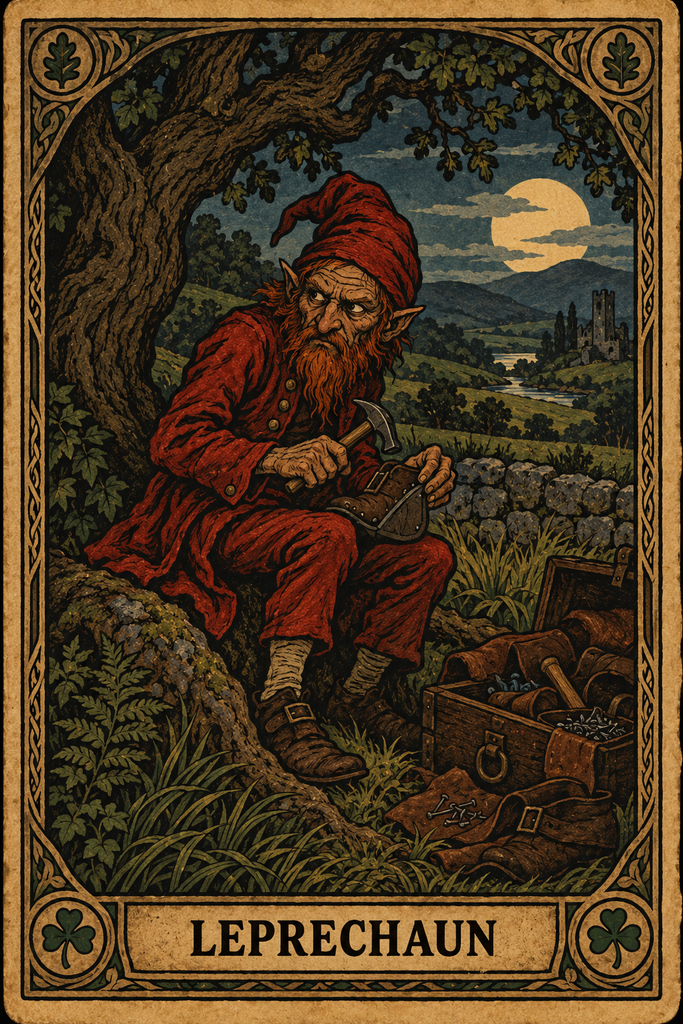
Leprechaun (Inistioge / County Kilkenny)
The leprechaun is a solitary fairy in Irish folklore, usually pictured as a tiny man who makes shoes. Stories often give him hidden gold and make him difficult to catch or hold. An Inistioge account describes a six-inch leprechaun wearing a red coat, trousers, and cap. He lived near a small wood at Old Court, where people heard his shoemaker’s tapping. Those who approached usually found that he had already escaped.
Another Inistioge story places a leprechaun in the Comb, a valley near the village. A poor shoemaker caught him and demanded to know where his gold was hidden. The leprechaun tried to distract him, but the shoemaker refused to look away. He finally pointed toward a tree, where the shoemaker returned with two helpers. They dug up a chest filled with leather, hammers, and nails that never ran out.
Cóiste Bodhar / Headless Coach (Ireland)
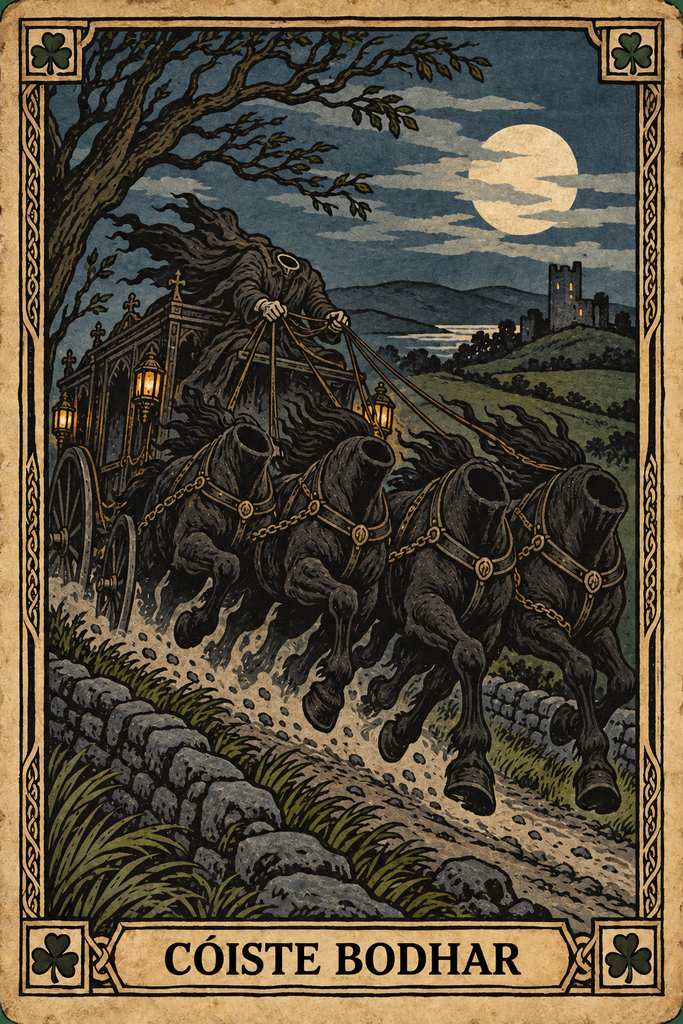
The Cóiste Bodhar, or Headless Coach, is a supernatural carriage whose appearance can warn of approaching death. Accounts describe black coaches, headless horses, headless drivers, or vehicles heard rattling through the night. A Clare tradition says four headless horses pulled it between midnight and two. People who saw it expected someone nearby to die soon afterward.
In Wexford, a 1937 account says a coal-black coach traveled silently from Carnross toward Cushenstown. Its horses and driver had no heads, although witnesses could see the coach clearly. Other versions were far noisier, with clanking chains, rumbling wheels, cracking whips, and ghostly shouting. One Clare story says the coach passed Ennistymon House before Sir Burton McNamara died in London the next morning.
Dobharchú (Glenade Lough / County Leitrim)
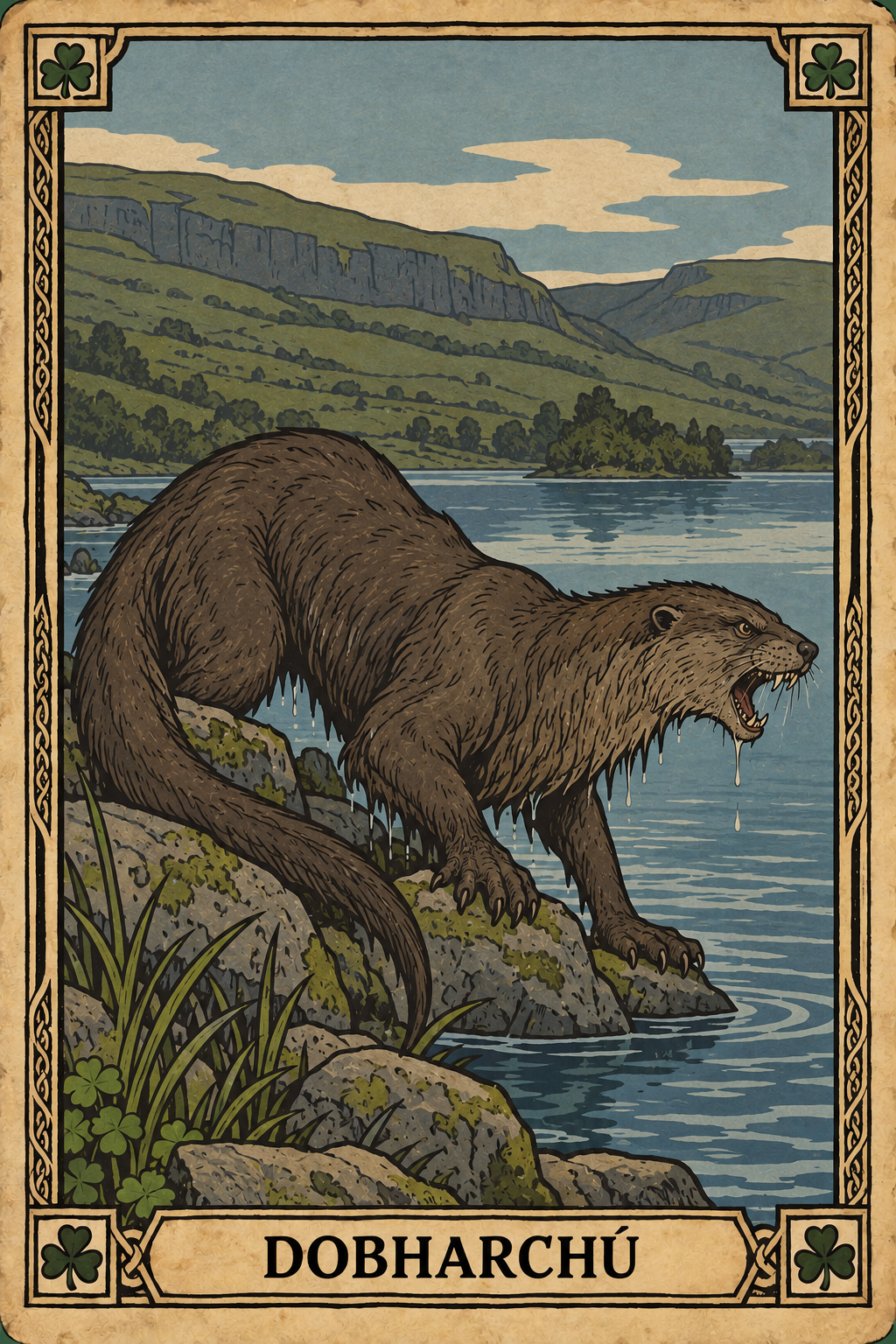
The Dobharchú is a fierce water creature linked most strongly with Glenade Lough in County Leitrim. It resembles a huge otter or water hound, with a long body, heavy neck, short head, and powerful limbs. A 1948 study of a Glenade tombstone described large paws, tiny ears, and an otter-like head and neck. One local version says Mrs. Mac Loughlin went to the lakeshore and never returned. Her husband found her dead, with a strange animal beside her body. He killed it, but the dying creature gave a piercing whistle. A second Dobharchú answered from the lake and chased him from Glenade.
Mac Loughlin fled on horseback, but the second beast followed him toward County Sligo. Another collected version says it attacked his horse before he killed it with a sword. Several retellings place the chase along roads between Glenade and Sligo, with details changing between storytellers. Conwall graveyard preserves a tombstone associated with the story, carved with a woman and a Dobharchú. The Schools’ Collection records that local people still knew the tale and the carving in the 1930s.
Each Uisce / Water Horse (Irish Lakes and Rivers)
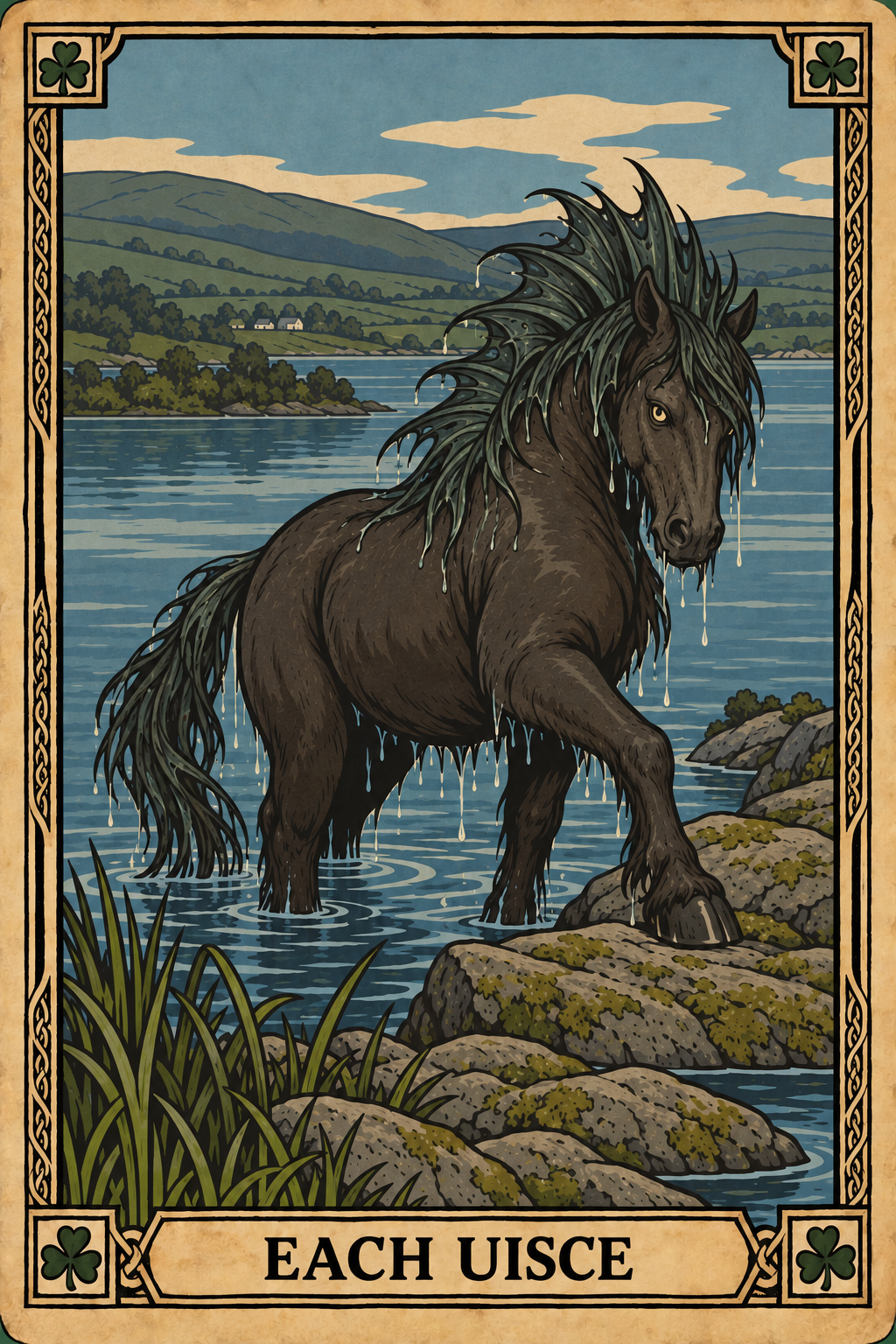
The Each Uisce, or water horse, is a supernatural horse found in Irish stories about lakes, rivers, and marshes. It may look like an ordinary pony until someone notices something wrong. A Mayo account says one grazed beside farmland and left tracks near the water. The same story says its breath could draw people into the water. Another Mayo tale tells of a rider escaping just before a water horse plunged into a lake.
At Lough Allen, Frances Carroll said she saw a water horse emerge, run along the shore, and return underwater. Thomas McGirl described another grazing near Blackrock while he traveled toward Drumshanbo. When McGirl spoke, the horse raised its head and its mane stood upright like fish fins. Its eyes flashed angrily before it leapt from the rocks into deep water and disappeared.
Black Pig of Ben Bulben (County Sligo)
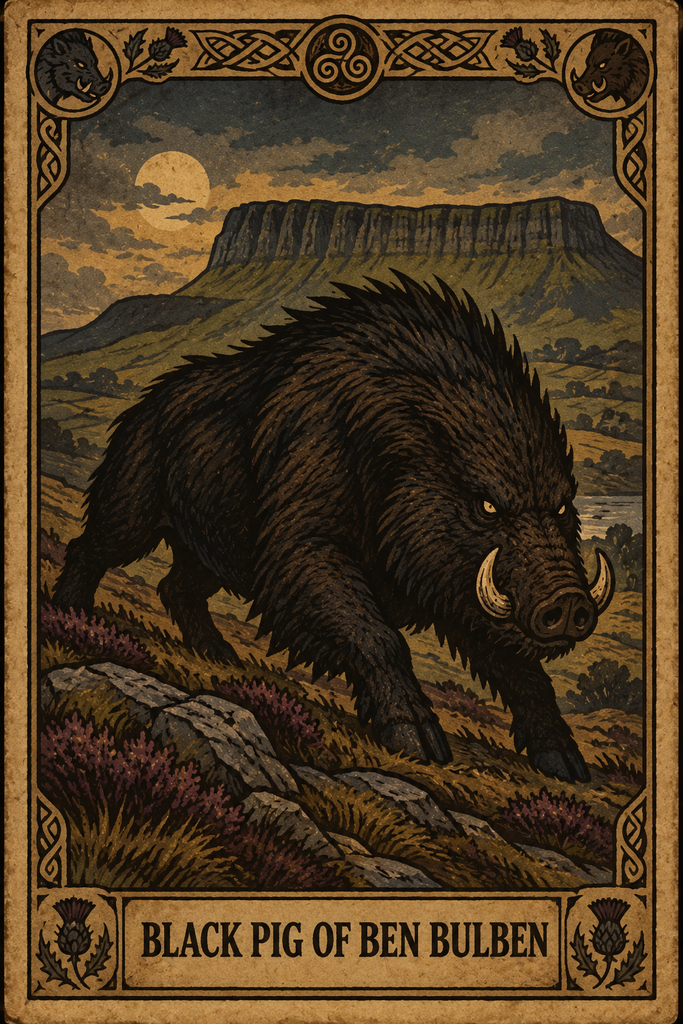
The Black Pig of Ben Bulben is an enchanted Sligo boar tied to the hero Diarmuid Ua Duibhne. A 1930s Schools’ Collection account describes it as a bristly boar without ears or tail, created through magic. Its life was bound to a young warrior, and the beast was destined to kill him when grown. The story places the Black Pig roaming Ben Bulben and terrifying the surrounding district.
In the older Diarmuid and Gráinne story, the enchanted boar waits on Ben Bulben for Diarmuid. During the final hunt, Diarmuid’s weapons fail before the beast charges, throws him down, and gores him. Diarmuid still kills the boar with the broken hilt of his sword, but his wounds are fatal. Fionn can save him with healing water, but twice lets it spill before finally returning too late. A Sligo folklore record from the 1930s still placed Diarmuid’s death on Ben Bulben’s summit.
Lough Ree Monster (Lough Ree / River Shannon)
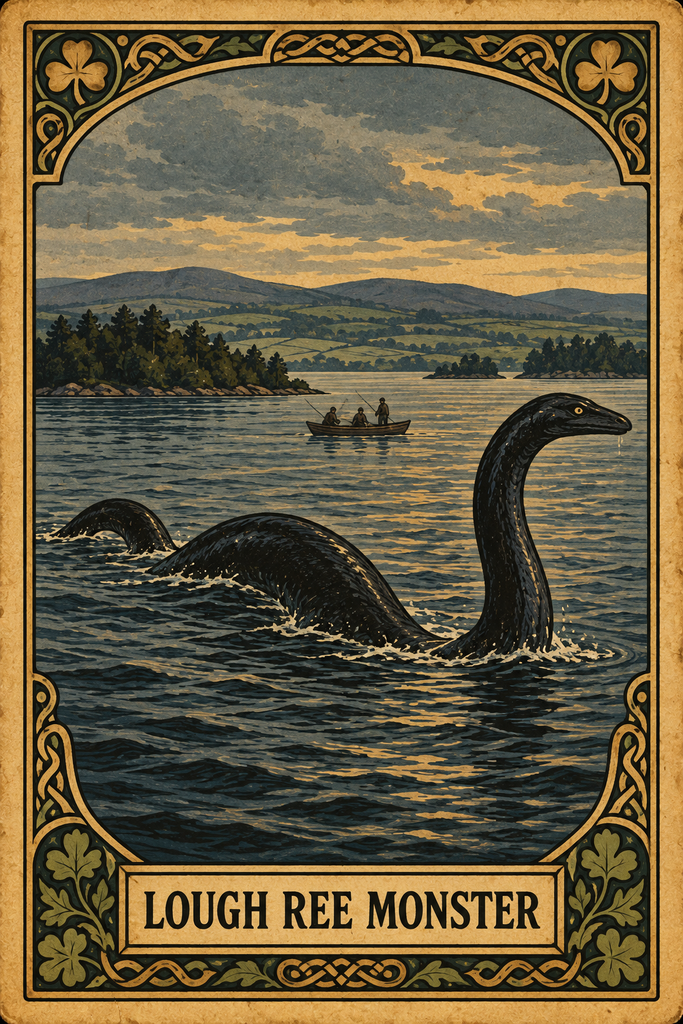
The Lough Ree Monster is a lake creature reported from Lough Ree, a broad Shannon lake in central Ireland. In May 1960, three Catholic priests were fishing when they noticed a large black animal about 100 metres away. They described about six feet of visible creature, including a narrow head and neck rising above the surface. As it swam, its body dipped underwater and rose again in a looping shape.
The sighting drew press attention and encouraged other people around the lake to report unusual encounters. In 2001, the Global Underwater Search Team spent a week at Lough Ree looking for the creature. They considered a giant “horse eel” and used equipment designed to detect underwater disturbances. During the search, the team reported detecting movement from a large unidentified animal near Killinure Point. RTÉ filmed the expedition, bringing the Lough Ree Monster back into national attention.
Fairy Forts (Ireland)
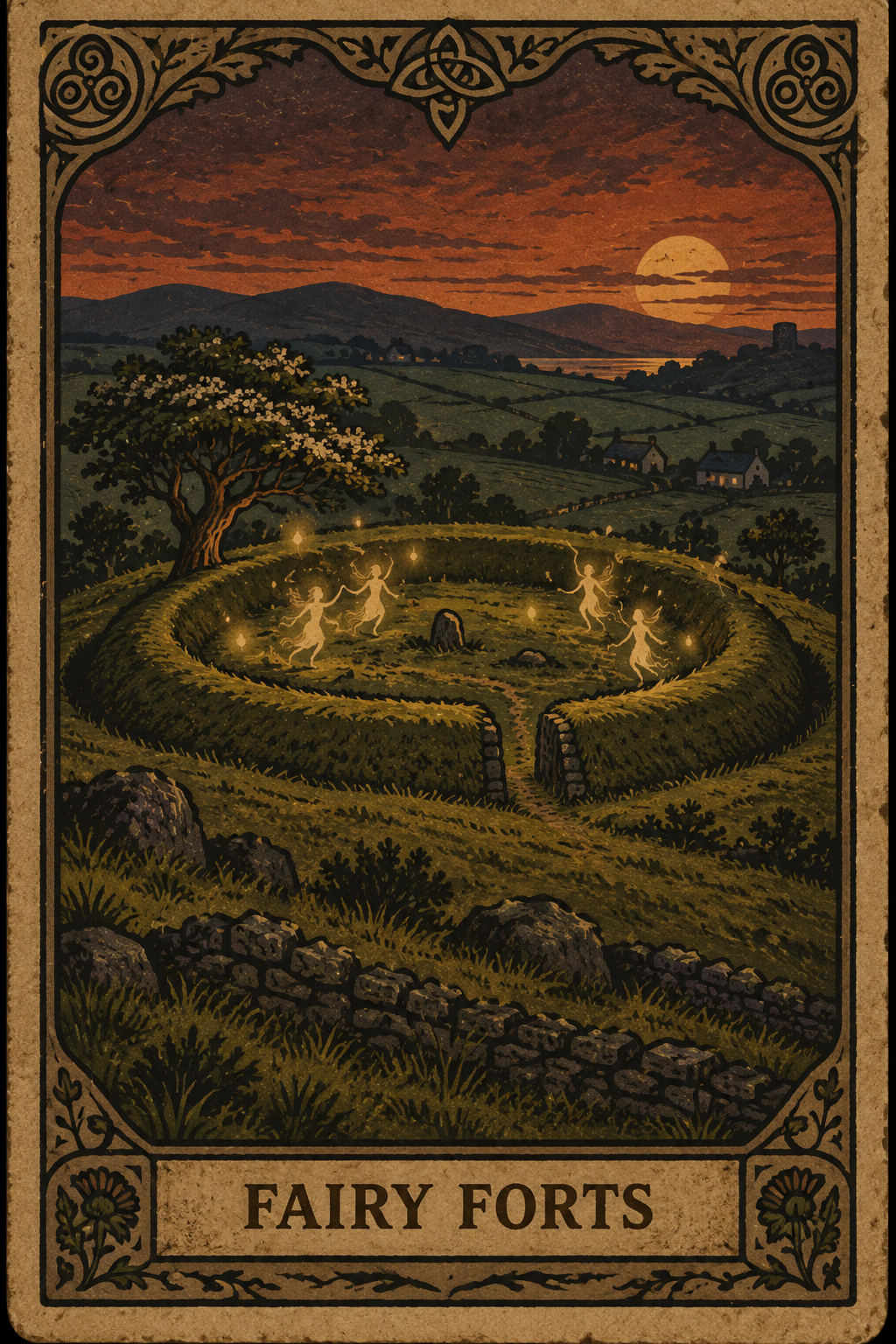
Fairy forts are mostly early medieval ringforts, circular farmsteads later surrounded by strong supernatural traditions. Heritage Ireland notes that ringforts were built mainly during the early medieval period and housed families and livestock. Folklore later treated many as homes or gathering places of fairies. In one Leitrim account, people heard music and churning and feared cutting trees beside the fort. Stories often warned that damaging a fort could bring illness, bad luck, or loss.
Other tales describe lights, dancing figures, strange music, and travelers led astray near these places. At Creevy in Donegal, fairies were said to dance around a hilltop fort and sing inside it. Some people avoided ploughing through forts or cutting their trees, leaving them standing in farmland. At Stonepark in Longford, farmers deliberately left several forts untouched. People there also reported music, churning, lights, and small figures inside the forts.
Leap Castle Elemental (Leap Castle / County Offaly)
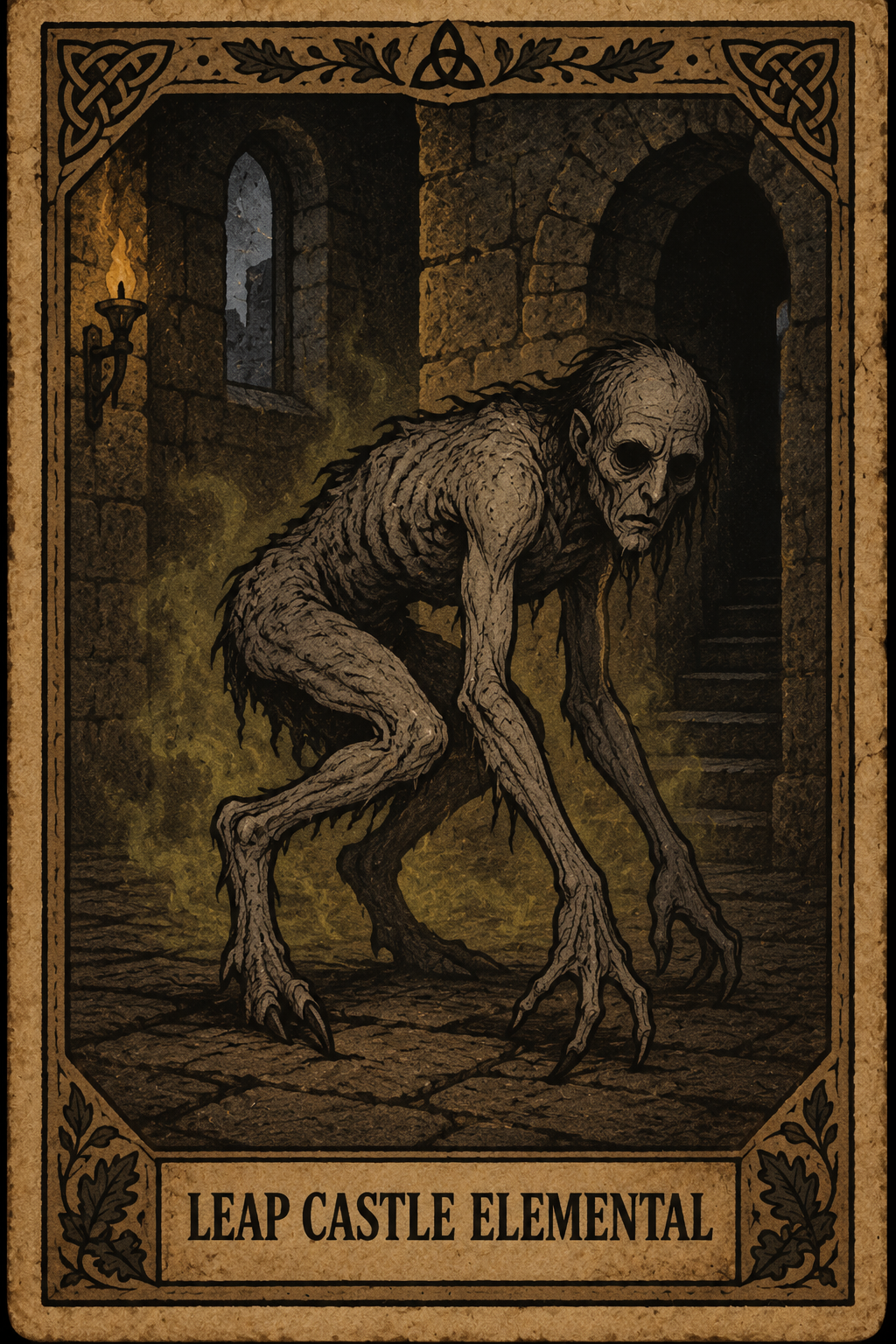
The Elemental is a strange, hostile presence in ghost stories surrounding Leap Castle near Roscrea in County Offaly. Early twentieth-century resident Mildred Darby described a grey, gaunt figure she called the “Thing.” In one account, it was about sheep-sized, with a humanlike face and dark, hollow-looking eyes. Darby also described a horrible smell like a decomposing corpse. The Leap Castle archive preserves several versions of her encounters with the strange figure.
Later stories give the Elemental several possible origins. Some call it an ancient guardian, while others link it to an O’Carroll spirit. Another tradition says séances or the disturbance of human remains awakened it. Reports often connect its arrival with sulphur, decay, nausea, or a sudden sense of dread. Ireland’s official tourism site still includes the foul-smelling Elemental among the castle’s reported supernatural residents.
Loftus Hall Devil Legend (Hook Peninsula / County Wexford)
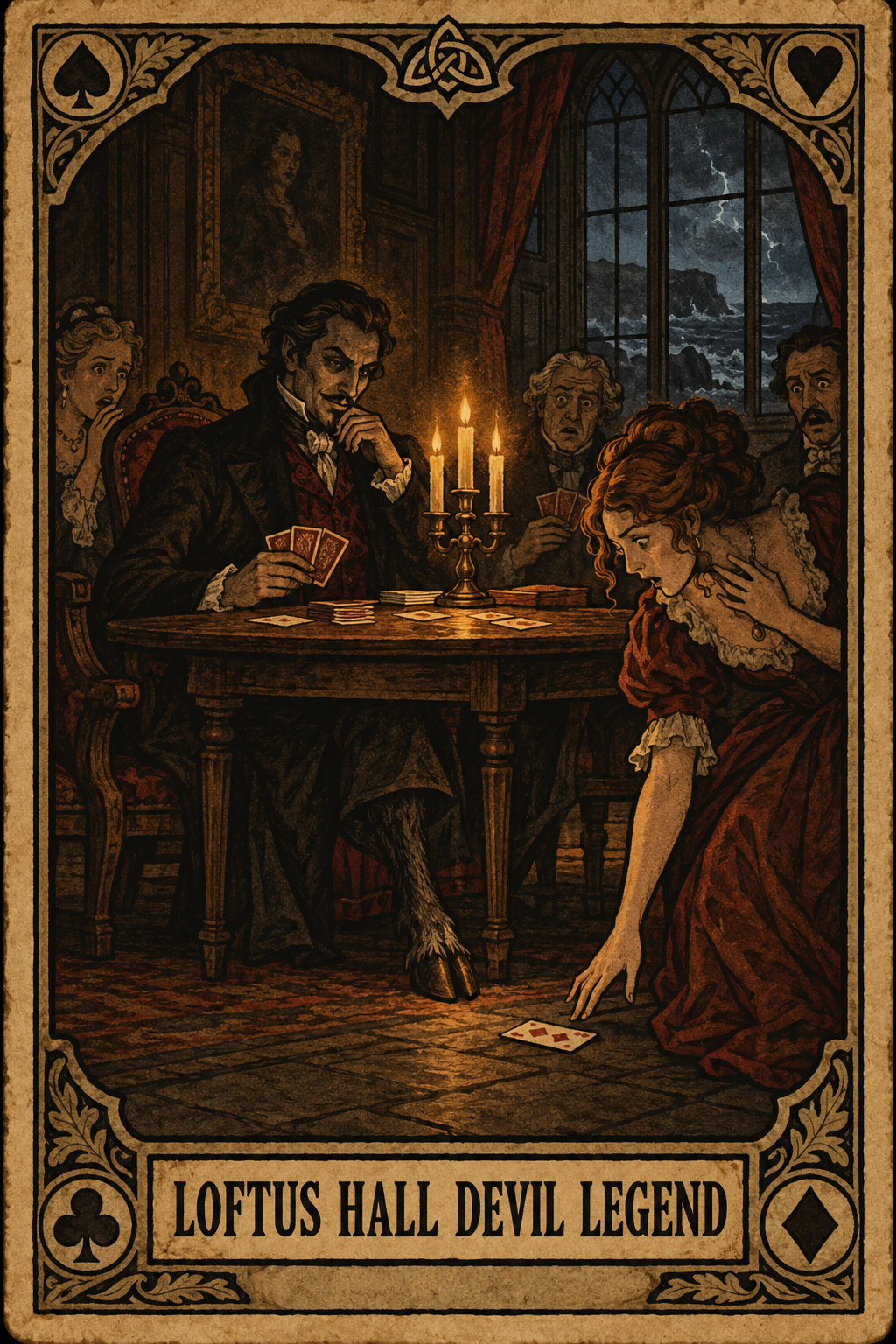
Loftus Hall on County Wexford’s Hook Peninsula is tied to one of Ireland’s best-known Devil legends. One Wexford account says a stranger arrived on horseback during a card party. A young woman invited him to join the game after disliking her original partner. When a card fell, she bent down and saw that the stranger had a cloven foot. She screamed that they were playing with the Devil. Two priests eventually drove him through the roof in a ball of fire.
The same tradition says the young woman died soon afterward. Stories describe her ghost haunting the room for years after the encounter. Later versions name her Anne Tottenham and say her family confined her to the Tapestry Room. Another Wexford account also describes the Devil escaping through the roof. The earlier telling even claims a black mark remained on the roof where he burst through.
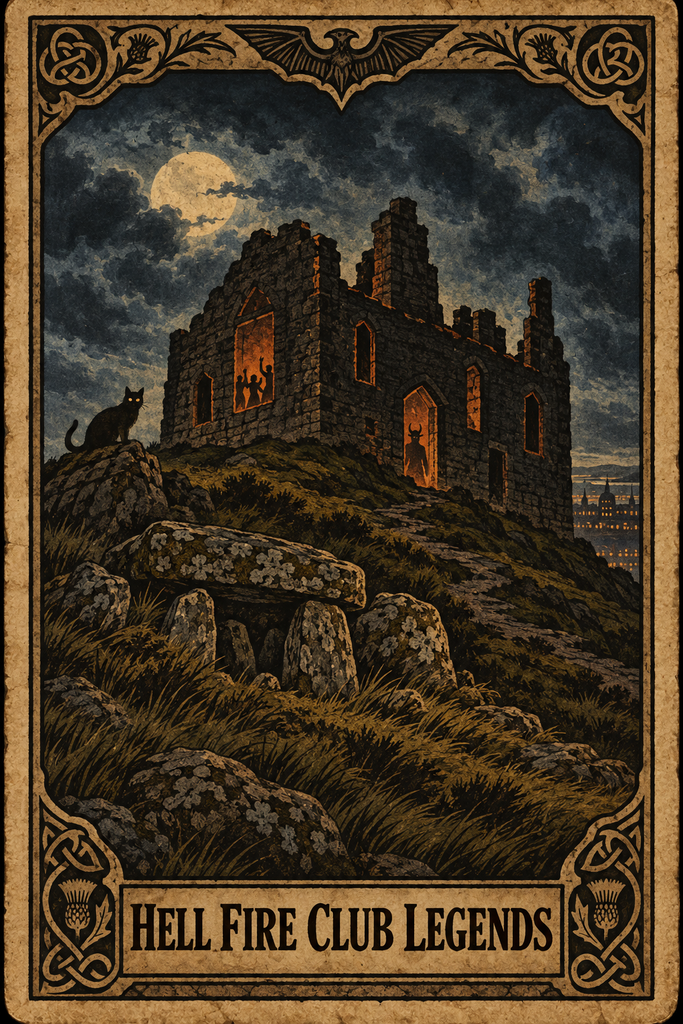
Hell Fire Club Legends (Montpelier Hill / Dublin)
The Hell Fire Club legends gather around the ruined hunting lodge on Montpelier Hill above Dublin. The lodge was built in 1725 for William Conolly, using stone from an older passage tomb. Local stories say trouble followed almost immediately, when a storm tore off the roof. People blamed the disturbed tomb and soon filled the lodge with darker tales.
One Schools’ Collection account says club members were playing cards when a stranger joined them. When a player bent for a dropped card, he saw the stranger’s cloven foot. The visitor vanished, and the company understood they had entertained the Devil. Other local traditions tell of murder, sacrilege, black cats, and haunted ruins on the hill.