West Virginia
West Virginia cryptids and folklore include winged humanoids, mountain monsters, Bigfoot reports, UFO encounters, hauntings, and strange roadside sightings. Appalachian towns, river valleys, coal country, and forested mountains give these stories strong local settings.
Point Pleasant has Mothman, while Braxton County gave rise to the Flatwoods Monster after the 1952 UFO incident. Other traditions include the White Thing, Sheepsquatch, and Bigfoot reports from the Monongahela region. Festivals, museums, books, and documentaries have carried several West Virginia legends far beyond their original communities.
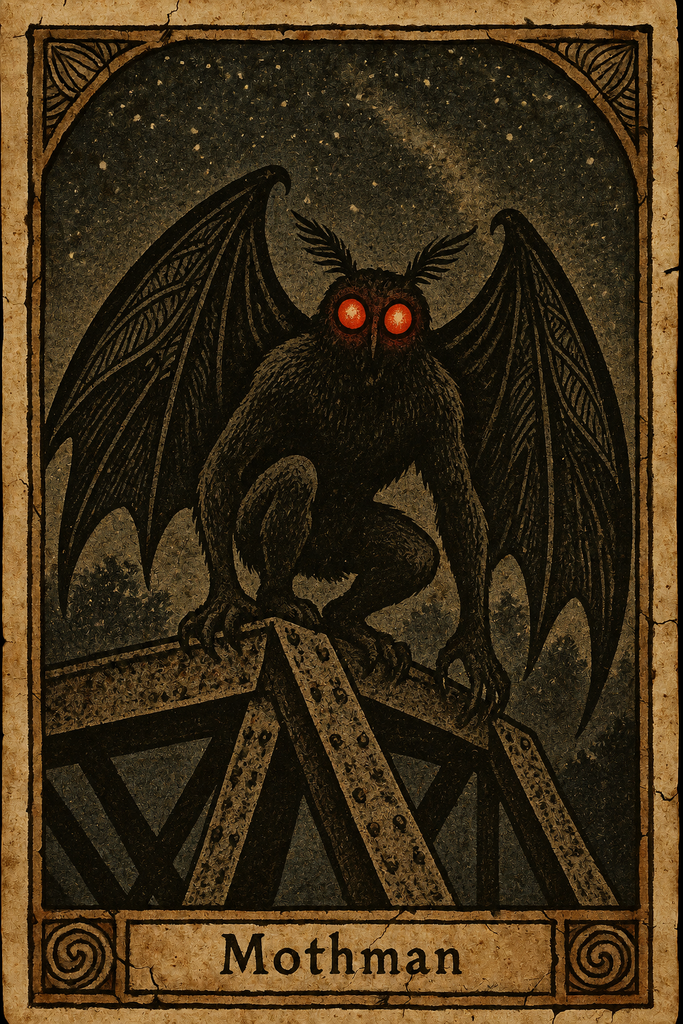
Mothman (Point Pleasant and the TNT Area, Mason County)
The Mothman is a West Virginia legend tied to Point Pleasant and the nearby TNT Area. On November 15, 1966, Roger and Linda Scarberry drove there with Steve and Mary Mallette. They reported a tall, winged figure with glowing red eyes that followed their car toward town. e-WV records 26 reports over the following year, mostly around Point Pleasant and the TNT plant.
The Silver Bridge collapsed over the Ohio River on December 15, 1967, killing 46 people. John Keel connected the sightings with the disaster in his 1975 book The Mothman Prophecies. That book helped popularize interpretations of Mothman as an omen preceding the collapse. Point Pleasant now preserves the legend through its museum and statue and annual Mothman Festival.
From the Folk Bestiary shop


Products and checkout are handled by Redbubble.
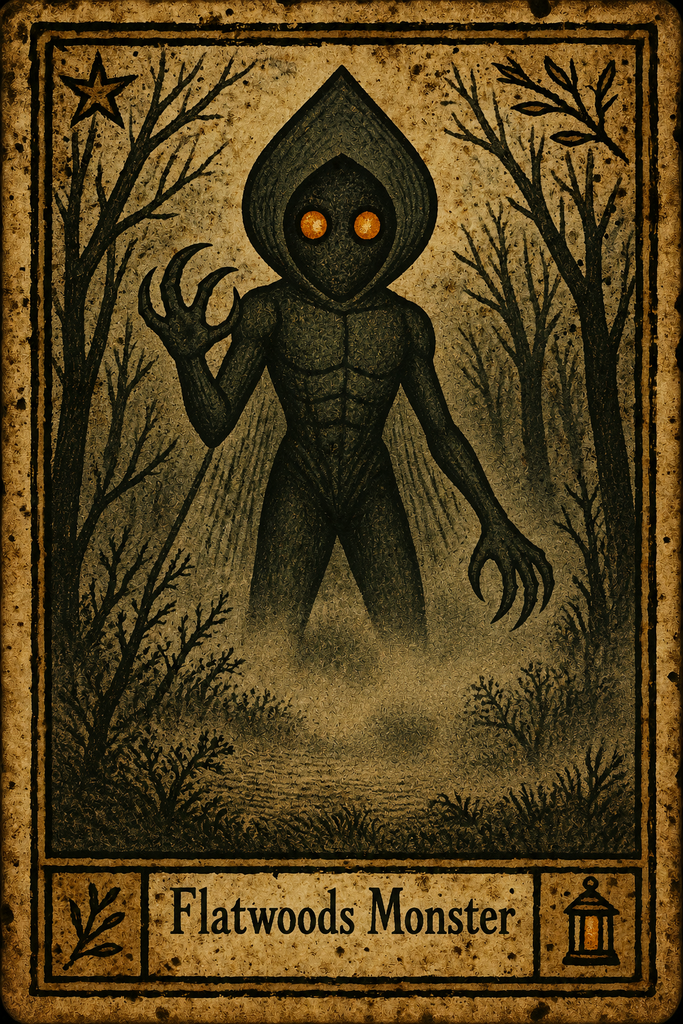
Flatwoods Monster (Flatwoods, Braxton County)
The Flatwoods Monster is a West Virginia cryptid from a reported September 12, 1952 encounter. Local youths saw a bright object cross the sky and descend beyond a nearby hillside. Kathleen May, National Guardsman Eugene Lemon, and several children went to investigate. They reported a towering figure with a red face, glowing eyes, and an ace-of-spades-shaped hood. Witnesses said it floated toward them amid a metallic odor before the group fled.
The Braxton County Monster quickly entered newspaper coverage, UFO writing, and West Virginia folklore. Flatwoods marked the encounter’s fiftieth anniversary with a community festival in 2002. The Flatwoods Monster Museum opened in Sutton in 2017 and preserves artifacts, artwork, and retellings. Five ten-foot monster chairs now stand across Braxton County as roadside tourism landmarks.
Sheepsquatch (Boone County and Western West Virginia)
Sheepsquatch is a modern West Virginia cryptid associated with Boone County and the lower Kanawha Valley. Mid-1990s reports describe a bear-sized creature with woolly white fur, a dog-like head, and ram-like horns. Some versions add saber-like teeth, clawed forelimbs, a hairless tail, and a strong sulfurous odor. Later accounts place similar creatures near Charleston, Point Pleasant, and the TNT Area.
West Virginia tourism now includes Sheepsquatch among the state’s recognized cryptid legends. Mountain Monsters featured a Boone County investigation in 2014, expanding the creature’s national audience. Bethesda added Sheepsquatch to Fallout 76’s Wild Appalachia update in 2019. West Virginia Public Broadcasting later documented its appearance in locally produced artwork and games.

Grafton Monster (Grafton and the Tygart Valley River, Taylor County)
The Grafton Monster is a West Virginia cryptid reported near Grafton on June 16, 1964. Grafton Sentinel reporter Robert Cockrell saw it beside Route 119 along the Tygart Valley River. He described a seven-to-nine-foot creature with slick, pale, seal-like skin and no visible head. Cockrell also reported a whistling sound before the creature quickly moved away.
The report sparked search parties and brought heavy traffic to Riverside Drive. The Sentinel soon dismissed the excitement as spring fever and wild imagination. Cockrell later worked with Gray Barker on an unfinished article about the encounter. Fallout 76 featured the monster in 2018, introducing it to a wider audience. Grafton launched its annual Grafton Monster Festival in June 2024.

The White Thing (Kanawha County and the Lower Kanawha Valley)
The White Thing is a West Virginia beast legend documented in Kanawha County during the 1950s. In 1954, Thomas A. Burford submitted the story for Ruth Ann Musick’s folklore course at Fairmont State. Burford said the tale was then common in Kanawha County. His account described a white, four-legged creature larger than a dog but smaller than a horse. It had protruding teeth and screamed like a woman in agony. After one encounter, a rider returned the next morning and found her mare torn apart outside the barn.
Musick published the story in The Telltale Lilac Bush in 1965 under her “Weird Creatures” section. She described such beings as supernatural manifestations that resisted ordinary ghost classifications. Modern West Virginia retellings sometimes use White Thing as another name for Sheepsquatch. Burford’s source material and Musick’s folklore papers are now preserved at Fairmont State University’s Folklife Center.

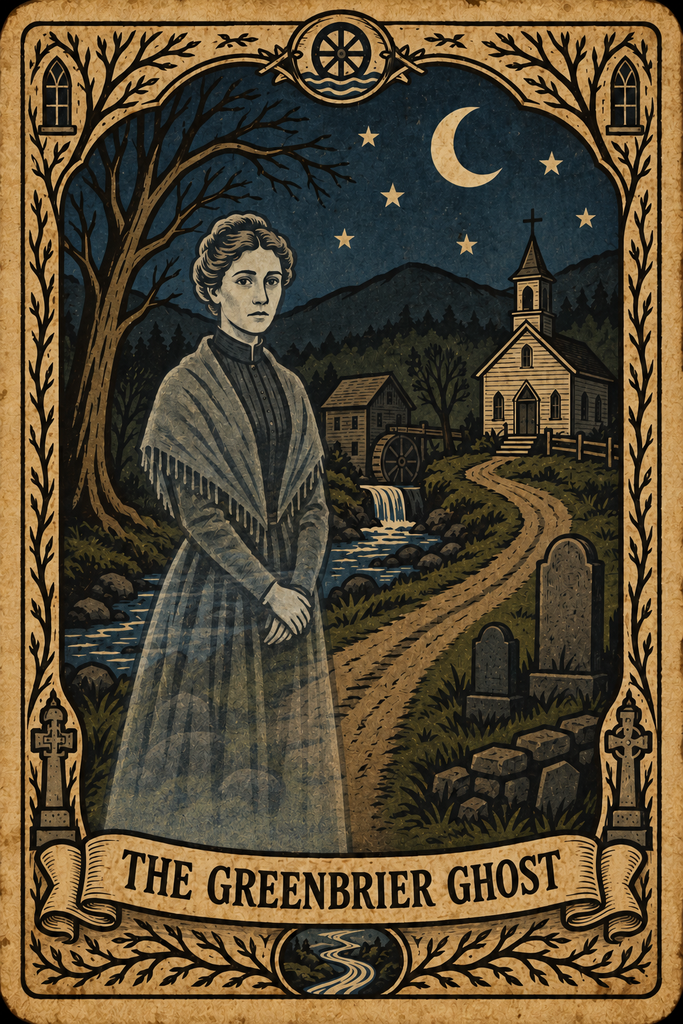
Greenbrier Ghost (Livesay’s Mill and Sam Black Church, Greenbrier County)
The Greenbrier Ghost is the West Virginia ghost story of Elva Zona Heaster Shue’s 1897 murder. She died near Livesay’s Mill only months after marrying blacksmith Erasmus Stribbling “Edward” Shue. Her mother, Mary Jane Heaster, said Zona’s spirit appeared four times and accused Shue. An exhumation found a broken neck and crushed windpipe, leading authorities to prosecute him.
Mary testified about the apparitions during Shue’s murder trial at the Greenbrier County Courthouse. A jury convicted him after one hour and sentenced him to life imprisonment. A state marker near Sam Black Church commemorates the case and its unusual ghost testimony. Zona’s grave and surviving home keep the legend tied to Greenbrier County tourism.
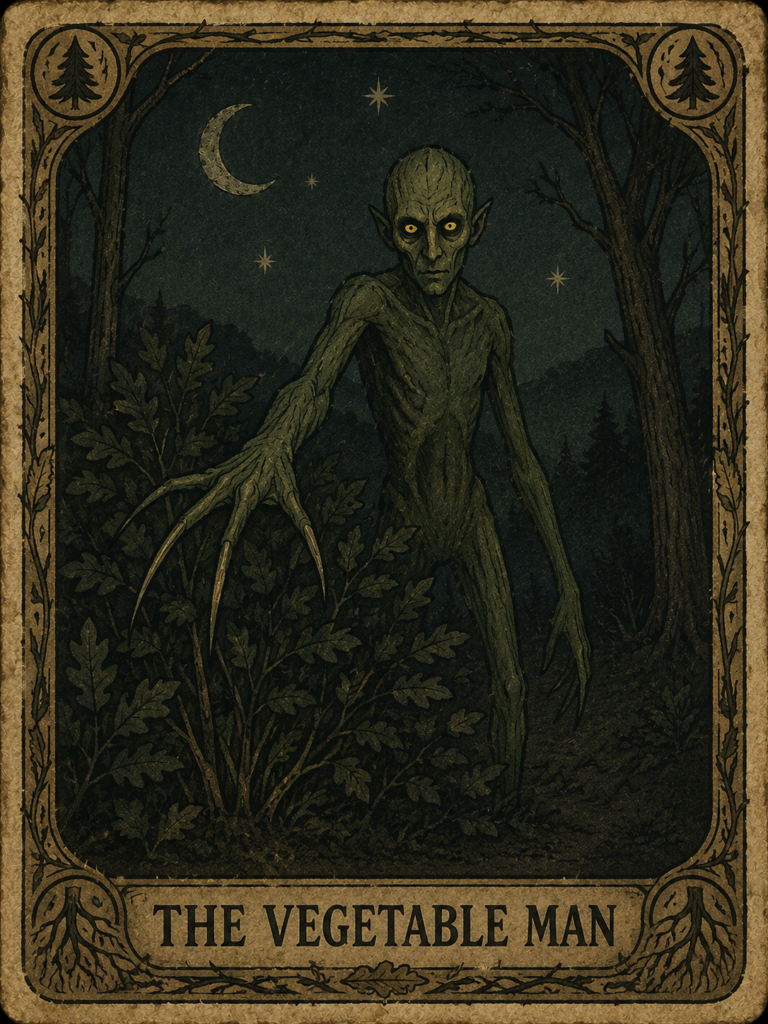
Vegetable Man (Grant Town and Fairmont, Marion County)
The Vegetable Man is a West Virginia cryptid linked to Grant Town and a claimed July 1968 encounter. Jennings H. Frederick said a thin humanoid approached him while he hunted in nearby woods. He described yellow eyes, pointed ears, and needle-tipped fingers that drew blood from his arm. Gray Barker first published Frederick’s account in his March 1976 newsletter.
Barker’s papers at the Clarksburg-Harrison Public Library preserve correspondence and other material connected to Frederick. Fairmont’s West Virginia Folklife Center hosted the first Veggie Man Day in July 2024. The event featured artists, authors, music, vendors, and children’s folklore activities. The Folklife Center continues hosting Veggie Man Day as a free public folklore event.
From the Folk Bestiary shop

Products and checkout are handled by Redbubble.
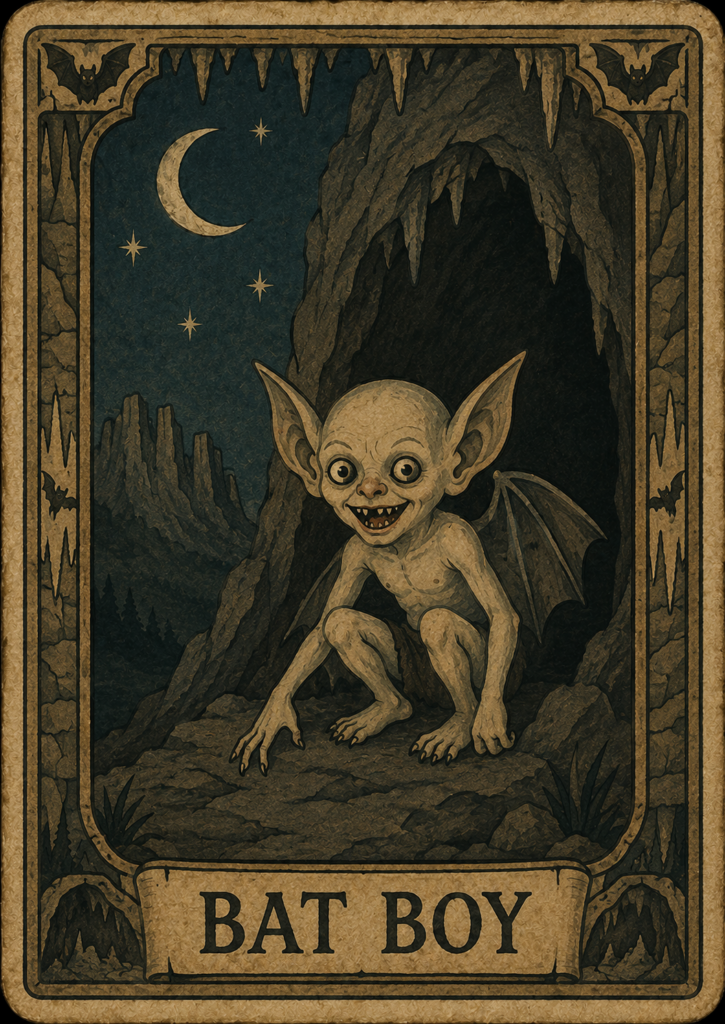
Bat Boy (West Virginia Cave Country)
Bat Boy is a tabloid-created West Virginia monster introduced by Weekly World News on June 23, 1992. The cover story described a half-human, half-bat child discovered inside an Allegheny Mountain cave. Later stories placed his original cave near Seneca Rocks and followed repeated escapes and adventures. Bat Boy became the newspaper’s most recognizable recurring character.
Bat Boy: The Musical premiered in Los Angeles in 1997 and opened Off-Broadway in 2001. Its story remained set in a fictional West Virginia community called Hope Falls. The National Speleological Society later filmed Hunt for Bat Boy inside Lost World Caverns near Lewisburg. Those adaptations preserved Bat Boy’s West Virginia cave origins within popular culture and regional cryptid tourism.
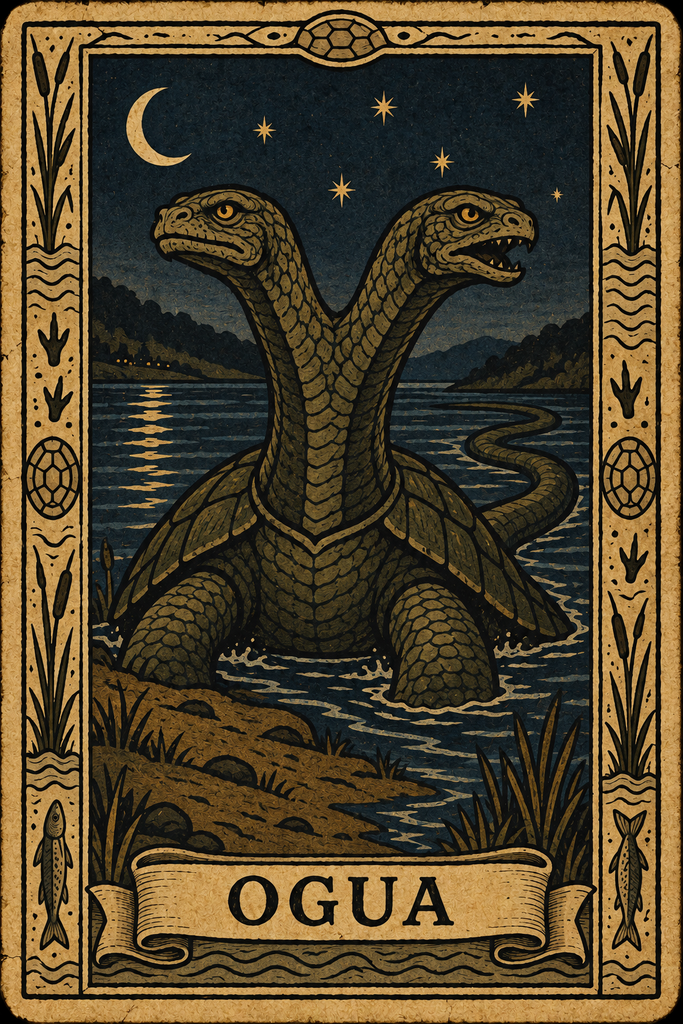
Ogua (Monongahela River and Rivesville, Marion County)
The Ogua is a West Virginia river monster associated with the Monongahela River and Marion County. Older accounts describe an amphibious, turtle-shaped animal with two heads and a fifteen-foot tail. A late-eighteenth-century letter described one killing deer before returning to a deep muddy riverbank. The name appeared as Agua or Agou in that historical account.
In 1983, coal miner John Edward White reported an encounter near Paw Paw Creek in Rivesville. White described disturbed water, fleeing fish, a large fin, and a serpentine tail. Later local-history projects connected his report with earlier Monongahela Valley animal traditions. The Ogua remains part of river folklore in Marion County and the wider Monongahela corridor.
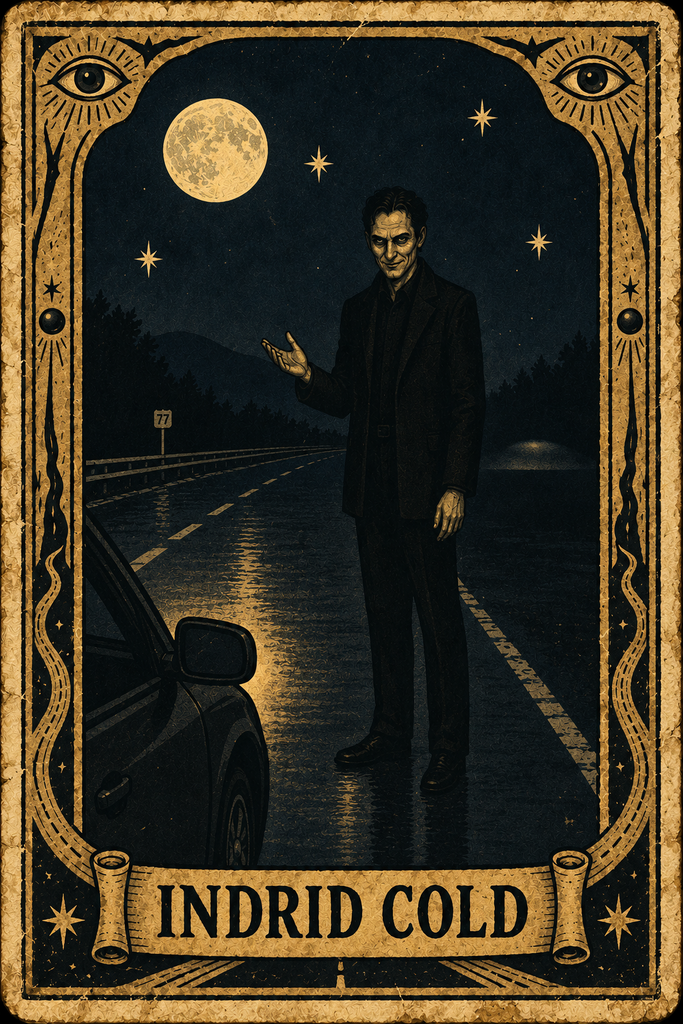
Indrid Cold (Interstate 77 near Parkersburg, Wood County)
Indrid Cold is a West Virginia contactee figure from Woodrow Derenberger’s November 2, 1966 roadside encounter. Derenberger said a gray object blocked Interstate 77 while he drove home toward Mineral Wells. He described a dark-haired man who communicated telepathically, smiled, and introduced himself as Cold. Derenberger contacted police and appeared on Parkersburg television the following day.
Newspapers covered the story for weeks, while other witnesses reported strange lights or similar figures. Derenberger later claimed repeated meetings and journeys to Cold’s home planet, Lanulos. His 1971 book Visitors from Lanulos expanded those accounts. John Keel later connected Cold with the broader Mothman era, reshaping him as the Grinning Man.
Snarly Yow (Harpers Ferry and the Upper Potomac Valley)
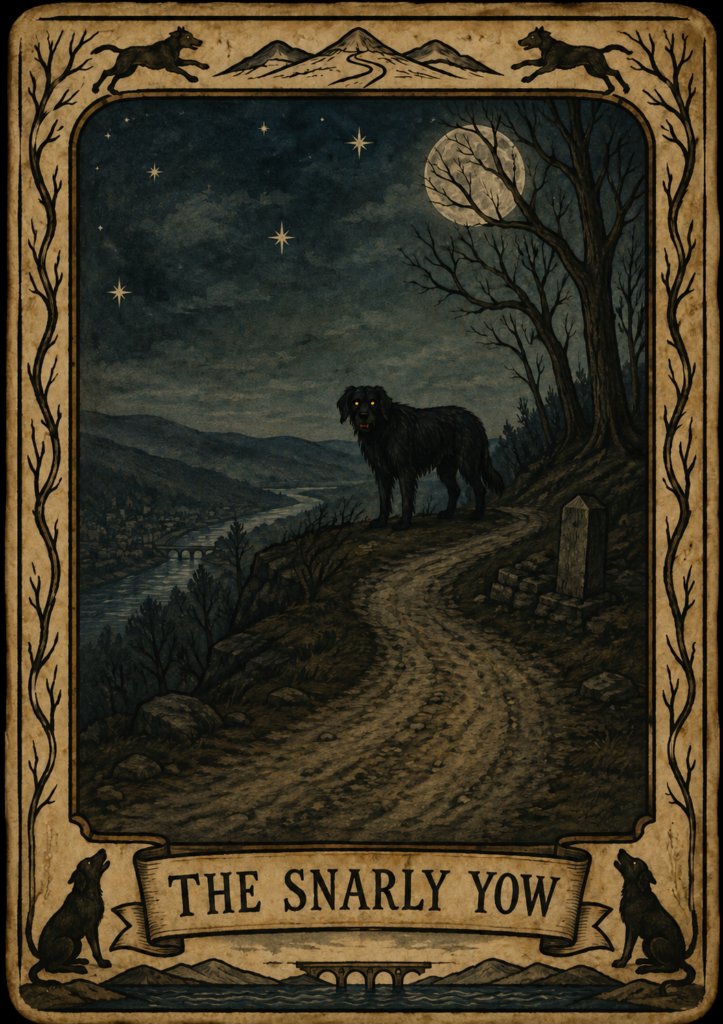
The Snarly Yow is a phantom black dog legend associated with Harpers Ferry and nearby mountain roads. Stories describe a large hound with dark fur, glowing eyes, and a threatening red mouth. The creature blocks travelers, changes size, disappears suddenly, and survives bullets or passing vehicles. Its strongest written tradition belongs to the South Mountain and upper Potomac borderlands.
Stephen Dorman Brown included the creature in his 1976 collection Haunted Houses of Harpers Ferry. Later writers connected the legend with Turner’s Gap, the National Road, and German Appalachian settlement traditions. Fairmont State writing places sightings near Harpers Ferry, the Blue Ridge, and the Shenandoah River valley.
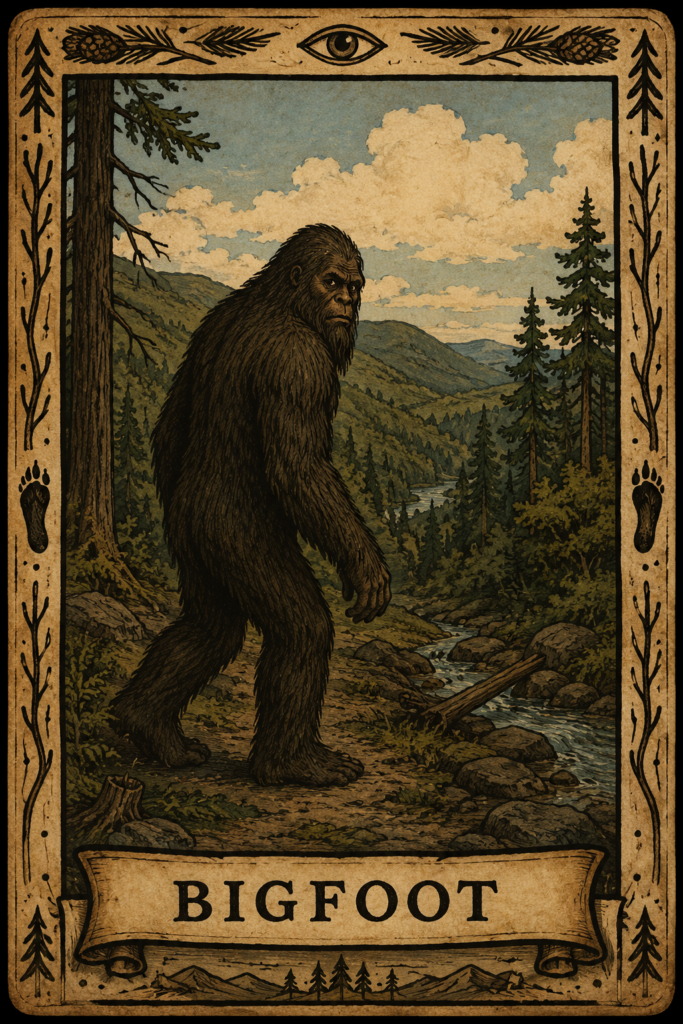
Bigfoot (Monongahela National Forest and Central West Virginia)
Bigfoot is a widespread Appalachian cryptid with recurring reports across West Virginia’s forests, mountains, and rural roads. A 2007 BFRO report documented a roadside sighting near the Cranberry River in Monongahela National Forest. The witness described a six-foot figure covered in reddish-brown hair running rapidly along Cranberry Ridge Road. His grandmother said people around the area traditionally called similar creatures “Yahoos.”
The West Virginia Bigfoot Museum opened in Sutton during the first West Virginia Bigfoot Festival in June 2021. Its exhibits include footprint casts, sighting reports, artwork, carvings, and replica primate skulls. West Virginia Tourism’s Paranormal Trail also includes the museum and a Bigfoot statue along the Elk River Trail. Students from Clay County created the 10.5-foot statue now standing near mile marker 47.
From the Folk Bestiary shop

Products and checkout are handled by Redbubble.