Hawai’i
Hawai‘i cryptids sit beside a much older body of Native Hawaiian moʻolelo tied closely to particular places. Stories of Pele, moʻo, menehune, and huakaʻi pō connect volcanoes, ponds, roads, valleys, and coastlines with named supernatural beings. The National Park Service describes moʻolelo as part of Hawaiʻi’s cultural fabric, carrying histories, values, and traditions across generations.
Later immigrant communities added ghost stories, obake traditions, plantation legends, and other supernatural tales to the islands. Modern Hawaiian folklore therefore includes roadside apparitions and reported creatures alongside traditions far older than the state itself. Local supernatural storytelling still mixes Native Hawaiian traditions with stories carried by Japanese, Chinese, Portuguese, and other island communities.
Menehune (Hawai‘i, especially Kaua‘i)
Menehune are renowned builders in traditional Hawaiian stories, especially those associated with Kauaʻi. Some accounts describe them as short, stout people who lived apart and worked secretly at night. Native Hawaiian writer Kalani Akana discusses traditions that treat Menehune as a distinct people. Their stories credit them with stonework, roads, canals, and fishponds across the islands.
ʻAlekoko Fishpond near Līhuʻe is the best-known place associated with Menehune builders. One traditional account says they formed a human chain from Wahiawa, passing stones through the night. When two chiefs secretly watched them work, the Menehune stopped before completing the pond. Today, Mālama Hulēʻia manages and restores ʻAlekoko while honoring its Hawaiian cultural history.

Nightmarchers (Huakaʻi Pō)
Hawaiian accounts of huakaʻi pō describe ghostly processions traveling established paths after dark. Stories often describe warriors escorting high-ranking chiefs, just as they did during life. Their approach may bring drums, chanting, conch shells, torchlight, and sometimes a foul odor. Tradition warns people to leave the path, hide, or lie face-down without looking.
One family account describes a procession crossing the black sands of Kalapana. The witness saw figures marching six abreast with red-burning torches and heard chanting in Hawaiian. Her brother pulled her down and covered her mouth until the procession passed. Other traditions say declaring one’s genealogy may bring protection from an ancestor among the marchers. Modern accounts still place Nightmarchers around Nuʻuanu Pali, Kaʻena Point, Mākaha Valley, and other established routes.

Moʻo (Hawai‘i)
Moʻo are powerful reptilian water beings in traditional Hawaiian stories, often associated with pools, streams, caves, and fishponds. Some guard freshwater and fishing grounds, while others appear as dangerous or unpredictable figures. Many stories describe moʻo changing between giant lizard and human forms. At Huilua Fishpond, tradition says a resident moʻo protected the pond from pollution and violations of sacred rules.
One famous moʻo, Kalamainuʻu, appeared as a beautiful woman and captured the Oʻahu chief Punaʻaikoaʻe. The National Park Service preserves their story, including her transformation into a giant supernatural lizard. Nineteenth-century historian Samuel Kamakau wrote that moʻo could appear as enormous black reptiles after offerings were made. Other traditions describe moʻo protecting streams, fishponds, families, and particular places across the islands.

Kāhuli (Hawai‘i)
Kāhuli are native Hawaiian land snails celebrated in traditional songs and stories for their supposed singing voices. Older accounts describe their chirps, trills, whistles, and nighttime songs as part of the forest’s sound. The Hawaiʻi Department of Land and Natural Resources calls kāhuli the “voice of the forest.” They appear in chants, hula, place names, and stories across the islands.
One traditional chant, “Kāhuli Aku, Kāhuli Mai,” asks the snails to sing and calls for water. It was recorded in the Hawaiian-language newspaper Ka Nūpepa Kūʻokoʻa in 1865. Later, Helen Desha Beamer and Winona Beamer set the chant to music. Kāhuli remain culturally important today as conservation programs work to save Hawaiʻi’s endangered native snails.

Kāneʻāpua (Lānaʻi and Kaunolū)
Kāneʻāpua appears in several Hawaiian traditions, especially those connected with Lānaʻi. An 1865 Hawaiian-language account names him as the younger brother of Kāne and Kanaloa. Later traditions tell how his brothers abandoned him on Lānaʻi after sending him inland for water. Another story makes Kāneʻāpua an expert navigator who guides chief Wahanui safely through dangerous seas.
Kāneʻāpua’s role changes across different stories. Some traditions connect him with fishing, while others place him among Pele’s relatives or supernatural bird brothers. At Kaunolū, the National Park Service records an offshore islet bearing his name. A small fishing shrine dedicated to Kāneʻāpua stands on its summit.

Pele (Hawaiʻi Island, especially Kīlauea and Halemaʻumaʻu)
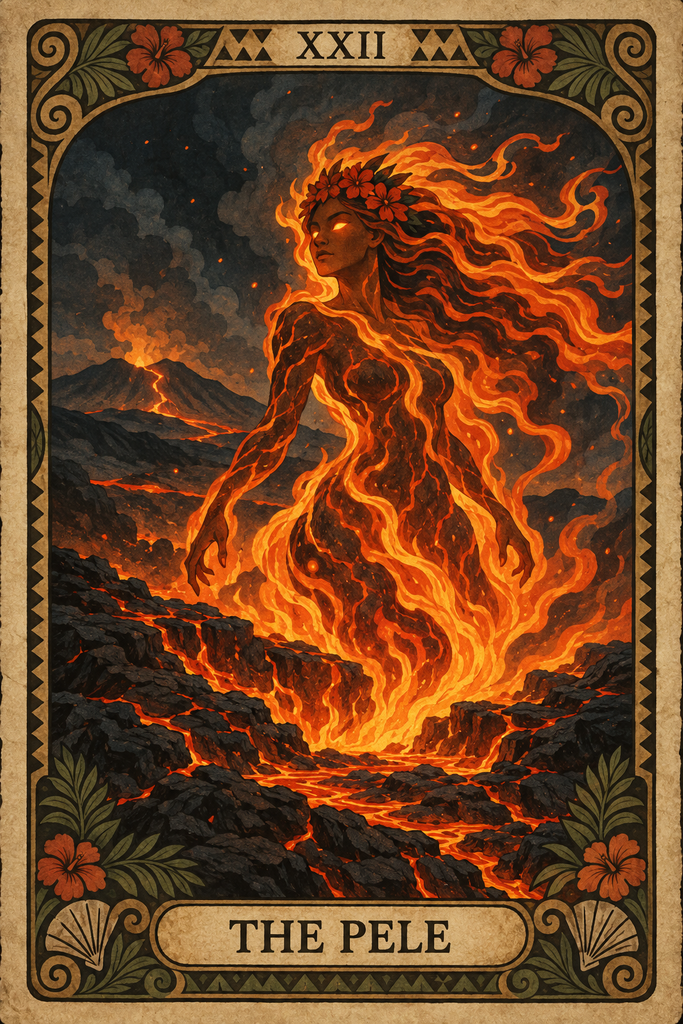
Pele is a Hawaiian volcano deity whose traditional home is Halemaʻumaʻu crater at Kīlauea on Hawaiʻi Island. Traditional accounts say she journeyed from Kahiki through the islands before settling at Kīlauea. Stories describe Pele as both creator and destroyer, forming new land while consuming older landscapes with lava. Her family and adventures appear throughout Hawaiian chants, genealogies, and stories.
In 1823, missionary William Ellis recorded Hawaiian guides offering ʻōhelo berries before eating them near Halemaʻumaʻu. Pele traditions remain active around Kīlauea through offerings, chants, hula, and family traditions. At Kaʻauea, a hula platform facing Halemaʻumaʻu has hosted traditional performances since 1979.
Kamapuaʻa (Hawaiian Islands)
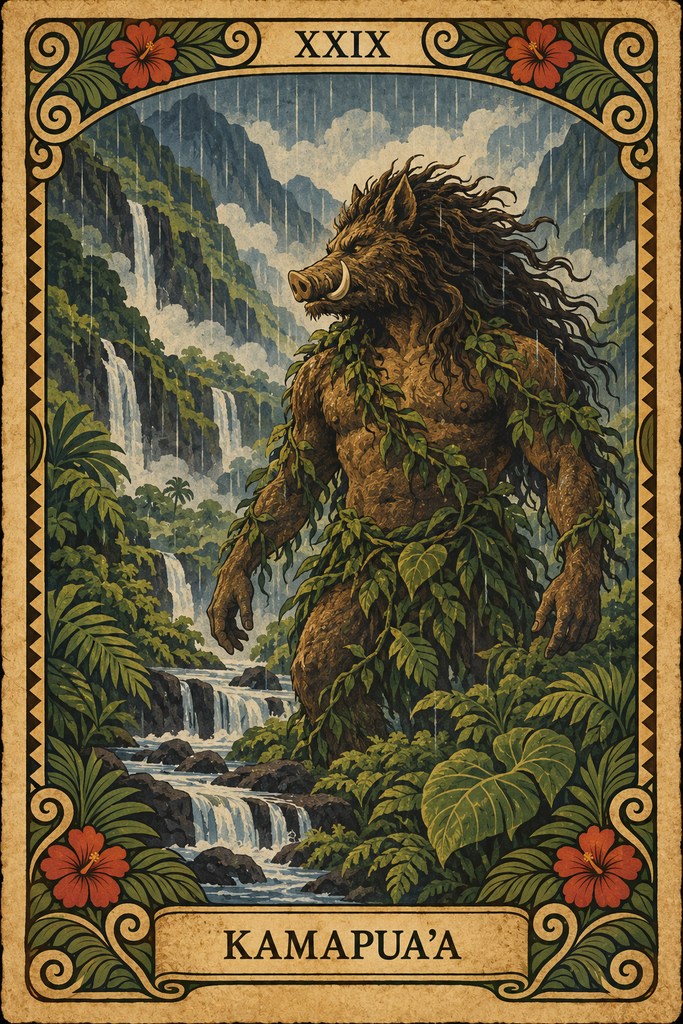
Kamapuaʻa is a shapeshifting demigod in Hawaiian tradition, often appearing as a man or powerful hog. Stories place his birth on Oʻahu, then follow his travels and battles across several islands. An 1861 Hawaiian-language account describes his visit to Maui and associates him with rain, agriculture, and transformation. University of Hawaiʻi collections preserve numerous nineteenth-century versions of his adventures.
One famous cycle brings Kamapuaʻa to Kīlauea, where he challenges Pele after trading insults and chants. When Pele attacks with fire, Kamapuaʻa summons rain and takes hog form against her volcanic power. Their struggle continues without a clear victor, joining rain, forest growth, and volcanic fire in the story. The National Park Service also identifies the ʻamaʻu fern among Kamapuaʻa’s many forms.
Nanaue, the Shark-Man (Hawaiian Islands)
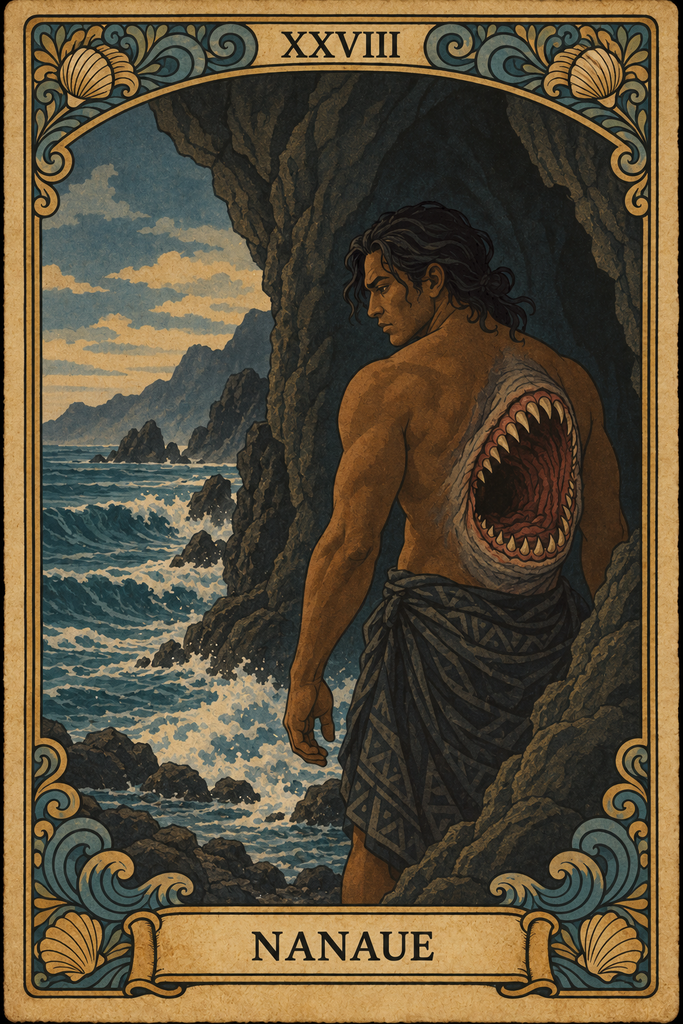
Nanaue is a shark-man in Hawaiian tradition, born to the shark god Kāmohoaliʻi and a woman named Kalei. An early published account places his childhood in Waipiʻo Valley on Hawaiʻi Island. He appeared human but carried a shark mouth between his shoulder blades. As Nanaue grew, he entered the water, became a shark, and eventually attacked people along the coast. After his identity was discovered, he fled Hawaiʻi for Maui and later Molokaʻi.
Another tradition places Nanaue at Kāneana Cave near Mākua on Oʻahu’s Waiʻanae Coast. Stories say he dragged victims into the cave through an underwater passage at high tide. In the older Molokaʻi account, residents eventually captured Nanaue after discovering the hidden shark mouth. They killed and burned him near Kainalu, ending his attacks there.
Kaupe (Nuʻuanu Valley, Oʻahu)
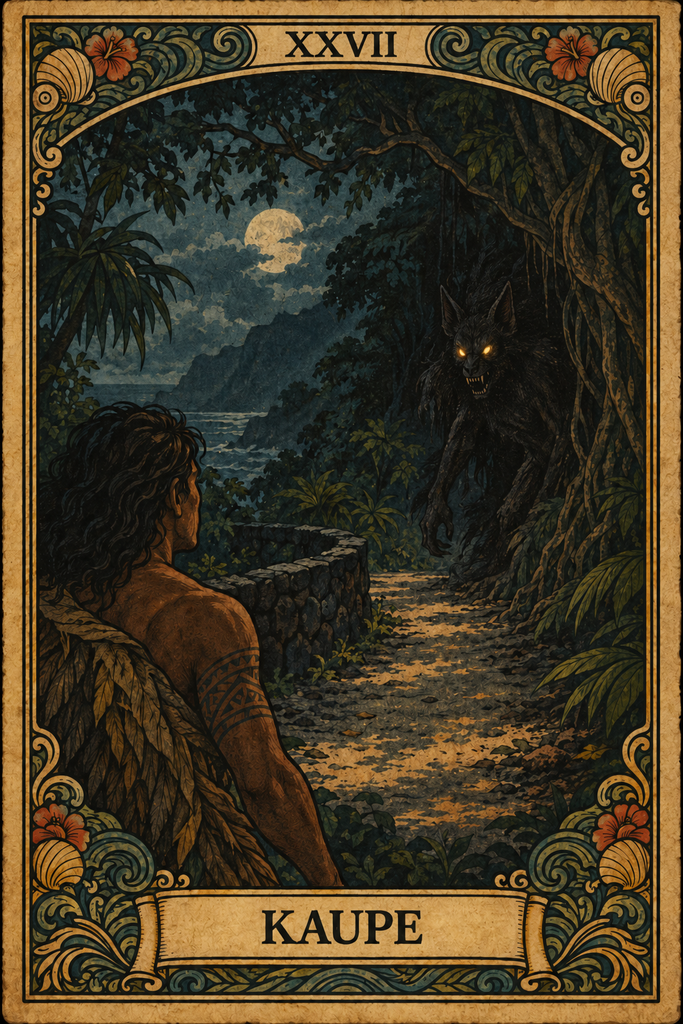
Kaupe is a supernatural dog-man in Hawaiian tradition, most strongly associated with Nuʻuanu Valley on Oʻahu. An Office of Hawaiian Affairs account describes him with a human body and a brindled dog’s head. Stories say he overthrew Kahānaiakeakua, ruled Nuʻuanu, practiced cannibalism, and could shift between human and canine forms. After his death, his spirit returned to Nuʻuanu and continued haunting its forests and trails.
Later stories call Kaupe a night-caller who mimics an old man or child to lure travelers closer. Some describe white mist forming into his dog-like shape while nearby dogs howl. Older Kaupe traditions also survive in historical accounts of Nuʻuanu. The University of Hawaiʻi legend index lists both “The Ghost Dog of Nuuanu” and “The Cannibal Dog-Man.”
Kapaemāhū (Waikīkī, Oʻahu)
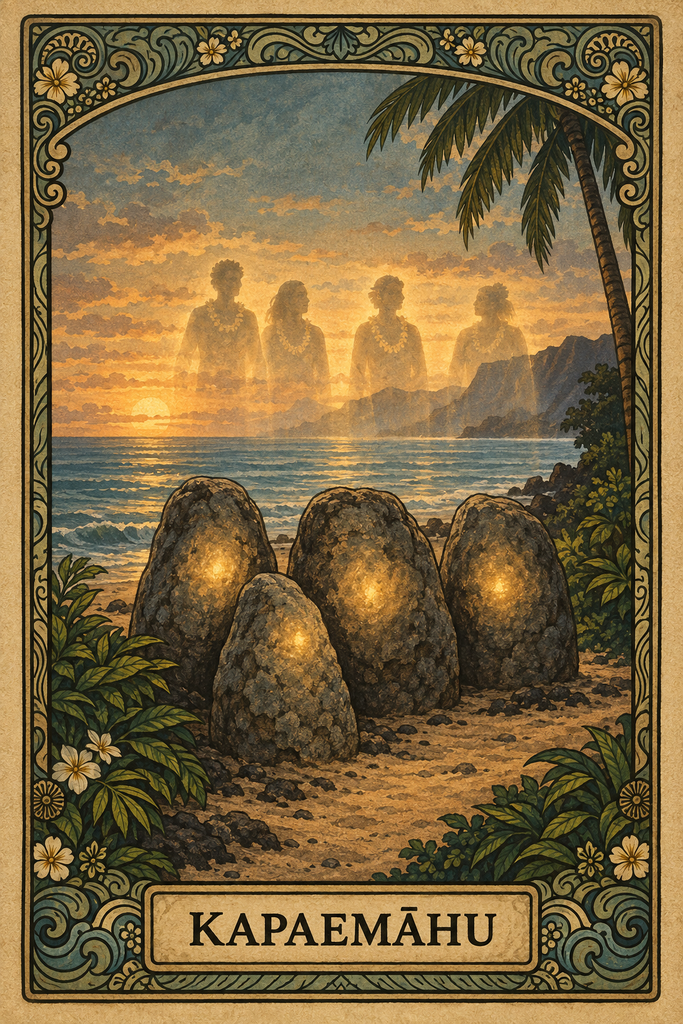
Kapaemāhū is one of four celebrated healers remembered through sacred stones at Waikīkī. An early written version published in 1907 names Kapaemāhū, Kapuni, Kinohi, and Kahaloa. The story says they came from Tahiti and were māhū, people combining male and female qualities. They became renowned for healing before transferring their names and spiritual power into four great stones.
The stones were excavated from Princess Likelike’s former beachfront property in 1905. They were buried beneath a bowling alley in 1941, then recovered after its demolition in 1963. In 1997, the stones were restored to a protected site at Kūhiō Beach. A new plaque installed in 2023 restored the healers’ names and their māhū identity to the monument.
Apukohai (Kauaʻi and Surrounding Waters)
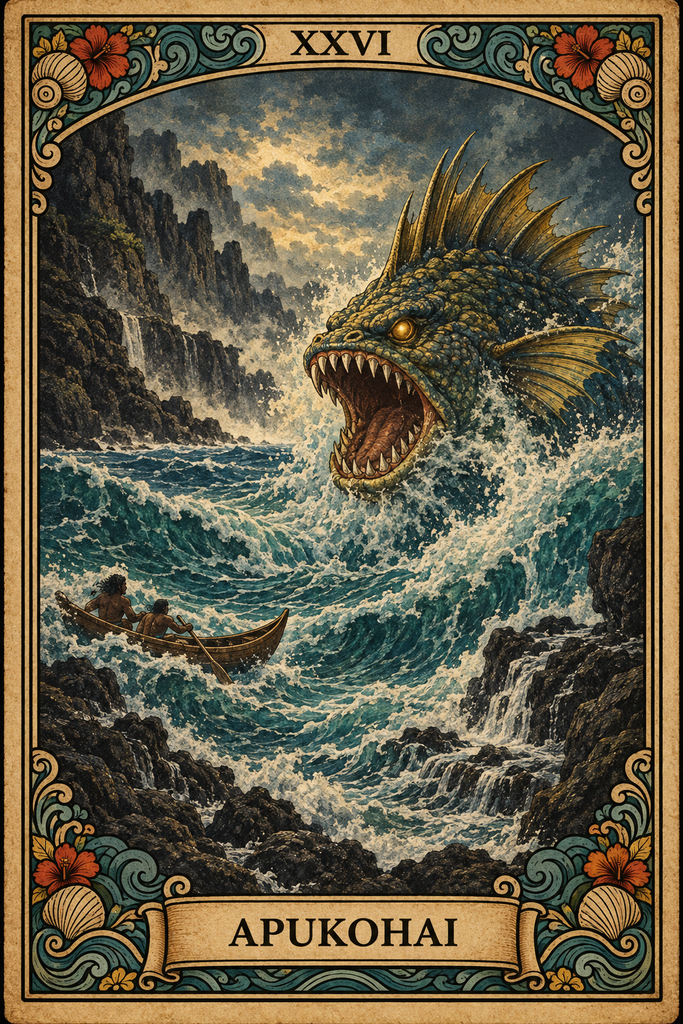
Apukohai is a powerful sea being in Hawaiian tradition, especially associated with Kauaʻi and ocean travel. King Kalākaua’s 1888 collection calls him a great fish-god of Kauaʻi. One story credits Apukohai with helping the chief Moʻikeha during a difficult voyage. The creature could seize canoes and carry them across the water at extraordinary speed.
Apukohai also appears in stories of Kawelo, a legendary warrior returning from Oʻahu to Kauaʻi. An older published account says Apukohai appeared shortly after Kawelo’s fleet left shore. Experienced sailors recognized the creature as an evil omen and urged Kawelo to turn back. Kawelo refused their warnings and continued toward Kauaʻi.