North Dakota
North Dakota cryptids draw from Missouri River traditions, prairie ghost stories, frontier legends, strange-animal reports, and Indigenous folklore. The state’s river valleys, Badlands, open grasslands, and isolated settlements give many stories a strong regional setting.
North Dakota folklore includes the Miniwashitu of the Missouri River, giant birds, mysterious serpents, and roadside or prairie apparitions. Other legends developed around dangerous waterways, remote ranch country, and historic settlements. These traditions mix older regional beliefs with later settler stories and modern paranormal reports.
Miniwashitu (Missouri River)
The Miniwashitu is a Dakota water-being associated with the Missouri River in North Dakota. Melvin Randolph Gilmore recorded the tradition in his 1921 book Prairie Smoke. His account describes red buffalo-like hair, one central eye, a single horn, and a jagged backbone. Seeing it by daylight was said to cause blindness, madness, and death.
Gilmore says the Miniwashitu moved upstream each spring, roaring as it broke apart the Missouri’s ice. The story directly connects the being with the dangerous seasonal breakup of the river. A 2023 account revisited the tradition and its connection to North Dakota’s Missouri River landscape. Modern retellings continue to preserve Miniwashitu as one of the state’s distinctive supernatural river beings.

Thunderbirds (Northern Plains and North Dakota)
Thunderbirds are powerful supernatural beings in several Northern Plains traditions, including Dakota, Mandan, and Hidatsa traditions. North Dakota’s Writing Rock State Historic Site preserves two granite boulders carved with large thunderbird figures. The State Historical Society associates these beings with thunder and lightning across Siouan and Algonquian cultures. Most comparable Northern Plains artifacts date from about A.D. 1000 to 1700.
North Dakota Studies also preserves a Hidatsa narrative in which Thunderbird defeats a powerful water snake. That story places thunderbirds within a broader sacred world rather than treating them as unidentified giant birds. Historical Dakota sources likewise describe Wakinyan, or Thunderers, as important sacred beings connected with thunder, war, and visions. Writing Rock keeps thunderbird imagery visibly rooted in North Dakota’s documented Indigenous history.

Devils Lake Serpent (Devils Lake / Spirit Lake)
The Devils Lake Serpent is a North Dakota lake-monster legend with documented newspaper reports from the late nineteenth century. Prairie Public traces reports to 1894, with earlier local stories already circulating around the lake. A 1908 Grand Forks Herald story described a black, horned serpent rising partly from the water. The lake is Mni Wakan, or Spirit Lake, to Dakota people of the region.
Later sightings strengthened the settler-era sea-serpent tradition. In 1914, three boaters reported a twenty-foot creature with a broad, alligator-like head near Graham’s Island. Prairie Public notes that newspaper sightings continued into the twentieth century.

White Lady Lane (Walhalla and Leroy, Pembina County)
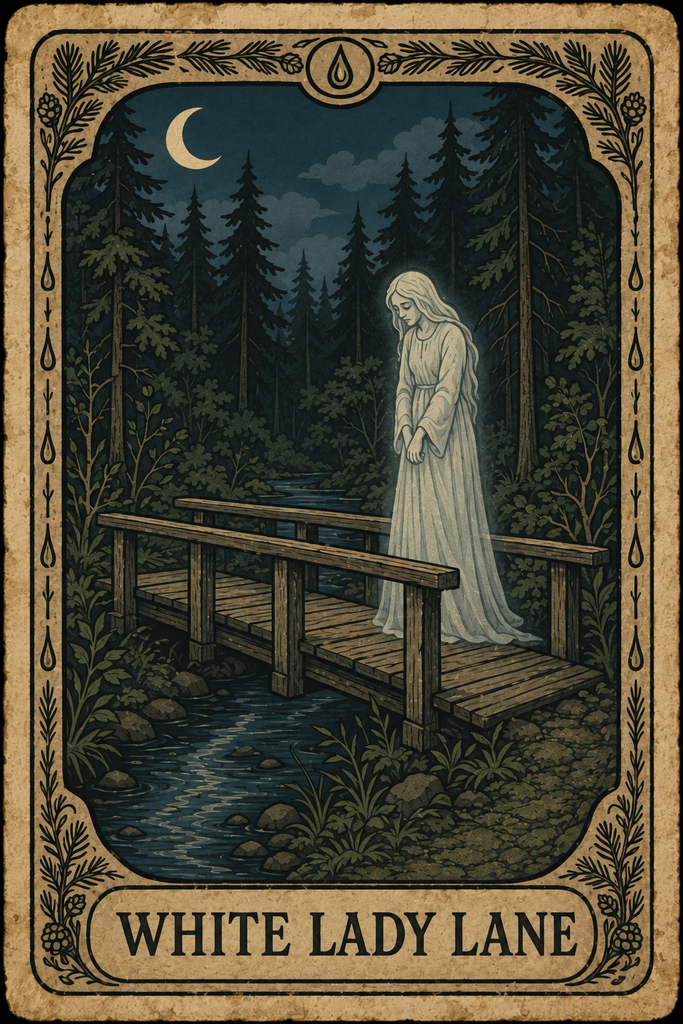
White Lady Lane is a haunting legend tied to County Road 9 through the Tetrault Woods near Walhalla. One version tells of a grieving bride who hanged herself beneath a narrow bridge after losing her child. Visitors later reported dread, melancholy, and the feeling of an unseen presence near the crossing.
Another version connects the White Lady to Anna Story, who was murdered in 1921 near Leyden. A contemporary newspaper account reported that peddler Sam Kalil shot Story after a disputed marriage arrangement. Walhalla’s official history page says her ghost still walks near Eddie’s Bridge in a white nightgown. Both versions remain part of the same northeastern North Dakota roadside legend.
Venlo Ghost Light (Venlo, Ransom County)
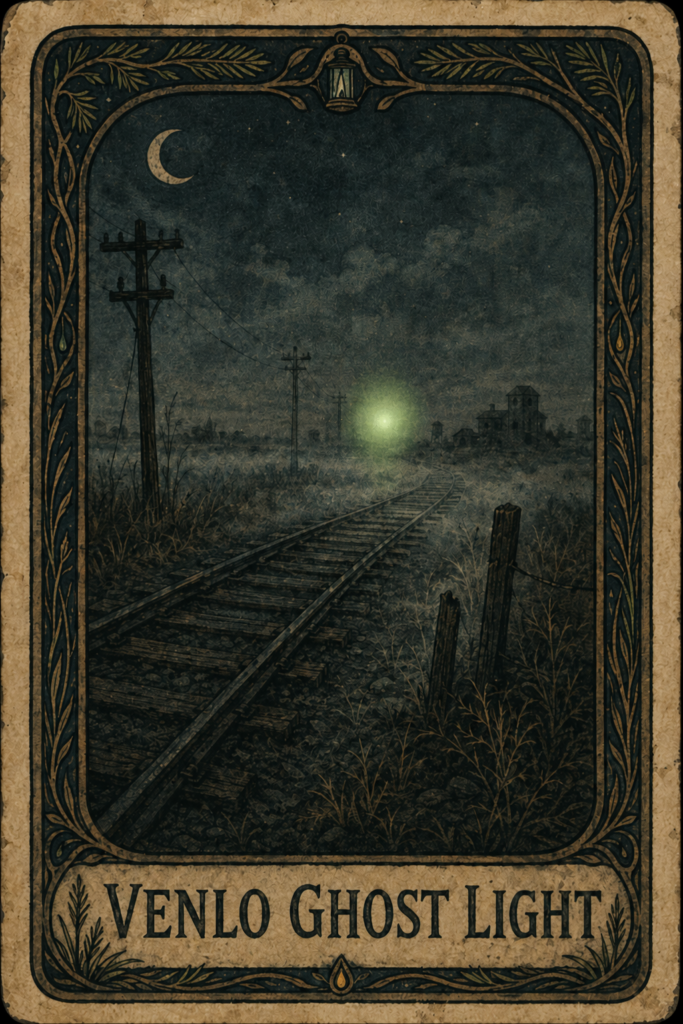
The Venlo Ghost Light is a railroad haunting associated with the former community of Venlo in southeastern North Dakota. High Plains Reader says locals report a green light appearing along the tracks on foggy nights. The legend identifies the light as a lantern carried by the ghost of a dead railroad worker.
Local tradition connects the apparition to an old railroad accident near Venlo, although surviving details remain unclear. The same High Plains Reader account describes the ghostly lantern as a warning through heavy fog. Venlo itself developed along the Soo Line, where a boxcar once served as the community’s railroad depot.