Kansas
Kansas folklore stretches across open prairies, winding rivers, and wooded valleys, mixing Native traditions, pioneer tales, and small-town legends. Rural communities trade stories of strange creatures and unexplained lights, while towns and cities carry ghost stories rooted in old buildings and historic districts.
The state’s vast, flat horizons seem to leave no place for secrets, yet Kansas mysteries slip away into the distance. From prairie hauntings to river monsters, each region adds to the state’s growing body of folklore and cryptid lore.
Sinkhole Sam (Big Sinkhole / Inman)
Sinkhole Sam is a giant serpent-like creature associated with Big Sinkhole southeast of Inman. Reports surged during 1952 and 1953, when locals described an animal roughly fifteen feet long. Albert Neufeld and George Regehr Jr. became central witnesses after seeing the creature in the water. Neufeld later fired at Sam, helping turn the story into a regional sensation.
Newspaper coverage drew crowds of curious visitors to Big Sinkhole during the height of the legend. Retellings described Sam as thick-bodied, snake-like, and about as wide as an automobile tire. The story remained tied to Inman even after sightings faded and the sinkhole changed over time. Sinkhole Sam still survives as one of Kansas’s best-known monster legends.

The Albino Woman (Topeka, Kansas)
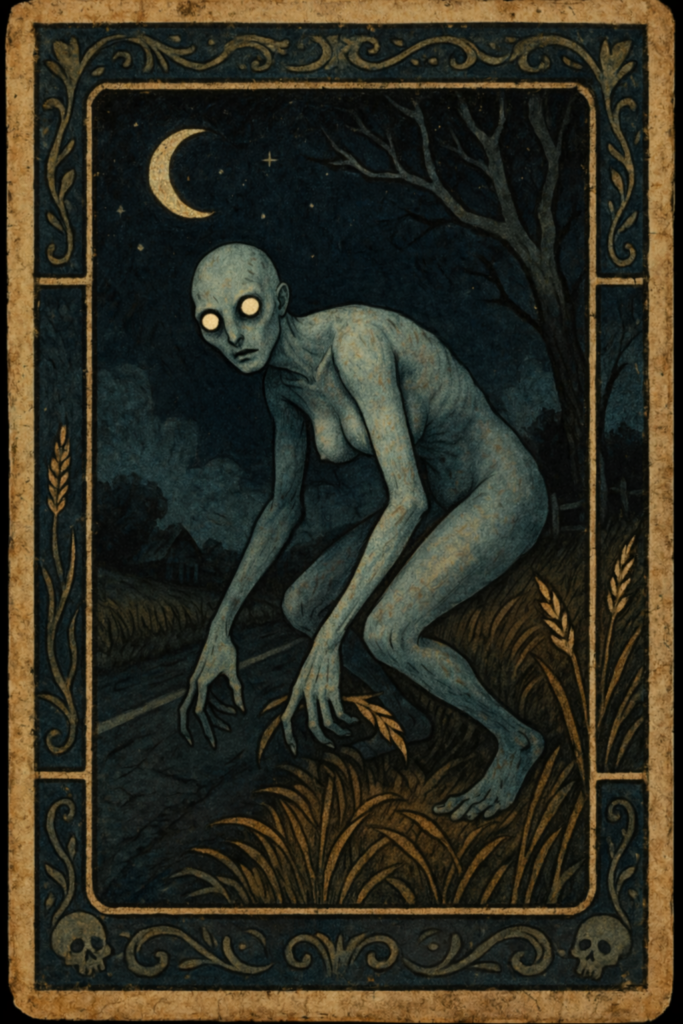
The Albino Woman is a long-running Topeka urban legend associated with Rochester Cemetery and the surrounding landscape of roads, woods, and creeks in north Topeka. The figure is commonly described as a ghostly woman with stark pale skin, long white hair, and conspicuous pink or red eyes, and the legend has been retold locally for generations.
Later versions of the same legend evolved into a more aggressive variant often called the “Blue Albino Woman,” which shifts the story toward horror imagery and attacks rather than a simple cemetery haunting. Folklorist Lisa Hefner Heitz describes the Albino Woman as an unusually complex, intergenerational local legend that changes form across decades, with the “Blue Albino Woman” functioning as one modern iteration rather than a separate tradition.
Pawnee Water Monster (Northern Kansas / Pawnee Tradition)
Pawnee traditions include powerful water monsters inhabiting rivers, lakes, and the supernatural world beneath them. One Skidi story describes an enormous serpent-like being emerging from a great river. It draws a dreamer underwater into an animal lodge filled with powerful beings. There, the monster teaches him ceremonial knowledge before returning him safely to land.
Another Pawnee story pits two young hunters against a dangerous water monster threatening animals and young Thunderbirds. The boys receive magical arrows and eventually kill the creature. Water monsters also appeared in Pawnee ceremonial traditions, including a large serpent effigy used within the Medicine Lodge.

Stull Cemetery (Gateway to Hell Legend)
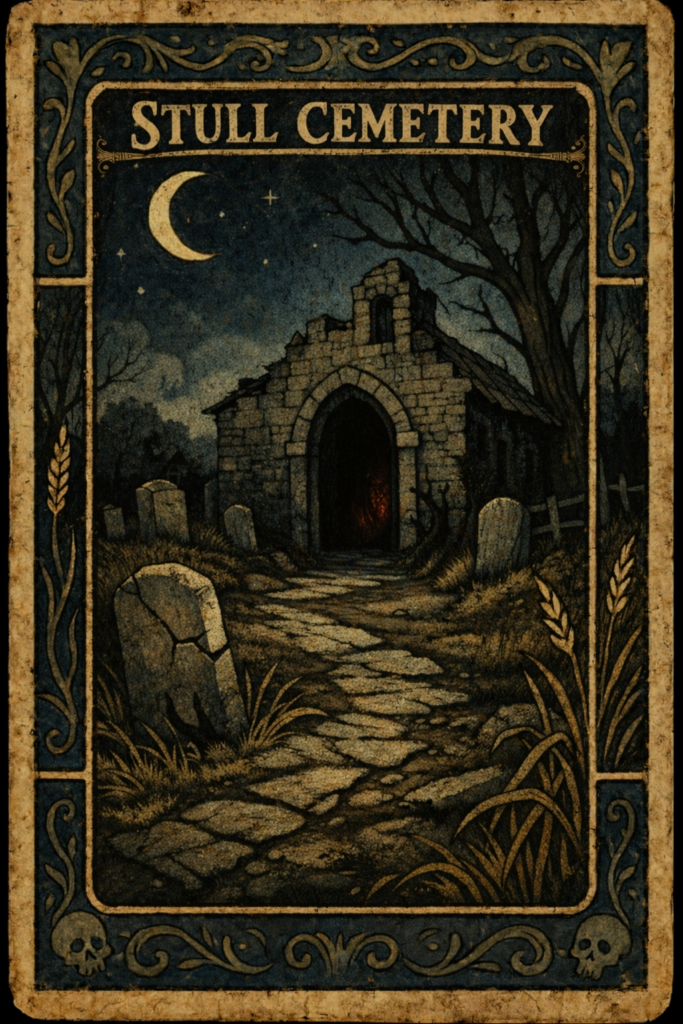
Stull Cemetery stands about ten miles west of Lawrence, Kansas. Legend names it one of seven gateways to Hell. The tale reached print in 1974 through a University Daily Kansan story. Later accounts traced the rumor to KU students in the 1970s.
Halloween visitors later trespassed, stood on graves, and waited for the devil. Residents reported repeated vandalism, broken stones, and trespassing around the cemetery. Sheriff patrols increased as the legend drew more visitors each fall.
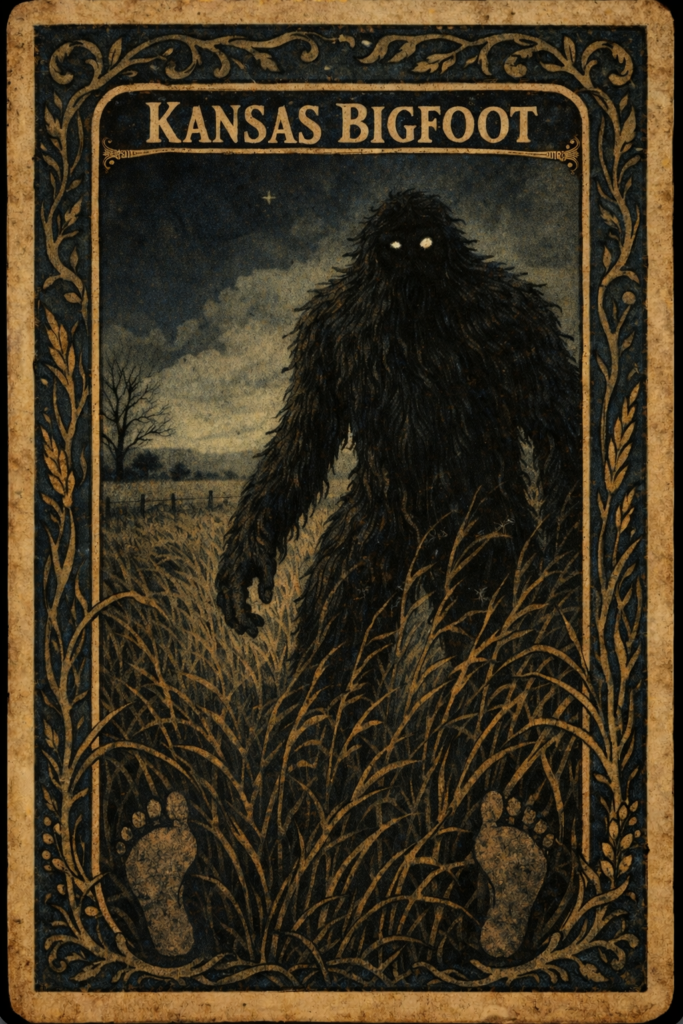
Kansas Bigfoot (Statewide, Kansas)
Kansas Bigfoot reports form a statewide wildman tradition. BFRO lists fifty-one Kansas reports across many counties. Those listings include Douglas, Jackson, Kingman, and Cherokee counties. Witnesses describe hairy figures, large tracks, and sudden roadside encounters.
In 2021, two motorists reported a furry figure near the South Fork Ninnescah. In Cherokee County, a 1995 report described screams near strip pits by Big Brutus. Jackson County reports include roadside encounters near Mayetta and older reservation lore.