Rhode Island
Rhode Island may be the nation’s smallest state, but its folklore looms large. Born from a seafaring colony and a refuge for religious dissenters, the state’s history blends with tales of sea serpents, haunted graveyards, and cryptid sightings rooted in both Native and settler traditions.
From the famous Exeter vampire panic of the 1890s to sea monsters reported off Newport and Block Island, Rhode Island’s cryptid lore mirrors its maritime culture and its enduring fascination with the boundary between life, death, and the unknown.
Mercy Brown, the Exeter Vampire (Exeter, Rhode Island)
Mercy Lena Brown is Rhode Island’s best-known New England vampire panic figure. Tuberculosis struck George Brown’s family during the 1880s and early 1890s. His wife Mary Eliza died in 1883, and daughter Mary Olive died in 1888. Mercy died at nineteen in January 1892. Her family placed her in the cemetery behind Chestnut Hill Baptist Church. Edwin Brown remained ill with consumption after her death.
On March 17, 1892, Exeter residents exhumed three Brown women. Neighbors suspected a vampire was stealing Edwin’s life. Mercy’s heart and liver were removed, burned, and mixed into a tonic. The Rhode Island Historical Society says Edwin drank the ashes and died on May 2, 1892. The Brown family rests at Chestnut Hill Baptist Church Cemetery in Exeter.

The Woonsocket Werewolf (Fairmont Section, Woonsocket)
The Woonsocket Werewolf is a loup-garou (French werewolf) legend from Woonsocket, Rhode Island. New England Legends places it in the Fairmont section, near the Blackstone River and Devil’s Hole. Its version begins in 1868, when a priest needed help building a church. A black horse called Old Nick appeared and hauled stone for the project. When a worker removed the horse’s bridle, the horse vanished into a chasm to hell. The same retelling says the worker became a loup-garou, or French-Canadian werewolf.
Woonsocket’s French-Canadian history gives the story its local frame. New England Legends says French-Canadian migrants came to Woonsocket for mill work. It also says Woonsocket had a major French and French-Canadian population by 1913. The tale says Devil’s Hole became cursed after Old Nick disappeared there. Later Woonsocket stories describe relatives or friends chased by the loup-garou. Belanger and Auger searched the woods in 2023, but found no marked cave.

Palatine Light (Block Island, Rhode Island)
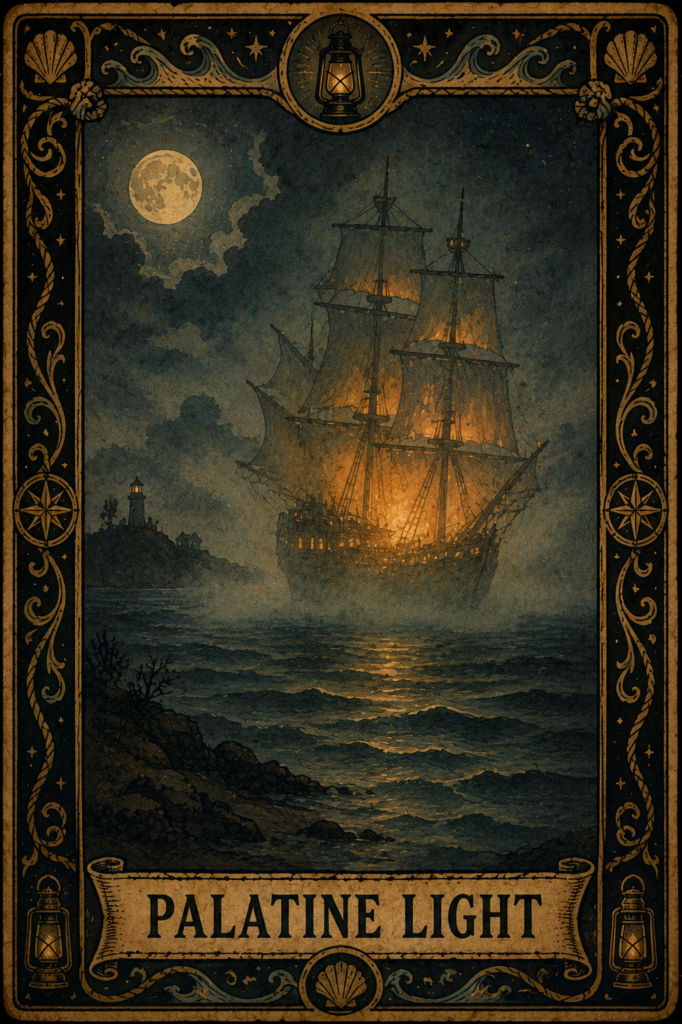
The Palatine Light is a ghost ship legend from Block Island, Rhode Island. It grew from the 1738 wreck of the Princess Augusta near Block Island. The ship carried Palatine emigrants from southwest Germany toward Philadelphia. Brandeis University Press says the wreck produced two frightening versions within a century. One version blamed the crew, while another blamed island wreckers and false lights.
Later stories described a fiery ship seen in Block Island Sound. Writers called the apparition the Palatine Light. John Greenleaf Whittier’s 1867 poem helped spread the legend. Massachusetts Historical Society says the poem launched the Palatine Light into mainstream society. Jill Farinelli’s study treats the case as history transformed through public memory.
Nine Men’s Misery (Cumberland Monastery Grounds, Cumberland)
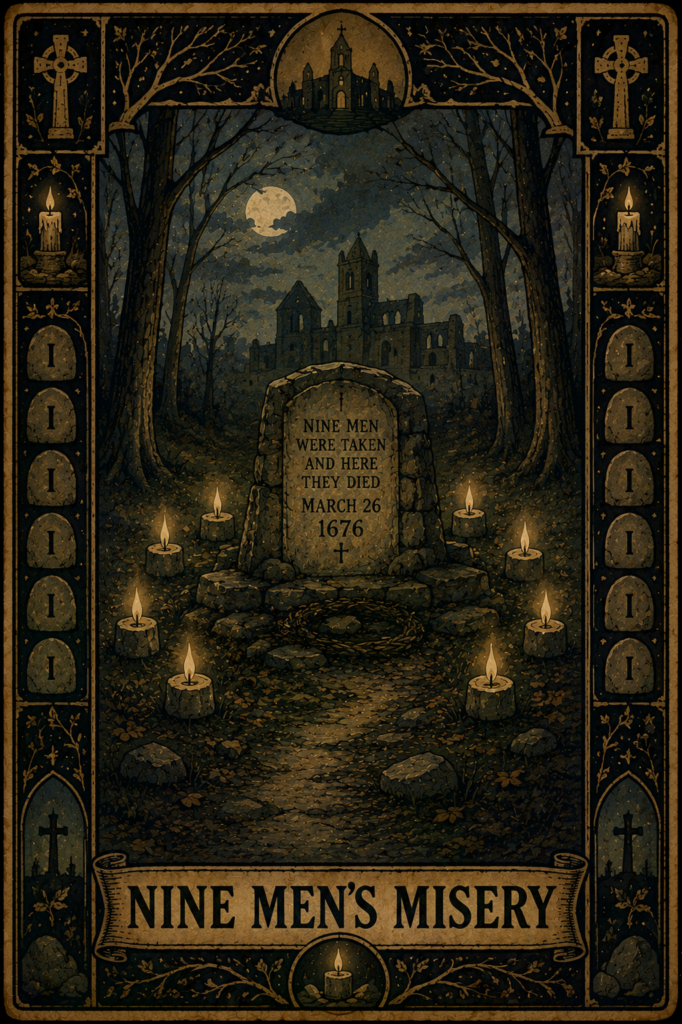
Nine Men’s Misery is a haunted historical site in Cumberland, Rhode Island. It marks events tied to Pierce’s Fight during King Philip’s War. Local tradition says nine captured colonial militiamen died there on March 26, 1676. English colonists later buried the bodies and marked the grave with stones. The current monument stands near the Cumberland Monastery property.
Later folklore added ghosts, screams, and the disturbed-grave story. New England Legends visited the old monastery woods in search of nine ghosts. It also mentions ghostly apparitions and disembodied screams at Nine Men’s Misery. Jason Colavito traced later giant stories to changing accounts about Benjamin Bucklin. Those layers keep the Cumberland site active in Rhode Island legend tourism.
East Side Train Tunnel Hauntings (College Hill, Providence)
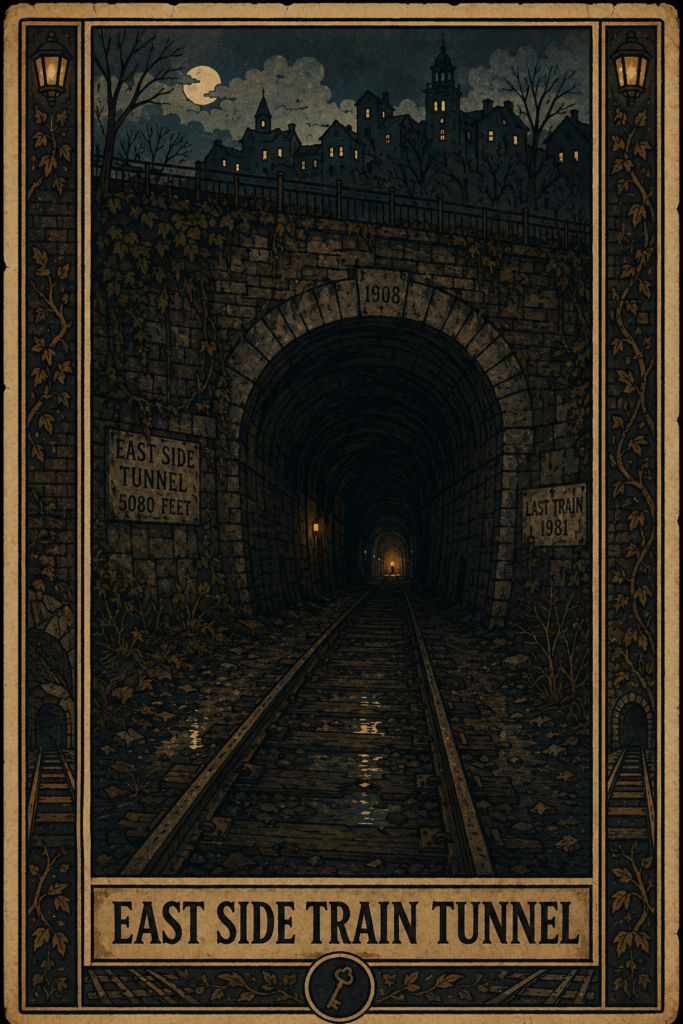
The East Side Train Tunnel runs beneath College Hill in Providence, Rhode Island. It connected Union Station with East Providence and the Seekonk River corridor. Construction began in 1906, and the tunnel opened on November 15, 1908. ArtInRuins says the tunnel is 5,080 feet long and reaches 110 feet below Prospect Street. The last train used the tunnel in 1981.
After abandonment, the tunnel became a site for dares, parties, and urban exploration. A large Beltane party there ended in a 1993 police clash. ArtInRuins says police later claimed they found signs of satanic rituals. Strange New England describes the tunnel as a home for frightening tales and urban legends. Providence Tour Company now includes the hidden rail tunnel entrance on a ghost tour.