Louisiana
Louisiana cryptids and folklore draw from Cajun, Creole, African American, Native, French, Spanish, and other regional traditions. Bayous, coastal marshes, pine country, plantations, river towns, and New Orleans neighborhoods all support distinct local legends.
Swamp creatures like the Rougarou, Letiche, and Honey Island Swamp Monster dominate southern Louisiana folklore. New Orleans adds urban legends, hauntings, and historical crimes such as the Axeman case. St. Francisville contributes plantation ghost stories, while bayou communities preserve water spirits and roadside monster traditions.
Rougarou (South Louisiana / Lafourche and Terrebonne Parishes)
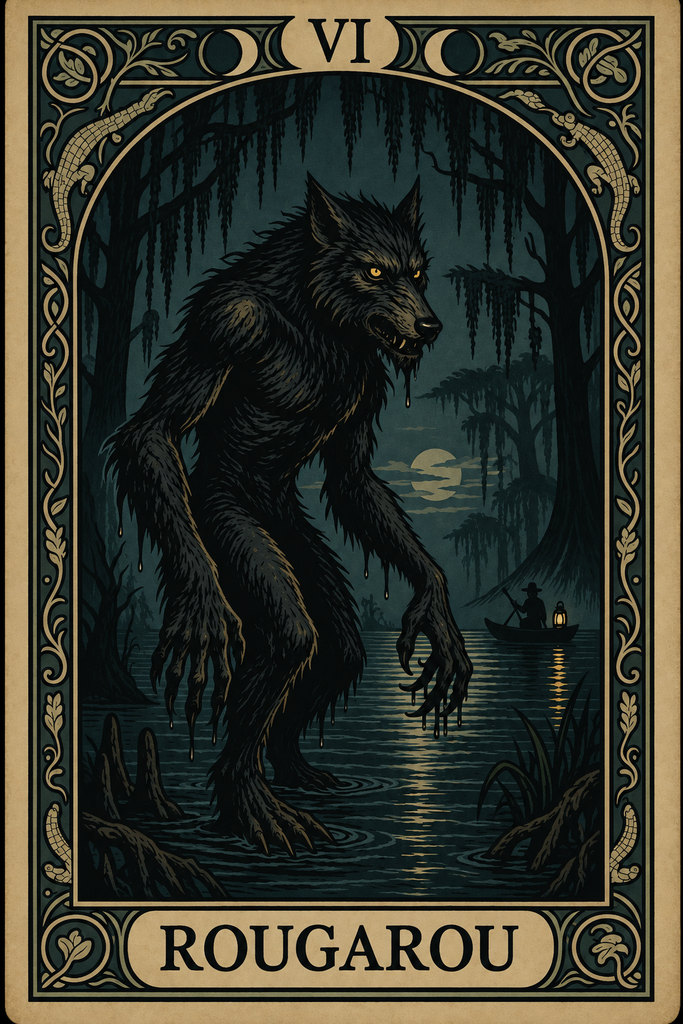
The Rougarou is a shape-shifting figure widespread in Cajun and Houma communities of South Louisiana. 64 Parishes describes it as half-human and half-beast, usually taking monstrous form at night. Louisiana accounts vary widely, comparing the creature to dogs, owls, or less distinct animal forms. The name comes from French loup-garou, but Louisiana descriptions rarely resemble the familiar European wolf-man. Parents also warned children that the Rougarou would catch them for misbehavior, broken curfews, or disobedience.
Adult accounts often describe the curse passing when the Rougarou bites someone or otherwise draws blood. Some versions require its identity to remain secret for 101 days or a year and a day. LSU’s Cajun French glossary records rougarou as a regional variant of loupgarou in southeastern Louisiana. Houma’s Rougarou Fest celebrates the legend with folklore programs, a parade, and cultural demonstrations.
Honey Island Swamp Monster (Honey Island Swamp / St. Tammany Parish)
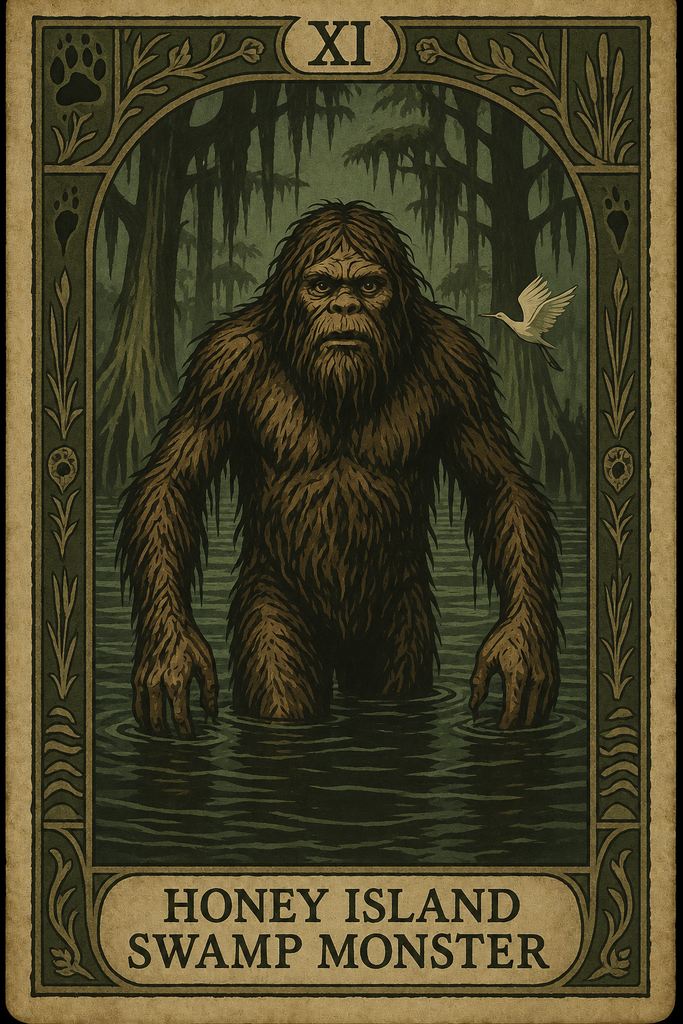
The Honey Island Swamp Monster is a hairy, upright creature associated with Honey Island Swamp near Slidell. Folklorist Frances Leary’s 2003 study traces the modern tradition to Harlan Ford and Billy Mills. They said they first encountered the creature in 1963 while traveling through the swamp. Ford described a figure over seven feet tall, covered with scraggly hair and possessing striking amber eyes. The story became public in 1974 after Ford and Mills produced plaster casts of unusual footprints.
Ford displayed his evidence during a 1978 episode of In Search Of…, bringing the story to a national audience. The surviving footprint cast shows four toes, although three-toed descriptions also circulated later. After Ford died in 1980, his family found 8mm footage he had recorded in the swamp. His granddaughter Dana Holyfield later published books and documentaries about his encounters. One of Ford’s casts remains displayed at the Abita Mystery House in Abita Springs.
Letiche (Louisiana Bayous / Cajun Folklore)
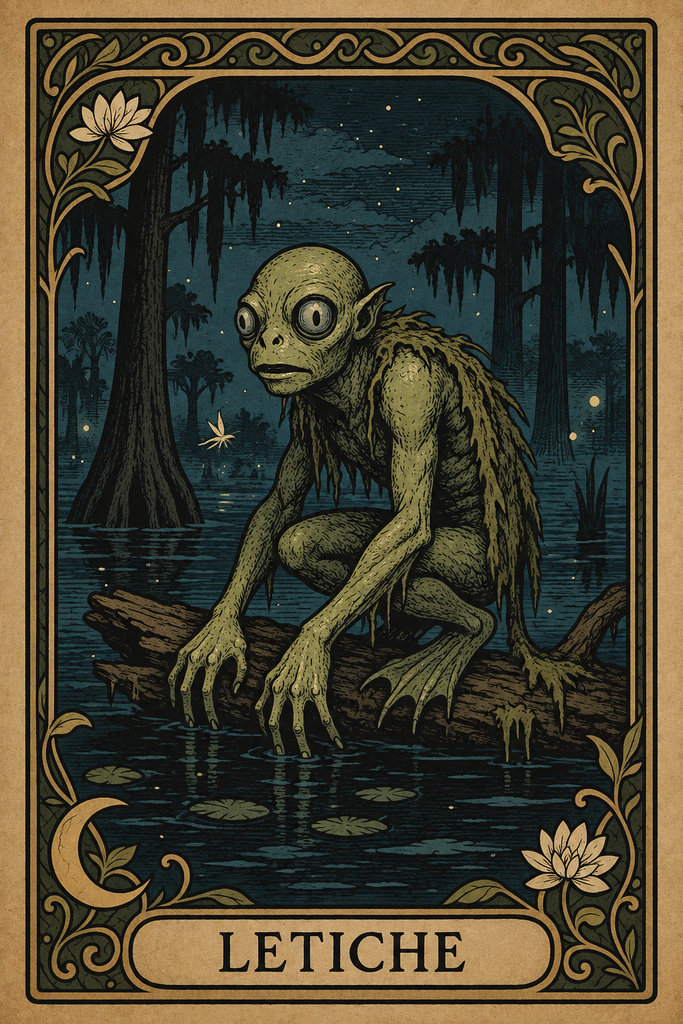
The Letiche is a water-haunting figure in Louisiana folklore, recorded by the Louisiana Writers’ Project during the WPA era. Federal Writers’ Project files describe the Letiche simply as a “ghost child” among Creole and French supernatural tales. The 1941 state guide identifies it with an unbaptized child’s soul haunting Louisiana’s bayous. Accounts say it swims beneath pirogues and overturns them, throwing travelers into the water.
The name has older French roots. In 1845, Amélie Bosquet recorded Norman létiches as small white nocturnal animals believed to embody unbaptized children’s souls. A later Louisiana version describes an abandoned child raised by alligators in the swamp. Dave Thompson included that version in his 2010 book Bayou Underground. Camp Monsters featured the Letiche in a 2020 episode about Louisiana swamp folklore.
The Grunch (New Orleans East / Greater New Orleans)
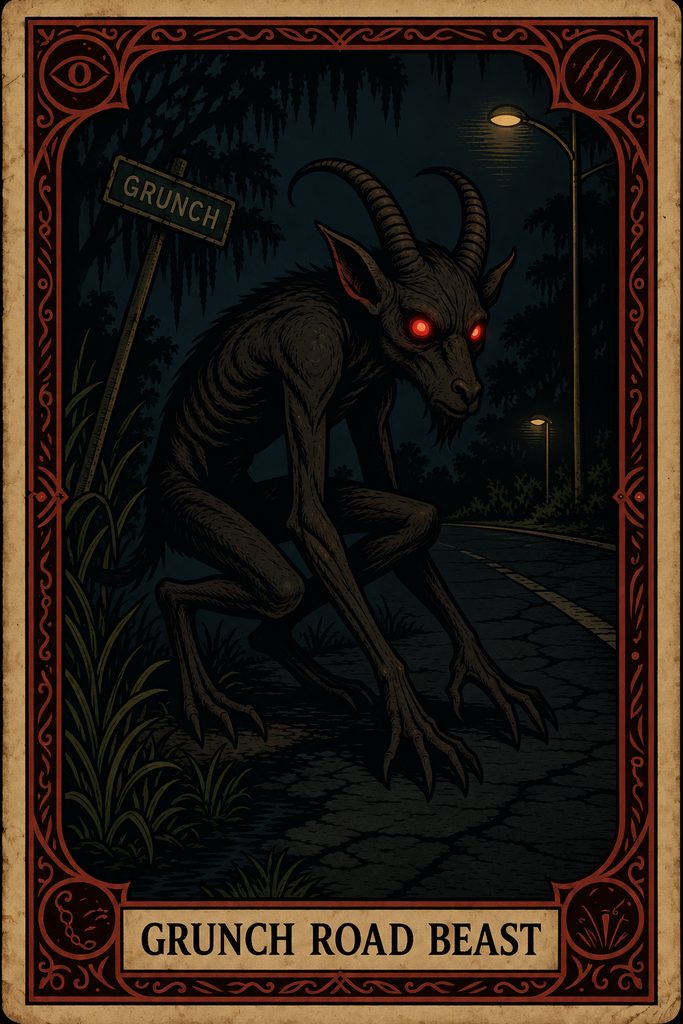
The Grunch is a New Orleans teenage legend documented by folklorist Kristie Harling in 1971. Her Louisiana Folklore Miscellany article examined stories already circulating among local teenagers during the 1960s. Informants usually described the Grunch as half man and half sheep, sometimes part goat. Early versions placed it along lovers’ lanes near Hayne Boulevard in undeveloped New Orleans East.
Teenagers said the creature threw rocks, pounded car hoods, or frightened couples parked along isolated roads. Later retellings added glowing eyes, reptilian traits, blood-draining attacks, and competing locations around greater New Orleans. New Orleans Magazine described Grunch Road in 2021 as a shifting lovers’ lane legend. Some versions place the road near Little Woods, while others move it elsewhere as New Orleans developed.
Axeman of New Orleans (New Orleans and Gretna)
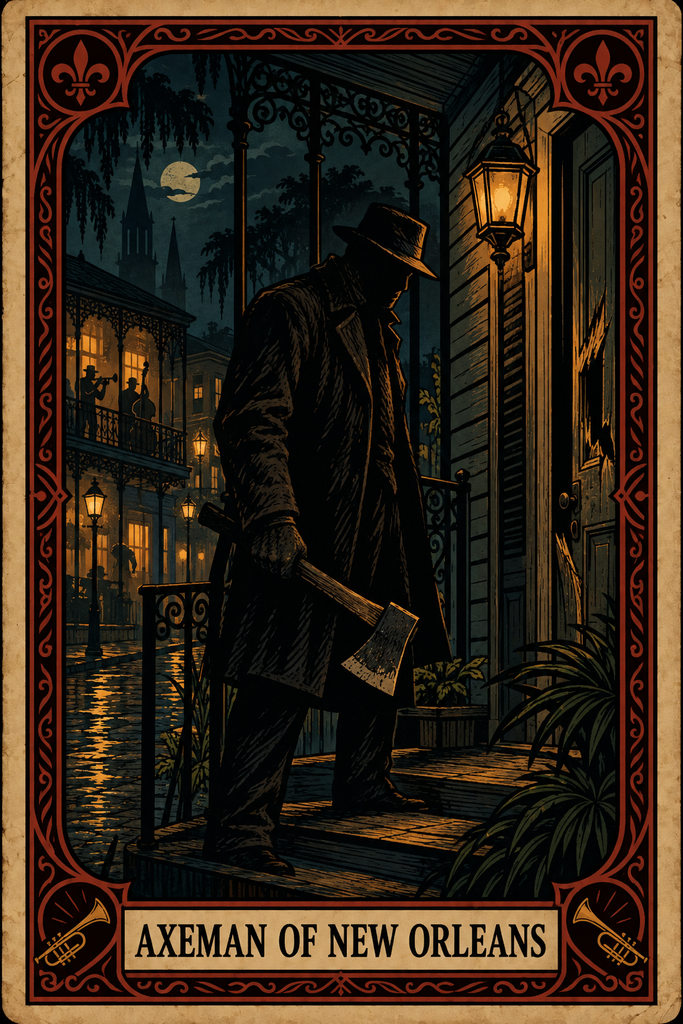
The Axeman of New Orleans attacked households across New Orleans and nearby Gretna between 1918 and 1919. The Historic New Orleans Collection says victims were mostly Italian grocers and relatives attacked at night. The intruder often chiseled through doors and used an axe found inside the victim’s home. On March 10, 1919, the Gretna Historical Society records an attack on Charles and Rosie Cortimiglia. Their two-year-old daughter Mary was killed.
On March 16, the Times-Picayune published a letter from someone claiming to be the Axeman. The writer promised to spare homes playing jazz at 12:15 a.m. on Saint Joseph’s Day. Jazz parties filled homes, cafés, and bars that night, and no Axeman attack was reported. Composer Joseph John Davilla soon published “The Mysterious Axman’s Jazz,” inspired by the letter and newspaper coverage. The Historic New Orleans Collection preserves a 1919 copy of Davilla’s sheet music.
Myrtles Plantation Haunting (St. Francisville / West Feliciana Parish)
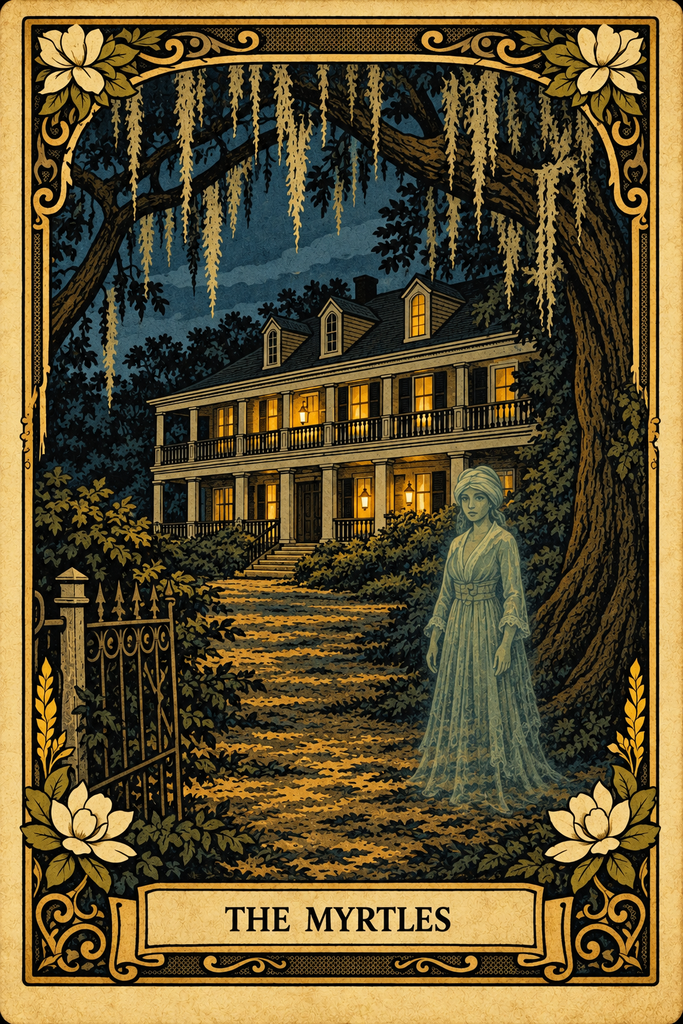
The Myrtles Plantation began as Laurel Grove, built by David Bradford near St. Francisville in 1796. Ghost stories became part of the property’s public identity during the twentieth century. The best-known legend concerns Chloe, an enslaved woman said to have worn a green turban. Versions say Chloe poisoned the Woodruff family with oleander cake before being killed herself. Official Myrtles history records Sarah Woodruff and two children dying from yellow fever in 1823 and 1824.
In 1992, Mrs. Moss photographed a shadowy figure later identified in Myrtles lore as Chloe. The property’s official history calls it the iconic photograph of Chloe. The Myrtles now offers historical tours, nightly Evening Mystery Tours, and overnight accommodations. Guests can stay in twenty-one rooms across the main house, cottages, and garden buildings. Evening Mystery Tours currently run seven nights a week.