North Carolina
North Carolina’s cryptid lore blends Cherokee traditions, colonial ghost stories, and modern monster sightings tied to its rugged terrain. The Appalachian Mountains hold tales of shapeshifters and mysterious people of the night, while the state’s rivers and coastlines fueled legends of sea and river creatures.
By the mid-20th century, sensationalized encounters with vampiric beasts that preyed on livestock cemented North Carolina’s place in American cryptid history. From the Beast of Bladenboro to the Moon-Eyed People, the state’s folklore reflects both ancient traditions and modern mysteries that continue to capture imaginations.
Beast of Bladenboro (Bladenboro, Bladen County)
The Beast of Bladenboro emerged during a series of animal deaths in late December 1953 and January 1954. Contemporary reports described dogs found mutilated, with some reportedly containing almost no blood. Contemporary newspaper accounts Witnesses described a large, cat-like animal, sometimes compared with a panther or bear. Reports of strange cries, tracks, and further attacks quickly spread through Bladenboro.
Hundreds of armed hunters descended on the town during the January 1954 scare. A 1958 account estimated about 1,000 hunters and fifty packs of dogs joined the search. 1958 Carolina Farmer retrospective The creature was never conclusively identified, although a bobcat was killed later that month. Bladenboro has celebrated the legend through its annual Beast Fest since 2008.

Wampus Cat (Iredell County and the North Carolina Piedmont)
The Wampus is a North Carolina monster legend centered on Iredell County and neighboring communities. NCpedia traces reports to 1890, when the Statesville Landmark described a mysterious creature around Statesville. Descriptions varied widely, including black or silver fur, red eyes, strange tracks, and piercing cries. By 1931, newspapers again reported Wampus sightings and livestock attacks across southern Iredell County.
Local parents also used the Wampus as a warning figure to frighten children home before dark. The Iredell County Public Library says early newspaper stories called the creature the Santer. Later reports increasingly used Wampus, especially during the 1930s. Modern local histories still preserve the creature as one of Iredell County’s distinctive monster traditions.
From the Folk Bestiary shop

Products and checkout are handled by Redbubble.

Wilmington Sea Serpent (“Willie”) (Cape Fear River, Wilmington)
The Wilmington Sea Serpent, often called Willie, is a monster legend associated with the lower Cape Fear River. Local folklore describes a large, snake-like creature appearing near Wilmington and the river’s mouth. Sherman Carmichael included the Wilmington Sea Serpent in his 2018 book Mysterious Tales of Coastal North Carolina. Later regional accounts describe Willie as a long, dark or gray creature surfacing in coastal waters.
The legend remains part of Wilmington-area folklore and continues through local histories and monster storytelling. The StarNews-produced Cape Fear Unearthed podcast featured the giant serpent among the region’s established legends. Wrightsville Beach Magazine has also preserved stories of Willie and reported sightings around the Cape Fear. These modern retellings keep the Wilmington Sea Serpent attached to southeastern North Carolina’s coastal folklore.

Moon-Eyed People (Western North Carolina and Southern Appalachians)
The Moon-Eyed People are a southern Appalachian legend attributed in early print to Cherokee tradition. Benjamin Smith Barton’s 1797 book describes earlier inhabitants who “could not see in the daytime.” Barton said the Cherokee drove them from the country after arriving in the region. Later writers described them as small or unusually pale, though details changed between retellings.
James Mooney later revisited the tradition in Myths of the Cherokee, alongside related stories of earlier inhabitants. North Carolina preserves another connection through Eastern Band Cherokee artist Lloyd C. Owle. His 1976 Moon-Eyed People carving, made in Birdtown, is held by the Smithsonian. A separate stone figure in Murphy has also become associated with Moon-Eyed People lore.

Beast of Bolivia (“Vampire Beast”) (Bolivia, Brunswick County)
The Beast of Bolivia emerged around Bolivia, North Carolina, during a series of unexplained dog attacks in 2007. An October WECT report said several dogs had been killed near Brown Road and Midway Road. Investigators found tracks but could not confirm an eyewitness sighting of the suspected large cat. By December, residents were calling the unidentified predator the Beast of Bolivia.
An Associated Press report described six dog attacks and three-inch paw prints, while possible culprits included bears, cougars, or wolves. The story gained national cryptid attention through a 2008 MonsterQuest episode titled “Vampire Beast.” The program connected Bolivia’s attacks with the earlier Beast of Bladenboro and investigated a possible large predator. That coverage preserved the episode as a distinct modern Brunswick County monster story.

Brown Mountain Lights (Brown Mountain, Burke and Caldwell Counties)
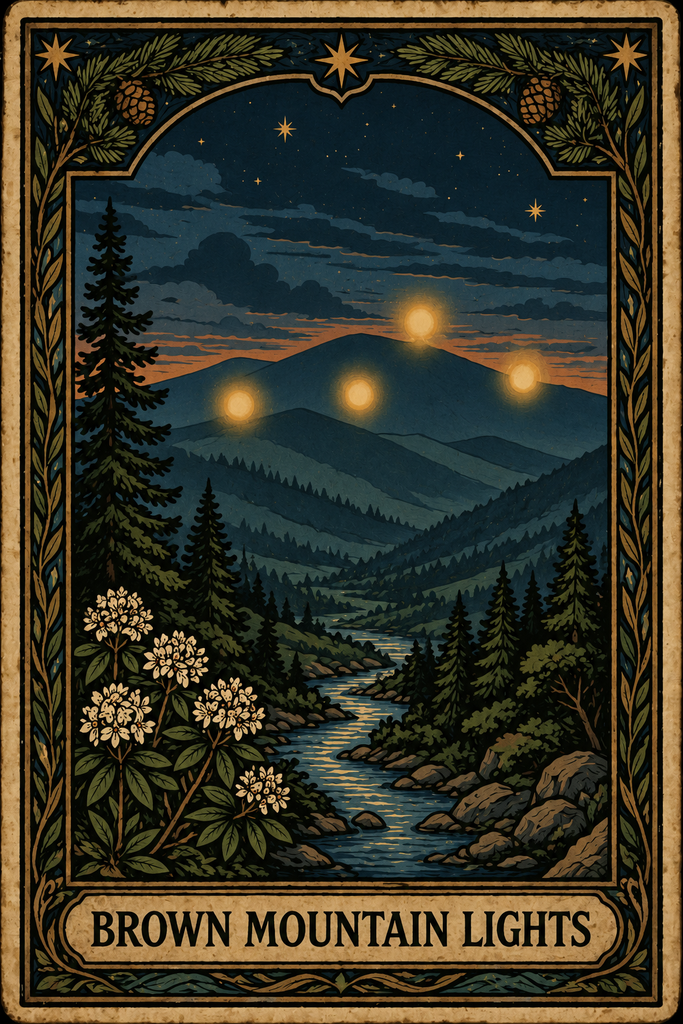
Brown Mountain Lights appear near Brown Mountain in Burke and Caldwell Counties, near Wilson Creek, northwest of Morganton. NCPedia says people documented the lights by 1833 and described glowing forms that lingered before fading. Reports sometimes mentioned several lights at once, which made Brown Mountain a major North Carolina ghost-light site.
Federal investigators studied the lights in 1913 and again in 1922 after public interest kept growing. A 1922 Geological Survey report argued that distant train headlights explained many sightings. Visitors still seek the lights from overlooks near Brown Mountain and along the Blue Ridge Parkway.
Maco Light (Ghost at Maco Station) (Maco Station, Brunswick County)
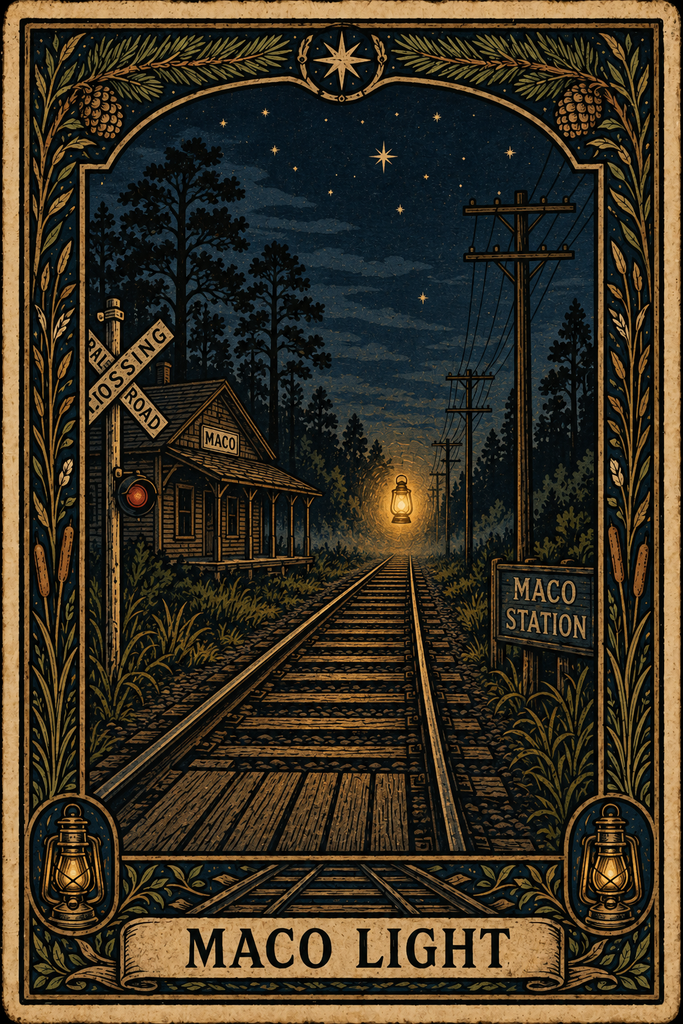
The Maco Light, or Ghost at Maco Station, belongs to Brunswick County near a rail crossing west of Wilmington. NCPedia dates the legend to a fatal 1867 train wreck at Farmer’s Turnout, later called Maco Station. The story says conductor Joe Baldwin waved a lantern after cars uncoupled, then died in the collision.
Soon afterward, people reported a flickering light along the tracks and linked it to Baldwin’s ghost. NCPedia says the light drew nighttime watchers for decades and fooled some railroad workers. Sightings faded after track removal around 1980, but the Maco Light remains a marquee North Carolina legend.
Devil’s Tramping Ground (Bear Creek, Chatham County)
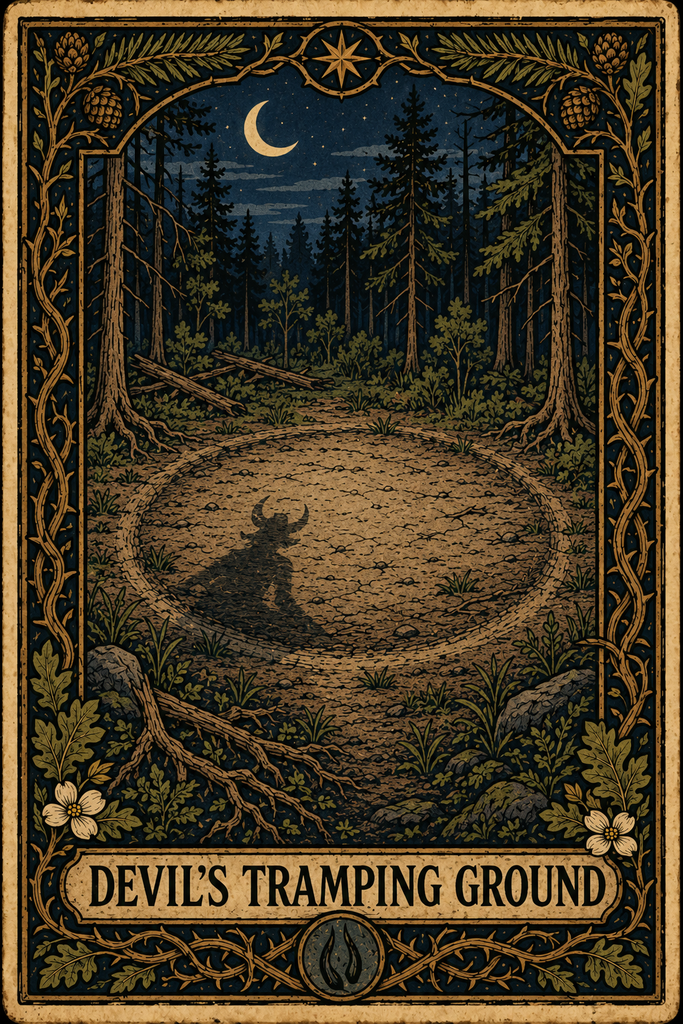
The Devil’s Tramping Ground is a circular barren path near Bear Creek in western Chatham County. NCpedia describes a roughly forty-foot circle where normal vegetation does not grow. Local legend says the Devil paces there nightly while planning new acts of evil. Visitors also tell stories of objects moved from the circle and animals avoiding the site.
A Chatham County Historical Association review found an 1882 newspaper article describing the site much as it appears today. The same association preserves a late-1800s photograph of visitors at the Tramping Ground. Visit North Carolina still promotes the site as one of the state’s best-known paranormal folklore locations. These records show the legend has circulated since at least the late nineteenth century.