New Jersey
New Jersey cryptids and folklore range from Pine Barrens legends and lake monsters to urban rumors, roadside ghosts, and coastal creature reports. The Jersey Devil remains the state’s best-known monster, closely associated with South Jersey and the Pine Barrens.
Elsewhere, Lake Hopatcong carries its own serpent tradition, while Matawan preserves the memory of the 1916 shark attacks. Hoboken produced the Monkey-Man schoolyard scare in the early 1980s. The Atco Ghost and White Stag of Shamong add roadside and warning legends from South Jersey.
The Jersey Devil (Pine Barrens, South Jersey)
The Jersey Devil is New Jersey’s best-known monster legend, closely tied to the Pine Barrens. The familiar Mother Leeds story places its birth in 1735 near Leeds Point. In that version, her thirteenth child transforms into a winged creature with hooves and escapes into the pines. The creature was historically called the Leeds Devil before the Jersey Devil name became dominant.
The legend surged across regional newspapers during January 1909, when reports spread throughout South Jersey and Philadelphia. Witnesses reported hoofprints, winged animals, strange cries, and encounters in towns including Camden and Haddon Heights. Some schools and workplaces closed after frightened students and employees stayed home. The outbreak helped turn the older Leeds Devil tradition into a widely recognized New Jersey legend.
From the Folk Bestiary shop

Products and checkout are handled by Redbubble.

The Hoboken Monkey-Man (Hoboken, Hudson County)
The Hoboken Monkey-Man is an urban legend that spread through Hoboken schools around Halloween 1982. Students traded stories about a half-human creature attacking children, throwing them from windows, and killing a teacher. A 2007 Hudson Reporter investigation found many residents who remembered the scare. Police officers interviewed for the article denied that the department formed the task force described in later retellings.
A separate anecdote surfaced in 2008 from Hoboken native Jack D., who recalled an encounter from October 1981. He placed it on River Road, now Sinatra Drive, while sitting in a car with his girlfriend. Jack described a long-haired, monkey-like figure hanging from a tree, grunting, and apparently wearing animal skins. He said it dropped from the tree and disappeared into nearby woods after he shouted at it. Finding Myself in Hoboken published his recollection in August 2008.

The Atco Ghost (Atco, Camden County)
The Atco Ghost is a South Jersey roadside legend centered on Burnt Mill Road near the Pine Barrens. The legend says a young boy died after a drunk driver struck him while he chased a basketball. Some versions place the accident on Christmas night, though surviving retellings identify no verified historical victim.
Visitors developed a summoning ritual involving the road’s dead end, three horn blasts, and three flashes of headlights. Stories say the boy then appears with his basketball or crosses the road before disappearing. South Jersey residents remember ghost-hunting trips there as a teenage tradition before social media. Weird NJ later helped preserve the Atco Ghost as one of the region’s enduring roadside legends.

Matawan Man-Eater (Matawan Creek, Matawan)
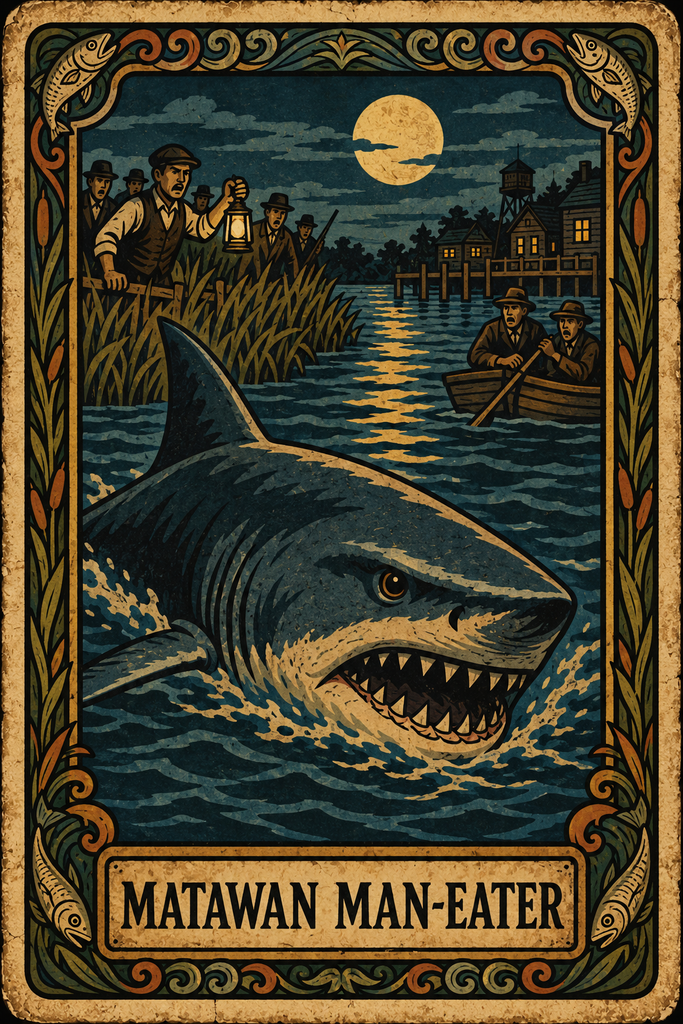
The Matawan Man-Eater refers to shark attacks that struck Matawan Creek during New Jersey’s deadly July 1916 outbreak. On July 12, a shark killed Lester Stillwell and attacked Stanley Fisher during the recovery effort. Fisher later died from his wounds. Joseph Dunn survived another attack farther along the creek.
The attacks triggered an extraordinary response, including armed searches, rewards, nets, and dynamite thrown into the creek. TIME later described the suspected attacker as the “Jersey man-eater” and connected the 1916 attacks with Jaws. Local histories, books, documentaries, and memorials have kept the Matawan story prominent in New Jersey folklore.
White Stag of Shamong (Quaker Bridge, Burlington County)
The White Stag of Shamong is a Pine Barrens warning legend centered on Quaker Bridge in Burlington County. A New Jersey military folklore handout places the stagecoach story in 1809. In the tale, a white stag blocks a coach traveling from Evesham during a storm. The driver then discovers Quaker Bridge washed away over the Batsto River. The delay saves the passengers from plunging into the water.
Arthur D. Pierce included the story in his 1957 book Iron in the Pines. A Pine Barrens history identifies it within Pierce’s chapter about Quaker Bridge. Later retellings describe the stag as a guardian appearing before danger. Philadelphia Magazine revisited the White Stag in 2026 among surviving Pine Barrens legends.

Hoppie, the Lake Hopatcong Monster (Lake Hopatcong)
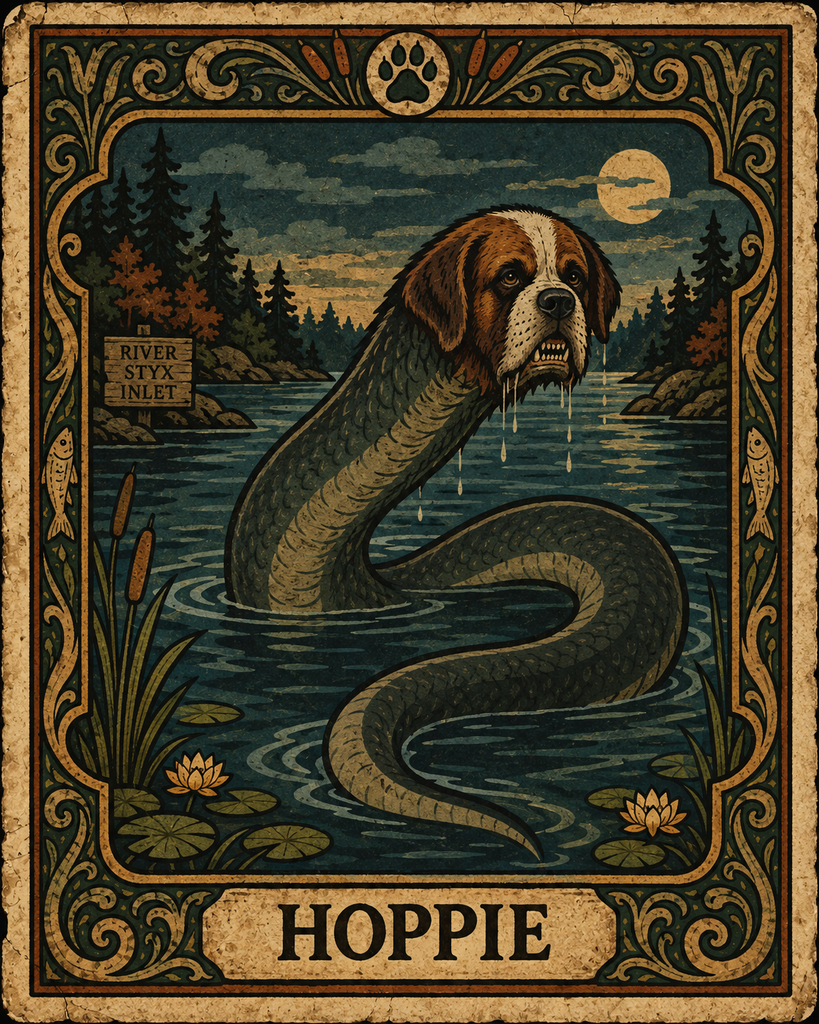
Hoppie is a Lake Hopatcong monster legend traced by modern retellings to reported 1894 sea-serpent sightings. Patch says the New York World described a creature with a St. Bernard’s head and snake-like body. Reports placed the creature near the River Styx inlet on the lake. Later accounts adopted the name Hoppie for Lake Hopatcong’s resident monster.
Separate from the older legend, a 2014 snake scare brought serpent stories back to Lake Hopatcong. Reptile specialist Gerald Andrejcak searched for the animal and reported nearly catching it near a boathouse. In 2022, the Sparta Independent called the lake’s serpent the locally famous “Snake in the Lake.” That continued circulation keeps Hoppie anchored in North Jersey lake folklore.