Texas
Texas cryptids and folklore span deserts, prairies, piney woods, borderlands, cities, and the Gulf Coast. The state’s legends draw from Indigenous traditions, Spanish and Mexican history, frontier settlement, ranching culture, and modern urban storytelling.
Texas stories include lake monsters, goatmen, ghost lights, winged humanoids, wild men, and haunted roadside figures. Fort Worth, San Antonio, Houston, Marfa, and the Big Thicket each contribute distinct regional legends. Modern Chupacabra reports add another layer to South and South-Central Texas folklore.
The Lake Worth Monster (Fort Worth / Greer Island)
The Lake Worth Monster is a Texas cryptid tied to Lake Worth near Fort Worth. The first major reports came from Greer Island on July 9, 1969. Three couples told police that a half-man, half-goat creature attacked them. Newspaper descriptions gave it fur, scales, and a strange animal cry. Later reports described a heavy, white-haired creature throwing a tire toward cars.
The sightings sparked a brief local monster panic around Greer Island and along the lakeside roads. Crowds came looking for the Goatman, sometimes with guns, alcohol, and traffic jams. Explanations ranged from pranks to misidentified animals, but no single answer settled the legend. The Fort Worth Nature Center still commemorates the story with Monster Bash events. That ongoing celebration keeps the Lake Worth Monster tied to Fort Worth folklore.

The Chupacabra (South and South-Central Texas)
The Chupacabra is a blood-drinking monster that entered Texas folklore after the earlier 1995 Puerto Rico reports. Early stories described a spiny, reptilian creature that attacked goats, sheep, and other animals. In Texas, the legend shifted toward hairless canids seen around ranches and rural roads. Reports often describe blue-gray skin, bony limbs, sharp teeth, and unnatural movement. South and South-Central Texas became major centers for these modern sightings.
Cuero rancher Phylis Canion helped define the Texas version after 2007 reports near her property. Other alleged Texas Chupacabras appeared as carcasses, patrol-camera footage, and captured strange animals. As the story spread, the Chupacabra became something of a pop culture icon, finding its place in the pantheon of the strange beasts of the Americas.

The Donkey Lady (San Antonio / Old Applewhite Bridge)
The Donkey Lady is a San Antonio ghost legend tied to Old Applewhite Bridge. The bridge sits on the city’s South Side, near Applewhite and Jett roads. Stories describe a disfigured woman with a donkey-like face, hooflike hands, and animal cries. Most versions say she suffered a fire, drowning, or violent attack involving her donkey. San Antonio Report says the local myth dates to the 1950s or earlier.
Cryptid and ghost tourists visit the bridge after dark, often honking or listening for braying from the woods. Retellings describe claw marks, cracked windshields, blood, and hoof sounds around passing cars. The story spread through South Texas folklore, ghost tours, local media, and neighborhood variants. A 2018 Donkey Lady hotline shows how the legend keeps moving through San Antonio.

The Houston Batman (Houston Heights / East Third Street)
The Houston Batman is a winged humanoid reported in Houston Heights. At about 2:30 a.m. on June 18, 1953, Hilda Walker saw a strange creature from her porch. Her neighbors Judy Meyer and Howard Phillips also reported seeing the figure. Descriptions gave it a six-and-a-half-foot manlike body, batlike wings, dark clothing, and a yellow glow. It appeared near a pecan tree before fading from sight.
The encounter reached the Houston Chronicle and became one of Houston’s strangest mid-century legends. Later writers compared it with Mothman because both stories involve winged humanoids and urban unease. Texas Standard notes the Houston report came before the Point Pleasant Mothman sightings. Unlike Mothman, the Houston Batman carries no strong disaster-omen tradition.

Marfa Lights (Presidio County / Paisano Pass)
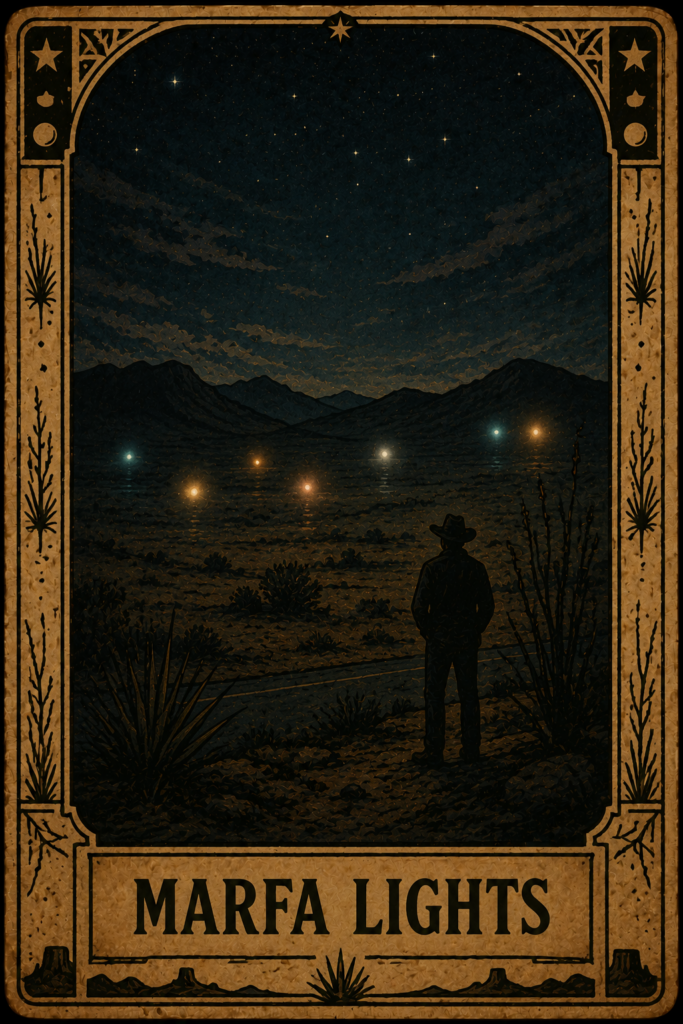
Marfa Lights are mysterious lights seen near Marfa and Paisano Pass in northeastern Presidio County. Viewers report colored lights that twinkle, move, divide, merge, disappear, and reappear. Texas records place the first historical report in 1883, through cowhand Robert Reed Ellison. Early settlers Joe and Sally Humphreys reported seeing the lights in 1885.
Later observers searched for causes without settling the mystery in local tradition. Cowboys, military observers, and World War II pilots all investigated the lights. Modern explanations include mirage-like atmospheric effects, but folklore keeps the lights stranger. The Marfa Mystery Lights Viewing Center opened east of Marfa in 2003.
Goatman of Old Alton Bridge (Denton County / Old Alton Bridge)
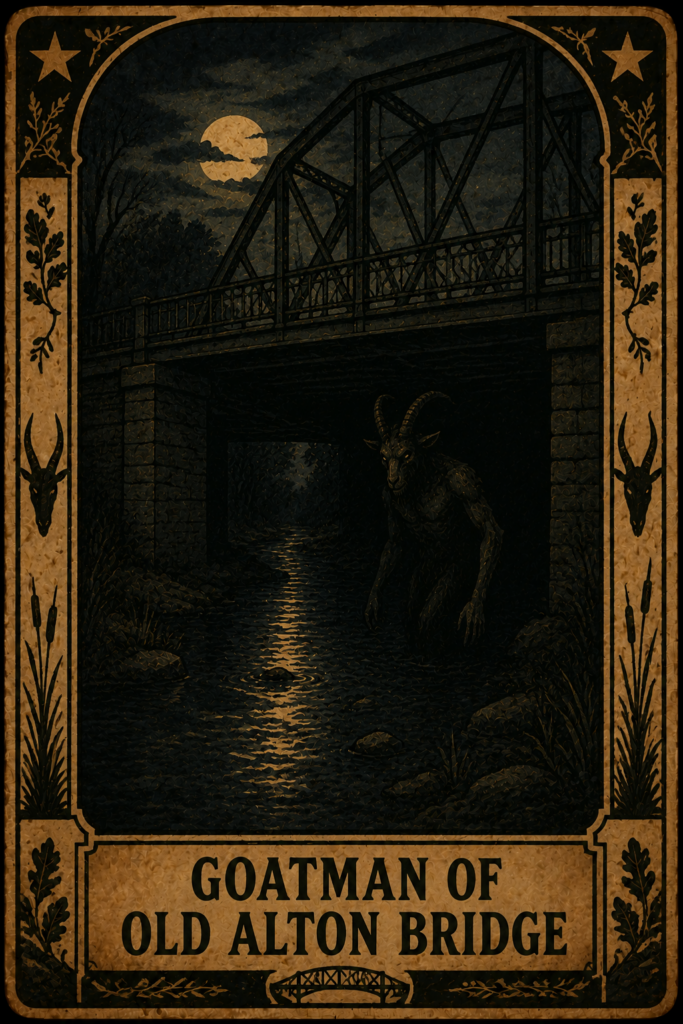
The Goatman of Old Alton Bridge is a North Texas ghostlore figure tied to Denton County. The legend centers on Old Alton Bridge, built in 1884 over Hickory Creek. Stories describe a half-goat, half-man figure haunting the bridge and surrounding woods. The best-known version links the Goatman to the alleged killing of Oscar Washburn.
Texas Standard reports little evidence that Washburn existed as described in the legend. Still, the story has become part of Denton’s cultural history. Visitors, paranormal investigators, and horror fans continue visiting the bridge at night. Modern retellings frame the Goatman as revenge folklore rooted in racial violence.
Wild Man of the Big Thicket (Southeast Texas / Big Thicket Region)
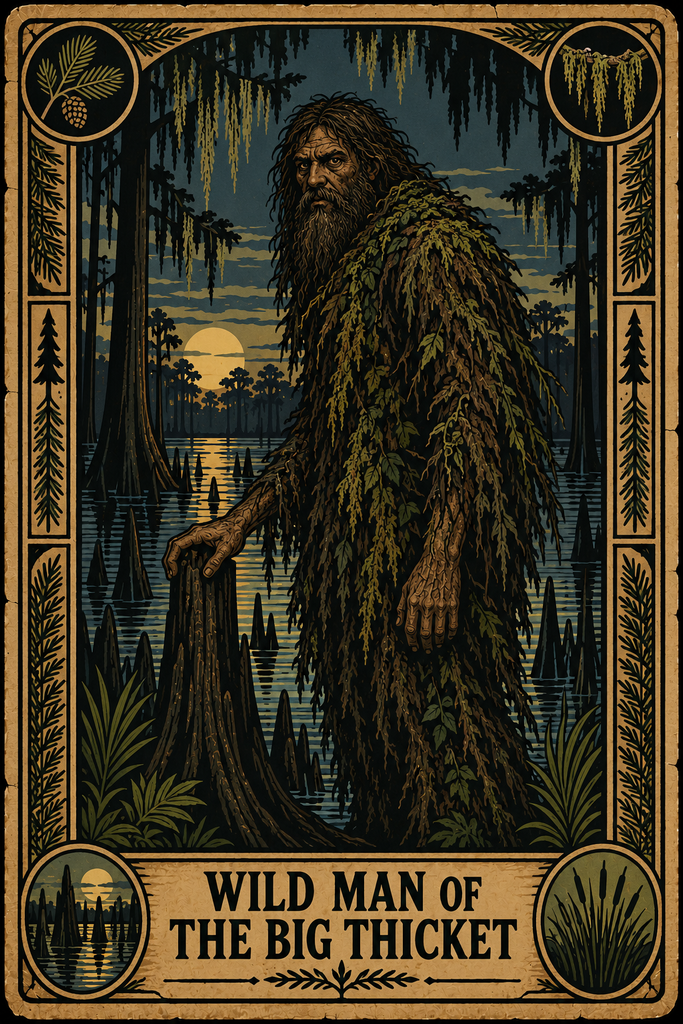
The Wild Man of the Big Thicket is a hairy wild-man tradition from southeast Texas. Stories place the figure in the dense forests, bayous, and isolated roads of the Big Thicket. Local names include the Wild Man, Old Mossy Back, and the Raggedy Man of Sour Lake. Later accounts often connect the figure with Texas Bigfoot and Sasquatch traditions.
The Big Thicket’s landscape helped support stories about hidden people, outlaws, deserters, and strange beings. The National Park Service describes the region as dense Piney Woods with swamps and isolated homesteads. Local reporting shows the wild-man tradition still circulating through talks, books, and museum events. That continuing attention keeps the legend anchored in southeast Texas folklore.