Montana
Montana cryptids and folklore pull from mountain forests, prairie roads, mining history, lake monsters, Bigfoot reports, and ghosts. Western Montana supplies many forest and lake stories, while the eastern plains contribute roadside and battlefield legends. Historic mining towns add their own hauntings.
Flathead Lake carries one of the state’s best-known monster traditions, while Yaak Valley has modern Sasquatch culture. The Pryor Mountains hold Crow Little People traditions, and Garnet preserves ghost stories tied to its mining past. Little Bighorn, Black Horse Lake, and western backroads add battlefield hauntings and roadside apparitions.
Shunka Warak’in (Madison Valley / Ennis, Montana)
The Shunka Warak’in is a wolf-like Montana legend centered on the Madison Valley. Naturalist Ross Hutchins later wrote that his grandfather, Israel Ammon Hutchins, killed a strange predator there in 1886. Accounts described dark fur, high shoulders, a narrow snout, and a hyena-like sloping back. Joseph Sherwood mounted the animal and displayed it at his Henrys Lake, Idaho store as the “Ringdocus.”
The mount disappeared after Sherwood’s collection left public display, but Jack Kirby tracked it down in 2007. It had been stored with Sherwood’s taxidermy at the Idaho Museum of Natural History. The specimen is now displayed at the Madison Valley History Museum in Ennis. The name Shunka Warak’in comes from Ioway tradition and means “carries off dogs.” That name was applied to the Montana specimen much later.

Flathead Lake Monster (Flathead Lake, Northwestern Montana)
The Flathead Lake Monster is a long-running lake-creature legend from Flathead Lake in northwestern Montana. Ella E. Clark’s 1966 collection records a Kootenai story about an antlered being beneath the lake’s winter ice. That tradition is culturally distinct from the later serpent-like creature reported by settlers and lake visitors.
Local histories usually date the modern monster tradition to 1889, when Captain James C. Kerr crossed the lake. He and about 100 passengers reportedly saw a large whale-like animal before a passenger fired at it. Flathead Lakers says more than 100 unusual-creature reports have since been documented, including thirteen during 1993. Later descriptions include eel-like bodies, serpentine movement, humps, and unusually large fish.

Hitchhiker of Black Horse Lake (Highway 87 near Great Falls, Montana)
The Hitchhiker of Black Horse Lake is a roadside ghost legend from Highway 87 northeast of Great Falls. Retellings describe a Native American man with long black hair, usually wearing denim or other plain clothing. Drivers see him walking or hitchhiking beside the highway at night. As they approach, he suddenly appears to collide with the vehicle.
Motorists report a heavy thump as the figure rolls across the hood or windshield. When they stop, they find no injured man and no damage to the car. One common version says he was once killed by a vehicle along the highway. Other tellings have him reappear farther down the road after the driver continues toward Fort Benton.

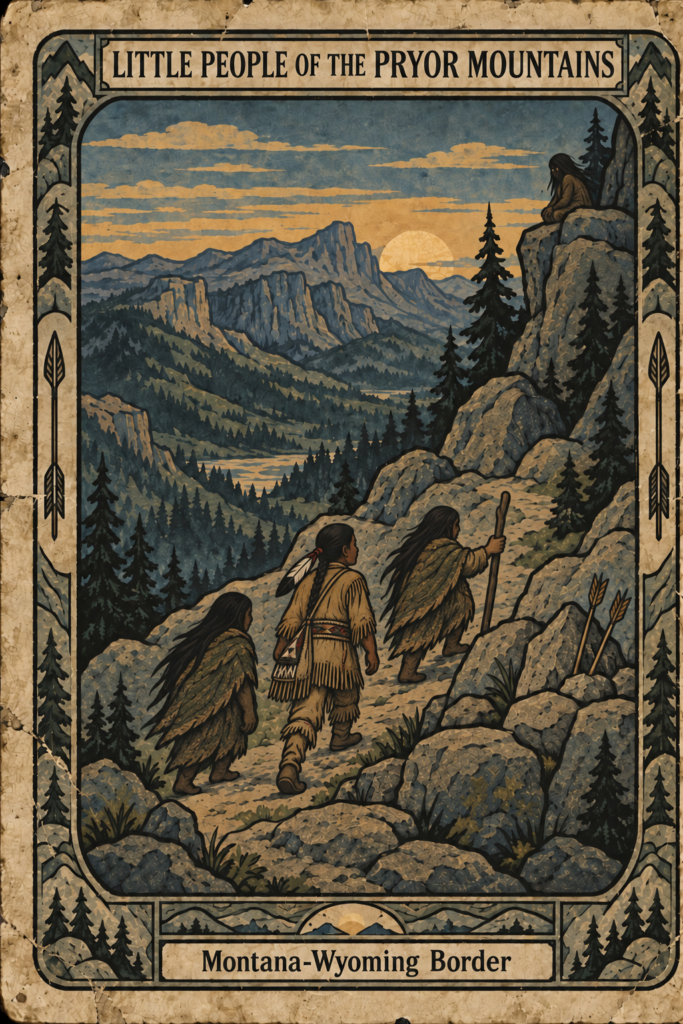
Little People of the Pryor Mountains (Montana-Wyoming Border)
Crow tradition places powerful Little People throughout the Pryor Mountains along the Montana-Wyoming border. They are described as small but extraordinarily strong beings connected with sacred places, visions, hunting, and spiritual power. Crow elder Burton Pretty On Top describes asking their permission before entering the mountains.
Stories say the Little People aided a lost Crow boy and taught him how travelers could cross safely. Offerings, prayers, and arrow-shooting traditions became associated with passage through the Pryors. Crow cultural leaders continue to describe the mountains as a living sacred landscape connected with these beings.
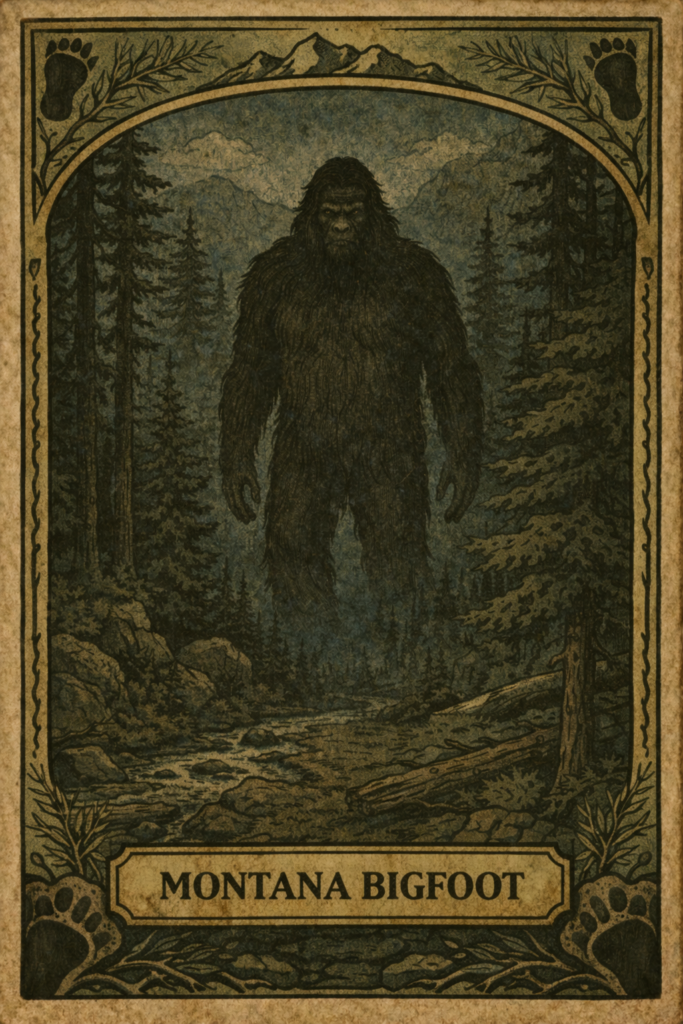
Montana Bigfoot (Yaak Valley and western Montana forests)
Montana Bigfoot reports are concentrated largely in western counties, especially around Missoula and the forested northwest. As of October 2026, the BFRO Montana database lists 55 reports statewide. Missoula County has nine listings, while Lincoln County has two. A 2024 Lincoln County report described possible footprints and whoops near Weasel Cabin in Kootenai National Forest.
Yaak has also incorporated Sasquatch into local events and tourism. The Western News covered a 6.2-kilometer Sasquatch Run during the 2019 Yaak Sasquatch Festival. Big Sky Journal later noted Bigfoot images scattered around the Yaak River Tavern. Western Montana tourism still directs visitors to photograph the Sasquatch figure outside the tavern.
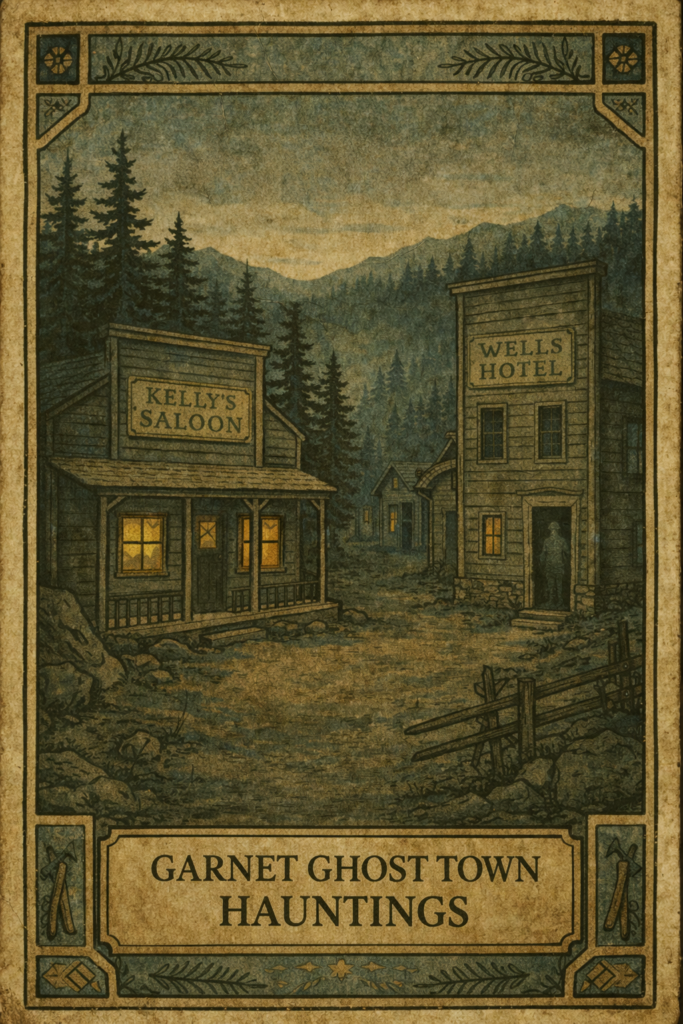
Garnet Ghost Town Hauntings (Garnet Ghost Town, near Missoula)
Garnet stands in the Garnet Mountains east of Missoula, at the head of First Chance Gulch. In 1895, Dr. Armistead Mitchell built a stamp mill that helped create the settlement. By January 1898, nearly 1,000 people lived there. Mining declined after 1900, and a 1912 fire destroyed many commercial buildings. By the 1940s, Garnet had largely become a ghost town.
Southwest Montana Travel identifies Kelley’s Saloon and the Wells Hotel as centers of Garnet’s ghost stories. Visitors report music and laughter inside the saloon when the building is empty. Caretakers have reported footsteps and shutting doors inside the hotel. Condé Nast Traveler says Garnet now receives about 30,000 visitors annually. The Bureau of Land Management and Garnet Preservation Association continue preserving its surviving buildings.
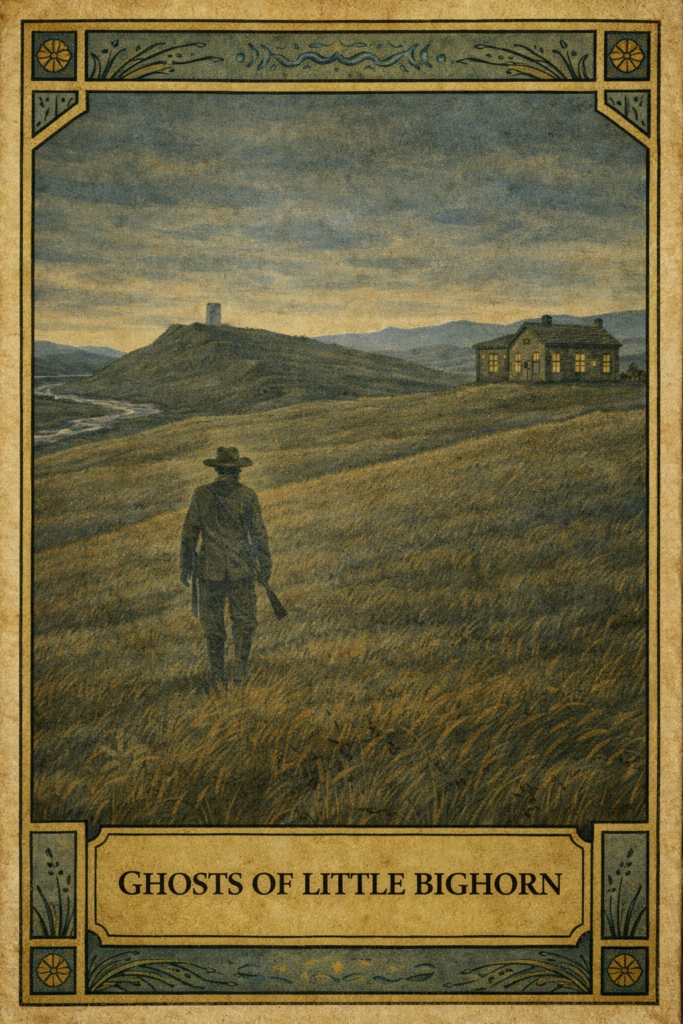
Ghosts of Little Bighorn Battlefield (Little Bighorn Battlefield area)
The Battle of the Little Bighorn took place along the Little Bighorn River in south-central Montana on June 25 and 26, 1876. Lakota Sioux, Northern Cheyenne, and Arapaho warriors fought the 7th Cavalry and its Crow and Arikara scouts there. Last Stand Hill marks the end of the Custer fight, and the National Park Service says about 40 to 50 men were cornered there before the battle closed.
Ghost stories later attached themselves to the battlefield. HistoryNet wrote that archaeological work there reawakened haunting memories, and Cowboys & Indians described the Stone House as the center of reported supernatural encounters. The Stone House was built in 1894 as the superintendent’s residence, and later accounts there include lights turning on, blocked doors, shadow figures, and a 1986 ranger sighting of a soldier apparition.