New York
New York cryptids and folklore range from Adirondack Bigfoot reports to lake monsters, river creatures, ghosts, and nineteenth-century hoaxes. Lake Champlain and the Finger Lakes contribute especially strong traditions of serpents and unexplained creatures.
The Hudson Valley adds the Kinderhook Creature and Sleepy Hollow’s Headless Horseman. Silver Lake and Lake George preserve famous monster hoaxes alongside genuine local legends. Long Island’s Montauk Monster shows how newer sightings can quickly enter New York folklore.
Champ (Lake Champlain, Northeastern New York)
Champ is Lake Champlain’s best-known monster legend, with many reports centered on the New York shoreline. Abenaki tradition also includes Gitaskog, a spiritual great horned serpent associated with Pitawbagw, or Lake Champlain. The first major printed monster report appeared in the Plattsburgh Republican on July 24, 1819. Captain Crum claimed he saw a huge black creature in Bulwagga Bay near Port Henry.
Reports multiplied in 1873, including accounts from a railroad crew and Clinton County Sheriff Nathan H. Mooney. Later sightings, photographs, television coverage, and local celebrations kept Champ prominent around the lake. Port Henry declared its waters a safe haven for Champ in 1981. A Pomeroy Foundation marker in Plattsburgh now identifies Champy as a regional New York folklore icon.

Kinderhook Creature (Kinderhook, Columbia County)
The Kinderhook Creature is a Bigfoot-style legend centered on Kinderhook and surrounding Columbia County. Reports clustered from the late 1970s through the early 1980s. Bruce Hallenbeck’s family reported hairy, upright creatures, strange vocalizations, and unexplained activity around their property. A letter to Times Union columnist Barney Fowler helped spread the story and the Kinderhook Creature name.
In November 1980, Barry Knights and Russell Zbierski reported several large, hairy figures near Cushing’s Hill. A separate 1983 sighting involved Joyce Gifford and her daughter near Valatie. Gifford described a tall, light-brown, hairy figure rising from a crouch and crossing a pasture. Hallenbeck later collected the local reports in his 2022 book about the Kinderhook Creature.

The Monster of Silver Lake (Silver Lake, Wyoming County)
The Silver Lake monster story erupted near Perry in July 1855. A July 18 Wyoming Times report described a fishing party encountering a serpent-like creature beside their boat. A 1915 history of Perry later reprinted the newspaper account and other 1855 reports. Sightings multiplied, drawing crowds, search parties, and even whaler Daniel Smith with harpoons and lances.
Two years later, the Walker Hotel burned, exposing remnants of a mechanical serpent in the ruins. The William G. Pomeroy Foundation says the hotel owner built it from wire, painted canvas, bellows, and hoses. The device could rise and sink in the lake, startling fishermen and attracting visitors. Perry still celebrates the story with Sea Serpent festivals, parades, replicas, and public artwork. A 2024 Legends & Lore marker at Silver Lake commemorates the hoax.

Adirondack Bigfoot (Adirondack region)
Adirondack Bigfoot is a regional modern legend rather than a single one-night incident. The BFRO’s New York listing includes a 2022 report from Franklin County in the Adirondacks northwest of Lake Placid. Its county pages also list Adirondack-area reports near Keeseville, the Ausable River, Cascade Lake, Minerva, Keene Valley, Indian Lake, and Wells. Those reports give the story a clear foothold in the Adirondack interior rather than one isolated town.
The legend also moved into public event culture in the Adirondack region. In 2024, Whitehall’s annual Adirondack Sasquatch Festival drew thousands of visitors, with organizers calling Sasquatch a beloved local entity.

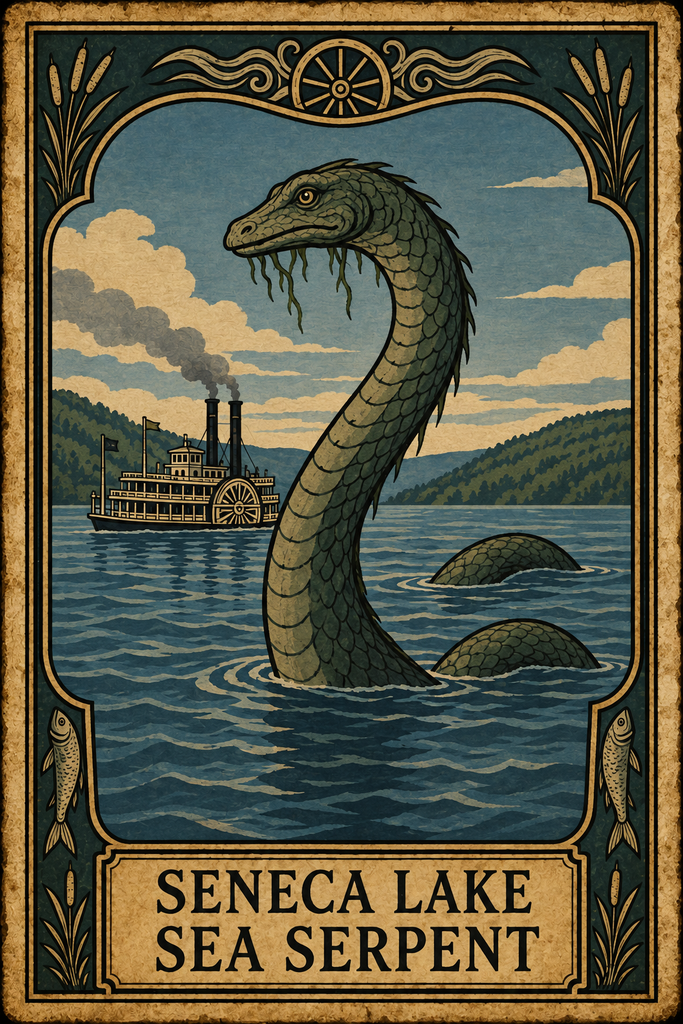
Seneca Lake Sea Serpent (Seneca Lake, Finger Lakes region)
Seneca Lake carries a long sea-serpent tradition in New York’s Finger Lakes. One famous account dates to July 14, 1899, aboard the side-wheel steamer Otetiani. The Finger Lakes Museum says passengers and crew first mistook a large object for an overturned boat. Captain Carleton Herendeen brought the vessel within about 100 yards before the object moved away. Later accounts described a large head, sharp teeth, and a long body moving through the lake.
Newspapers carried differing versions of the encounter, including descriptions ranging from roughly 25 to 90 feet. Seneca County historian Walter Gable later collected the 1899 reports among the lake’s serpent stories. Geneva gave the legend an unusual civic role in 2015. The city added Section 206-2 prohibiting anyone from hunting, trapping, or harming the Seneca Lake Monster. The ordinance also protects any descendants the creature might have.
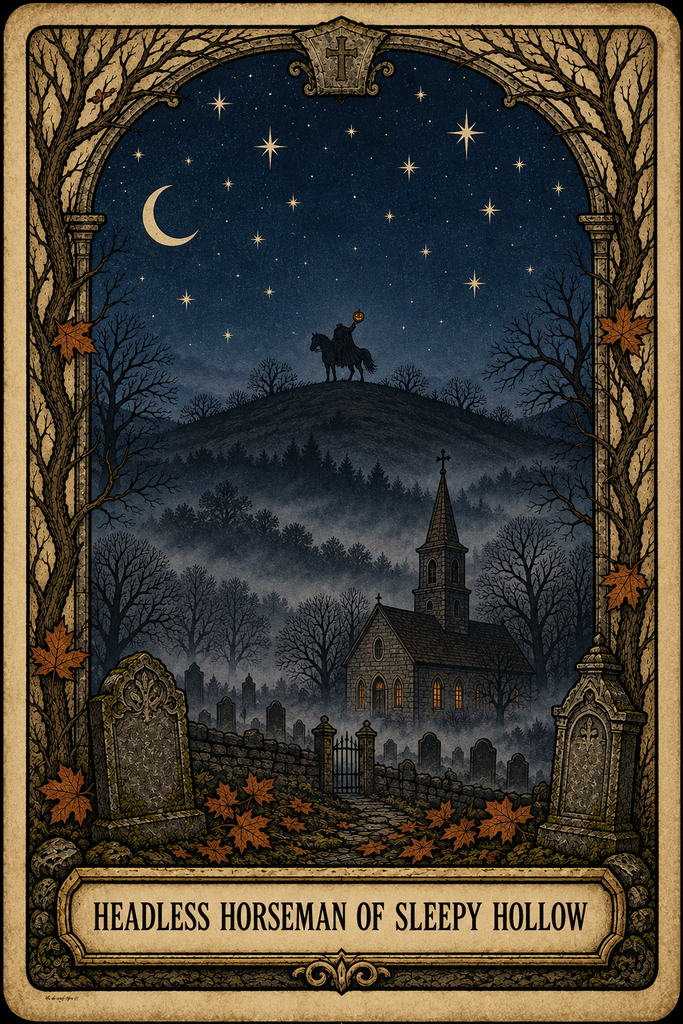
Headless Horseman of Sleepy Hollow (Sleepy Hollow, Westchester County)
Washington Irving published “The Legend of Sleepy Hollow” in 1820 within The Sketch Book of Geoffrey Crayon, Gent. The Headless Horseman is a spectral Hessian soldier searching for his missing head. Irving places his reputed grave in the churchyard surrounding the Old Dutch Church, founded around 1685. Ichabod Crane’s famous nighttime flight ends near the church and its bridge.
Sleepy Hollow still builds much of its autumn identity around Irving’s Horseman. The village promotes performances, haunted hayrides, tours, and Halloween events tied to the legend. Visitors can also follow landmarks associated with Ichabod’s ride through the village. Historic Hudson Valley continues seasonal programs at Sunnyside and other sites connected with Irving’s story.
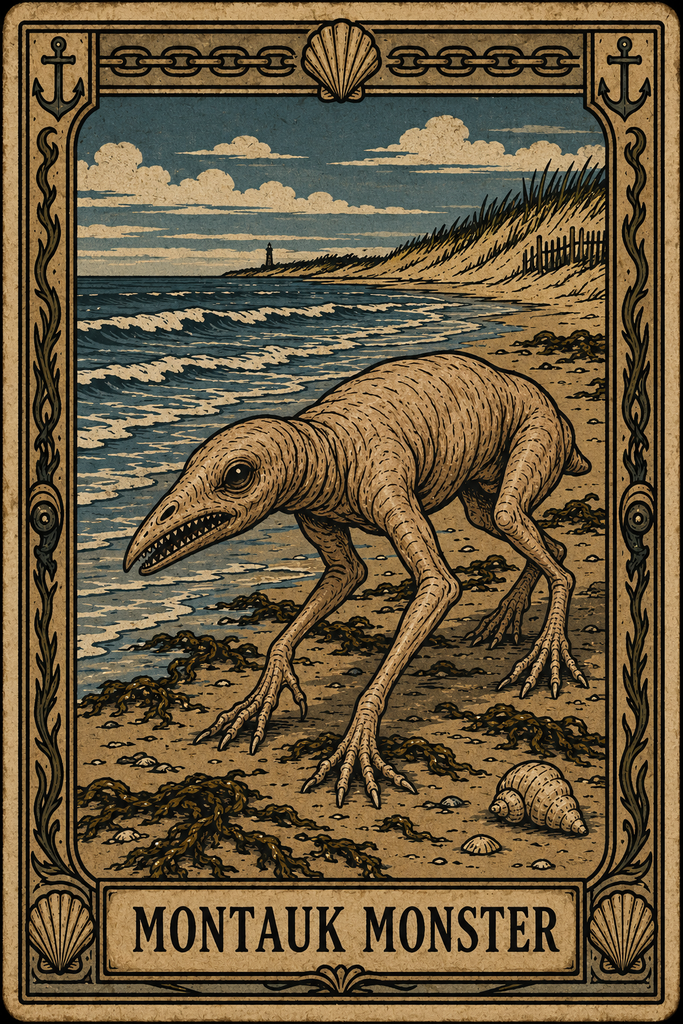
Montauk Monster (Montauk, Long Island)
In July 2008, Jenna Hewitt photographed a strange carcass on the beach in Montauk. The East Hampton Star says the image traveled around the world. Skeptical Inquirer says the carcass soon drew theories involving hidden experiments, hoaxes, and unknown animals.
The story stayed attached to Montauk after the carcass disappeared. In August 2008, the East Hampton Star said the image had captivated millions and spawned many identities. Later, in 2020, the same paper reported that people were still talking about the original photo 12 years later.
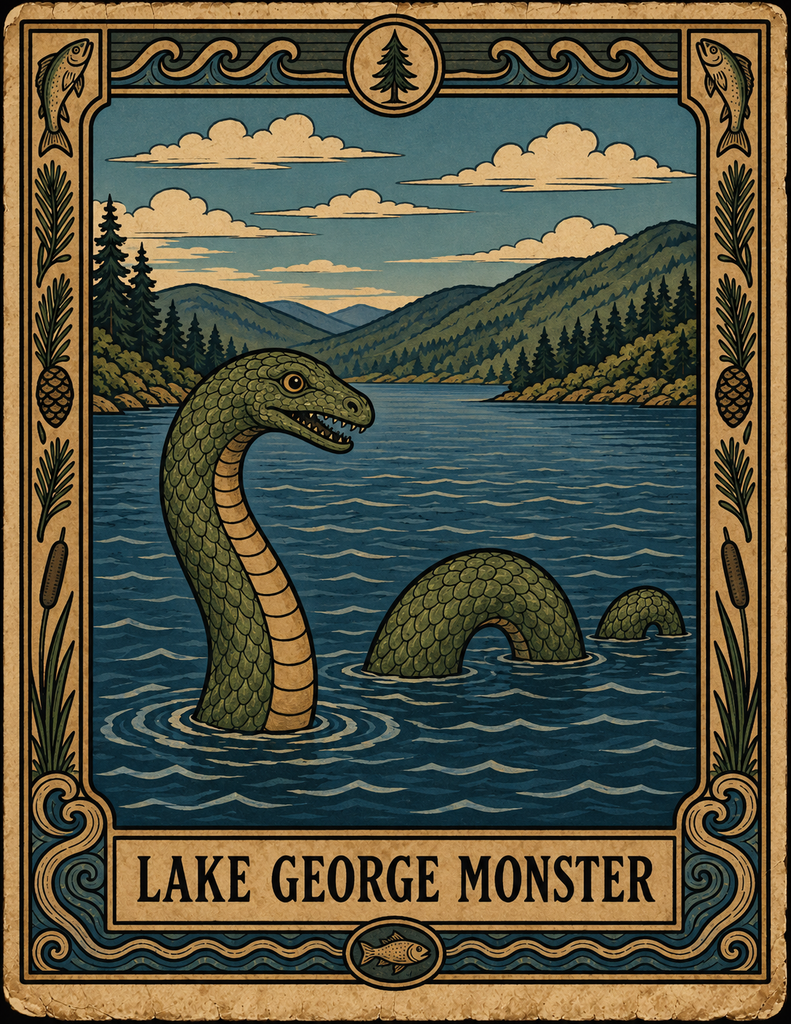
Lake George Monster (“Georgie”) (Hague Bay, Lake George)
The Lake George Monster began as a documented 1904 practical joke near Hague Bay. Artist Harry Watrous built a ten-foot cedar monster after newspaper editor William d’Alton Mann fooled him with a fake trout. Watrous painted its head, added glass eyes and teeth, and operated it through an underwater pulley. Moving the creature along shore helped spread rumors of a genuine Lake George monster.
Watrous publicly recounted the prank in 1934, while the creature later became known as George or Georgie. The Lake George tourism site still includes Georgie among the region’s local stories. The purported original is preserved at Hague’s historical museum, while another museum holds a replica. The prank remains an unusual piece of Adirondack monster folklore.