Connecticut
Connecticut cryptids and folklore include colonial legends, strange creatures, haunted places, roadside ghosts, and stories associated with the Devil. Centuries-old towns, wooded hills, river valleys, and the Long Island Sound coastline give these traditions distinct local settings.
Connecticut’s legends range from the Glawackus and Winsted Wildman to supernatural tales attached to roads, rocks, and historic buildings. Other stories involve unexplained sounds, unusual animal sightings, and hauntings connected to abandoned institutions and old communities.
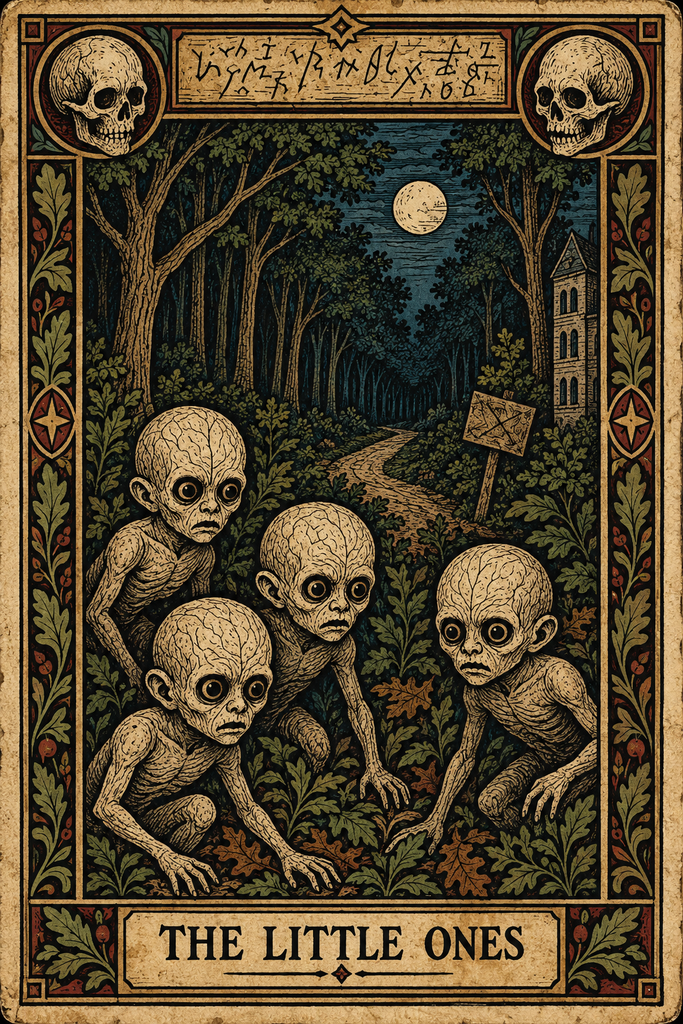
Melon Heads (Southwestern Connecticut)
The Melon Heads are small, large-headed humanoids from southwestern Connecticut folklore. Stories circulated across Shelton, Trumbull, Monroe, Milford, and neighboring communities. One origin story makes them escaped asylum patients who retreated into the woods. Another describes descendants of an outcast family accused of witchcraft.
Different towns attach the Melon Heads to secluded local roads. Saw Mill City Road serves that role in Shelton. In Monroe, local reporting places them along Velvet Street, also called Dracula Drive. One story describes girls finding child-sized figures inside their blue Ford Granada after searching nearby woods. Some versions claim the Melon Heads still drive the Granada.
Winsted Wildman (Winsted and Colebrook)
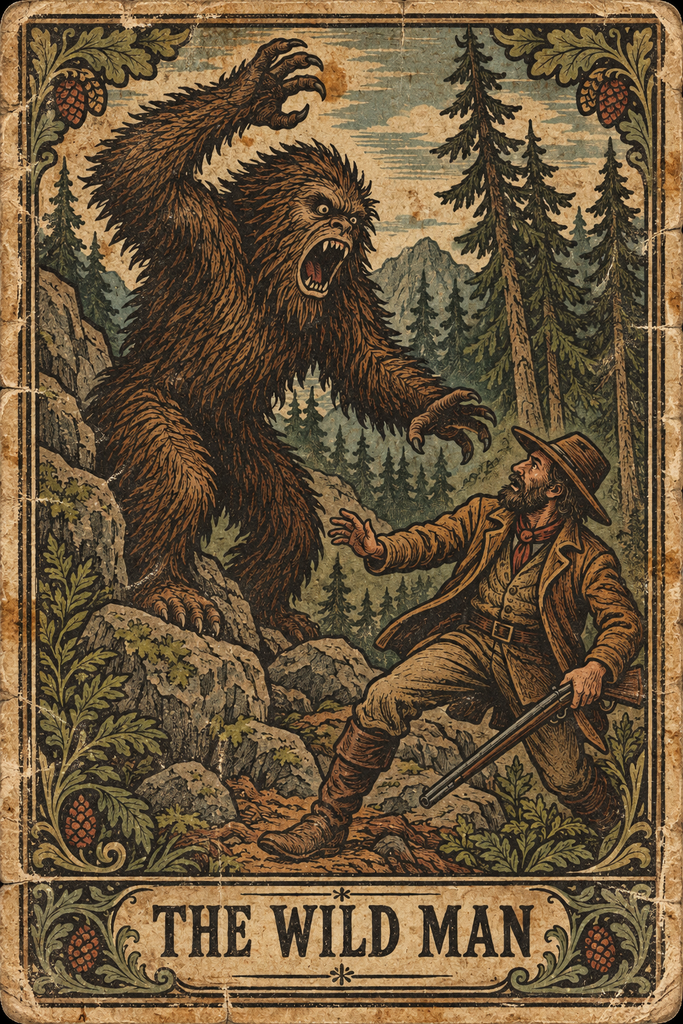
The Winsted Wildman entered Connecticut newspapers during a series of reports in August 1895. Winsted selectman Riley Smith encountered a large, naked man covered with black hair while traveling near Colebrook. Smith said the figure burst from bushes, cried loudly, and fled rapidly into the woods. His frightened bulldog reportedly cowered between Smith’s legs during the encounter.
In July 1972, Wayne Hall and David Chapman reported an eight-foot hairy figure near Crystal Lake Reservoir. They watched it walk upright near a barn before disappearing into the woods. Two couples reported another hair-covered creature near Rugg Brook Reservoir in September 1974. Police searched afterward but found no tracks or other evidence.
Glastonbury Glawackus (Glastonbury)
The Glawackus appeared during a wave of strange animal reports around Glastonbury in January 1939. Pets and livestock were found mutilated, while residents reported screams, large tracks, and glimpses of an unfamiliar predator. Descriptions varied between a mountain lion, large bobcat, doglike animal, or stranger combinations. Newspapers named the creature the Glawackus as coverage spread beyond Glastonbury.
Residents organized hunts, but the creature escaped capture as newspapers continued reporting new encounters. The Historical Society of Glastonbury preserves wooden Glawackus footprints once used to fool local residents. Later Connecticut reporting continued revisiting the 1939 panic and its unusual newspaper history. In 2026, Hartford Athletic introduced Dillon, a mascot based on the Glawackus.

Black Dog of the Hanging Hills (Hanging Hills, Meriden)
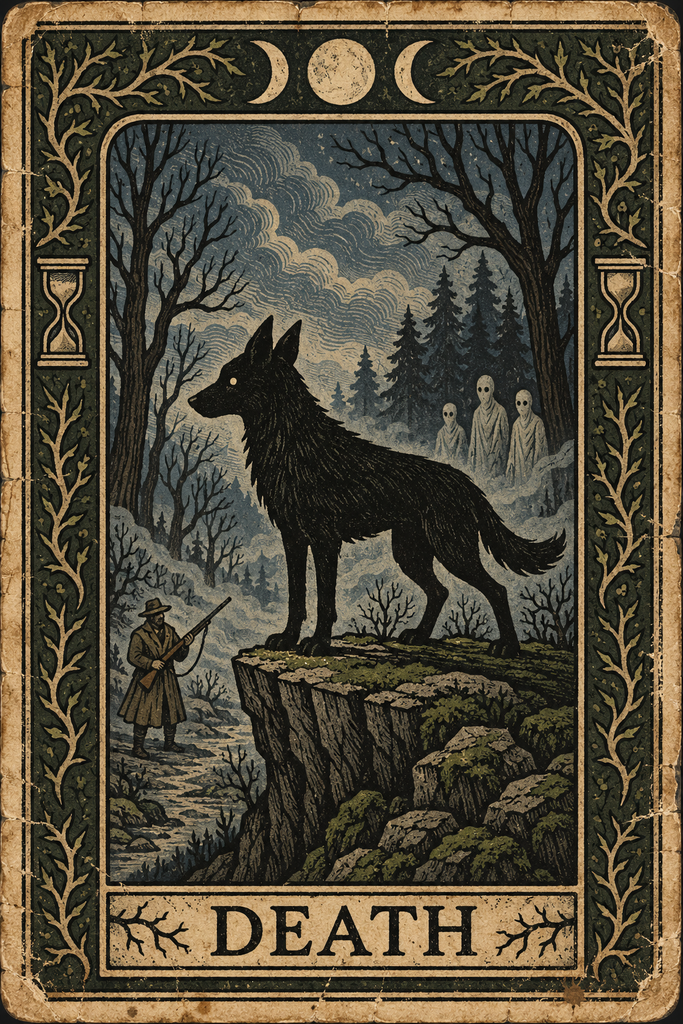
The Black Dog of the Hanging Hills is a silent phantom hound associated with Meriden’s rocky ridges. The familiar written version appeared in W.H.C. Pynchon’s 1898 story “The Black Dog”. Pynchon described a short-haired black dog that made no sound and left no footprints. His story says one sighting brings joy, two bring sorrow, and a third brings death. The fictional narrator watches the dog appear before companion Herbert Marshall falls from West Peak.
Geologist John Rodgers gave the legend an unusual official appearance in 1985. His Bedrock Geological Map of Connecticut includes a tiny black dog beside the Hanging Hills. Yale’s geology newsletter explained that Rodgers added the symbol from his interest in local legend. The Connecticut Geological Survey still lists Rodgers’s 1985 map among its statewide geological publications.
Moodus Noises (Moodus and East Haddam)
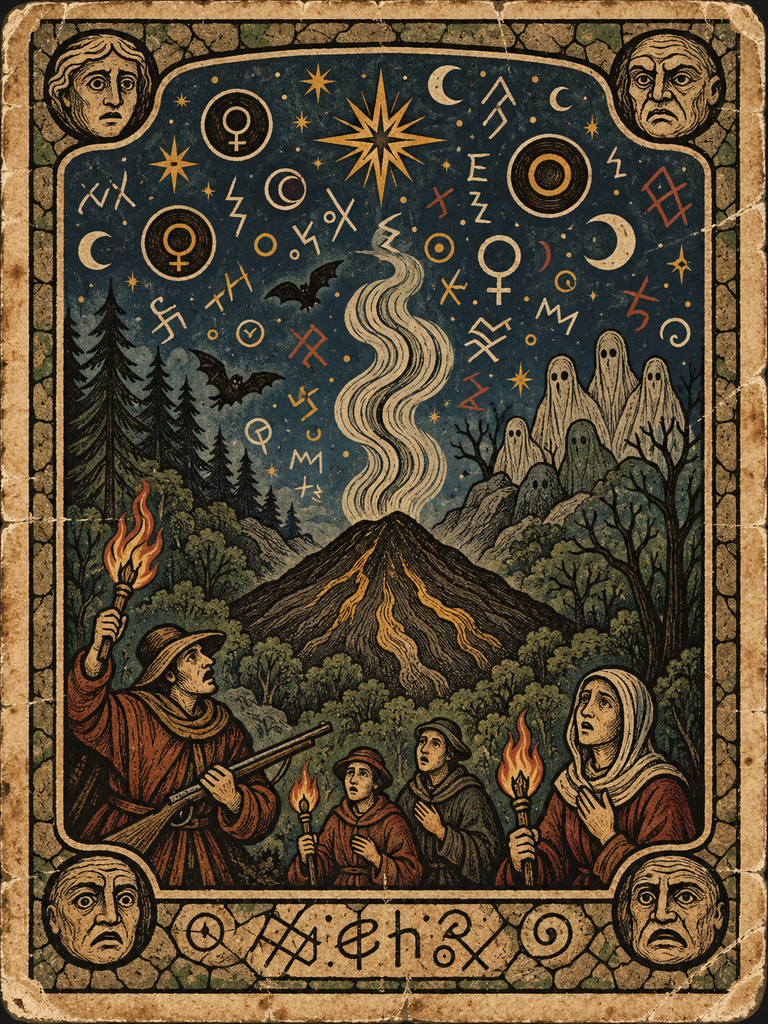
The Moodus Noises are underground booms and rumblings long associated with Moodus and East Haddam. The Wangunk name Machemoodus is commonly translated as “Place of Noises.” Colonial accounts recorded Indigenous explanations for the sounds before English settlement. Reverend Stephen Hosmer described repeated explosions and thunder-like sounds in a 1729 letter.
Hosmer wrote that some noises shook houses and everything inside them. The phenomenon is now associated with the seismically active Moodus area. More than 500 small earthquakes were recorded during a 1981 swarm, many originating at unusually shallow depths. The village still carries the name derived from the noises.
The Jewett City Vampires (Jewett City, Griswold)
The Ray family became linked to a documented vampire panic in Jewett City during 1854. Several relatives had died from consumption, the nineteenth-century term for tuberculosis. When another son became ill, relatives believed the dead were feeding upon surviving family members. On May 8, they exhumed Lemuel and Elisha Ray and burned their remains in the cemetery.
The May 24, 1854 Norwich Weekly Courier reported the ritual under the headline “Strange Superstition.” The article described a belief that undecomposed relatives could continue consuming the living. Archaeologists later found evidence of similar anti-vampire practices elsewhere in Griswold. The Ray graves remain in Jewett City Cemetery, including those of Lemuel and Elisha.

Downs Road Monster (Downs Road, Bethany and Hamden)
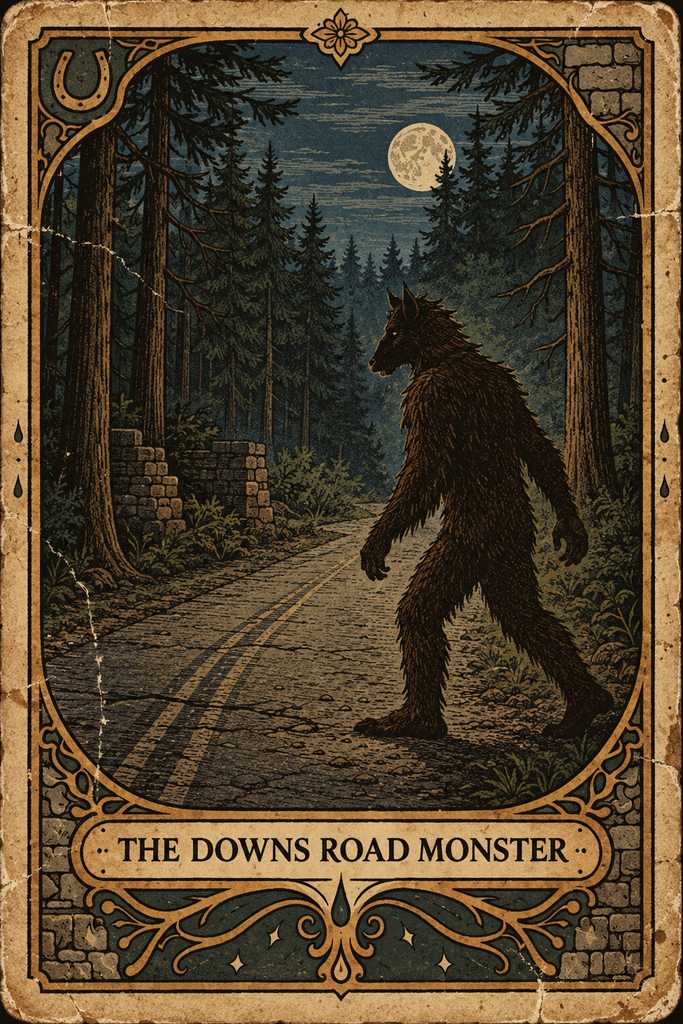
The Downs Road Monster is a modern legend tied to the abandoned section of Downs Road. A 2012 Bethwood Patch report described it as a four-to-five-foot “abbreviated yeti.” Another version describes a large white beast sprinting through the surrounding forest. Some local retellings explain the creature as an albino horse escaped from a nearby farm.
Downs Road carries several overlapping ghost and monster stories, including apparitions, strange lights, and the Monster. A 2006 account repeated a childhood story about the Monster killing a couple parked along the road. By 2011, the abandoned stretch was gated to vehicles but remained part of the Quinnipiac Trail. Connecticut’s official tourism site now lists Downs Road among the state’s haunted hiking locations.
Connecticut River Serpent (Cromwell and the Connecticut River)
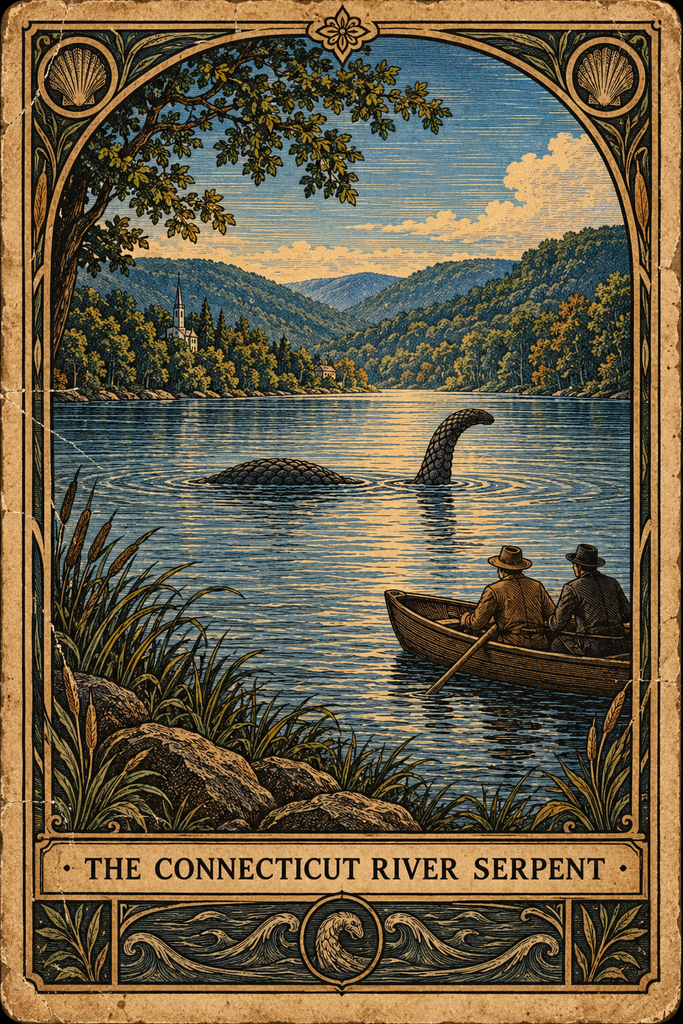
The Connecticut River Serpent became a major local story near Cromwell on September 8, 1886. Two men crossing toward Portland said something struck their boat and threw it into the air. Reports described a hundred-foot creature with a barrel-sized head, large eyes, and a long black body. Local historian Richard Donohue notes that later accounts incorrectly named the witnesses Colonel Stocking and Silas Sage. Both men had died in 1876.
Later river-serpent stories appeared elsewhere along the Connecticut River, and modern retellings call the creature Connie. In April 2025, the Connecticut River Conservancy published an elaborate Connie investigation as an April Fool’s joke. The post directed readers to the Connecticut River Museum in Essex for more about the legend. The museum also featured Connie in a 2025 children’s event and offered a serpent plush.
Hobbomock and Sleeping Giant (Sleeping Giant, Hamden)
Sleeping Giant is a traprock ridge in Hamden whose profile resembles a reclining human figure. Local legend identifies that figure as Hobbomock, a powerful supernatural being. In the familiar story, Hobbomock stamped the earth and diverted the Connecticut River in anger. A benevolent spirit then placed him under an eternal sleep, leaving his body stretched across the landscape. The modern Sleeping Giant version appears in Rachel Hartley’s 1943 history of Hamden.
The story spread through local histories, park literature, and generations of visitors to Sleeping Giant. The Sleeping Giant Park Association presents the Hobbomock legend as part of the mountain’s cultural history. Connecticut State Parks also recounts Hobbomock’s anger, the altered river, and his enchanted sleep. The legend now accompanies one of Connecticut’s most recognizable natural landmarks.
