Ohio
Ohio’s cryptid lore ranks among the richest in America, blending Native traditions, frontier myths, and modern monster sightings. The state’s Appalachian hills in the east fuel Bigfoot reports, while rivers, cemeteries, and rural lakes add their own share of ghostly and monstrous legends.
From horned lake creatures and colossal serpents to glowing-eyed cemetery phantoms, Ohio’s folklore captures the meeting point of campfire tales and cryptid encounters. These stories continue to define the state’s reputation as one of the country’s most active centers of strange and unexplained phenomena.
The Loveland Frogman (Loveland, Little Miami River)
The Loveland Frogman is a local legend tied to Loveland and the Little Miami River. Local lore places its earliest famous encounter in 1955, when a businessman reported three strange figures near the river. Later retellings describe short, leathery, frog-like or lizard-like beings, sometimes carrying a sparking wand. A 2024 Ohio Newsroom account traces how those details became part of the modern legend.
On March 3, 1972, officer Ray Shockey reported a strange animal near Riverside Drive and the Totes factory. Later that month, officer Mark Mathews encountered another animal in the same area. Mathews later said he had shot a large tailless iguana, which Shockey identified as the same creature. Loveland now celebrates the Frogman through its official city mascot and public events.
From the Folk Bestiary shop


Products and checkout are handled by Redbubble.

Ohio Grassman (Eastern Ohio, especially Salt Fork State Park)
The Ohio Grassman is a regional Bigfoot legend tied to eastern Ohio, especially Salt Fork State Park. Ohio Magazine says Ohio sightings often use Grassman as another name for Bigfoot or Sasquatch. It also says Guernsey County has ranked among the state’s busiest Bigfoot areas since 1995.
Salt Fork became the creature’s best-known Ohio home after repeated reports near the park from the mid-1980s onward. Visit Guernsey County says more than 36 sightings reached researcher Don Keating there after the mid-1980s.

Charles Mill Lake Monster (Charles Mill Lake, near Mansfield)
The Charles Mill Lake Monster is a humanoid legend from Charles Mill Lake near Mansfield. Richland Source traces its best-known encounter to late March 1959. Denny Patterson, Wayne Armstrong, and Michael Lane reported a seven-foot, seemingly armless figure emerging from the lake. Later accounts say officers found tracks resembling skin-divers’ footgear near the shore.
Cryptozoologist Loren Coleman later wrote that another luminous, green-eyed creature was seen there in 1963. In 2015, the marina still displayed the monster story for visitors. Richland Source also listed a 2022 Lake Monster kayak tour at Charles Mill.

The Crosswick Serpent (Crosswick near Waynesville, Warren County)
The Crosswick Serpent comes from a dramatic newspaper story published on May 29, 1882. The Western Star placed the encounter near Crosswick, a small settlement north of Waynesville in Warren County. It said Ed and Joe Lynch saw a huge reptilian creature while fishing beside a creek. The report described long forelegs, hind legs, yellow spots, and a hollow sycamore tree.
The same report said nearby workers heard the boys, rescued one child, and later joined a large pursuit. It also said about sixty men chased the creature until it disappeared under rocks in a hill. The Warren County Historical Society republished the article from its archives in 2020.

Orange Eyes (Central Ohio and Charles Mill Lake)
Orange Eyes is an Ohio monster legend associated with central Ohio and later Charles Mill Lake retellings. Daniel Cohen described the creature as a central Ohio variation of the lovers’-lane monster. Later accounts portray a large, hairy humanoid distinguished by glowing orange eyes. Modern Ohio folklore research traces much of the written tradition to Cohen and later retellings.
The legend became increasingly linked with Charles Mill Lake during later decades. Richland Source records reported Orange Eyes encounters in 1963, 1968, and 1991. Writers also blended the creature with the separate Charles Mill Lake Monster tradition. That overlap helped keep Orange Eyes circulating as a distinctive Ohio monster legend.

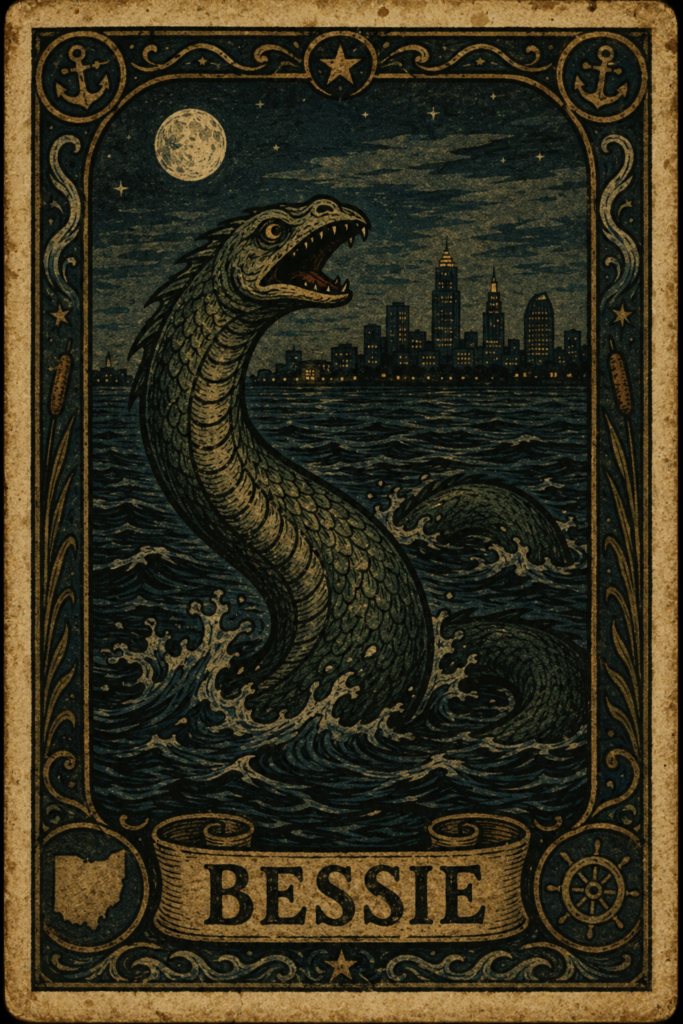
Bessie (Lake Erie Monster / South Bay Bessie) (Lake Erie, especially the Ohio shoreline near Sandusky and Cleveland-area waters)
Bessie is Lake Erie’s monster in Ohio folklore, especially along the shoreline near Cleveland and Sandusky. Ideastream calls Bessie a monster of legend and notes serpent-like sightings since the eighteenth century. Many retellings also call her South Bay Bessie, which ties the legend to the Sandusky side.
The legend still circulates in public culture around Lake Erie. Ideastream featured Bessie in 2020 and 2024, and Ohio promoted her again in 2025. That continuing use keeps Bessie anchored to Ohio’s Great Lakes folklore.
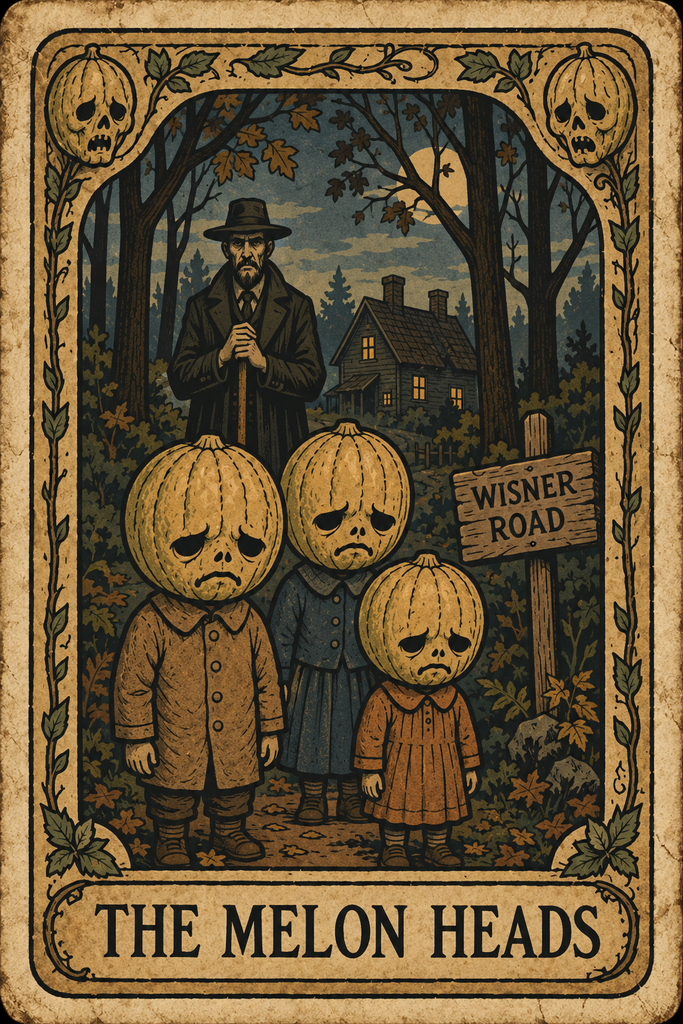
The Melon Heads (Kirtland, Chardon, and Wisner Road)
The Melon Heads are a northeast Ohio legend tied to Kirtland, Chardon, and wooded stretches of Wisner Road. News 5 says most versions involve Dr. Crow and children with enlarged heads living near the woods. Some stories portray Crow as their caretaker, while others say he performed experiments on them. After his death, the children supposedly remained in the surrounding forest.
Wisner Road became a nighttime rite of passage for local teenagers searching for the Melon Heads. Residents recalled driving the wooded road, lowering their windows, and listening for the creatures. The legend inspired the locally produced 2024 film The Melon Heads: House of Crow. Sold-out screenings showed the story still had a strong following around Kirtland and Mentor.
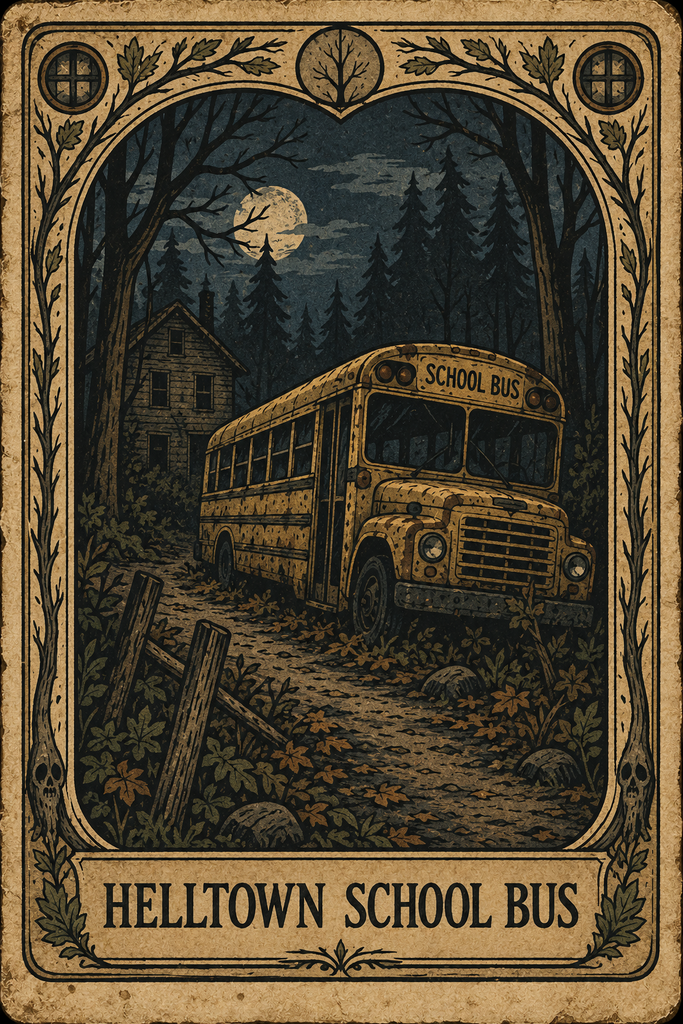
Helltown School Bus (Boston Township, Cuyahoga Valley area)
The Helltown School Bus legend belongs to Boston Township in Summit County. Helltown folklore grew after federal land purchases reshaped the valley in the 1970s. Cleveland Magazine and Ohio folklore writers both list the bus among the area’s best-known stories. The legend places a haunted bus in the woods with dead children or a killer inside.
Later retellings kept the bus tied to abandoned roads and boarded houses. Ohio Forgotten says visitors expected ghostly passengers, while Cleveland Magazine traced the bus to a displaced family. Ghosts of Ohio likewise said the bus once served as temporary housing.
Helltown Satanic Church (Boston Township, Cuyahoga Valley area)
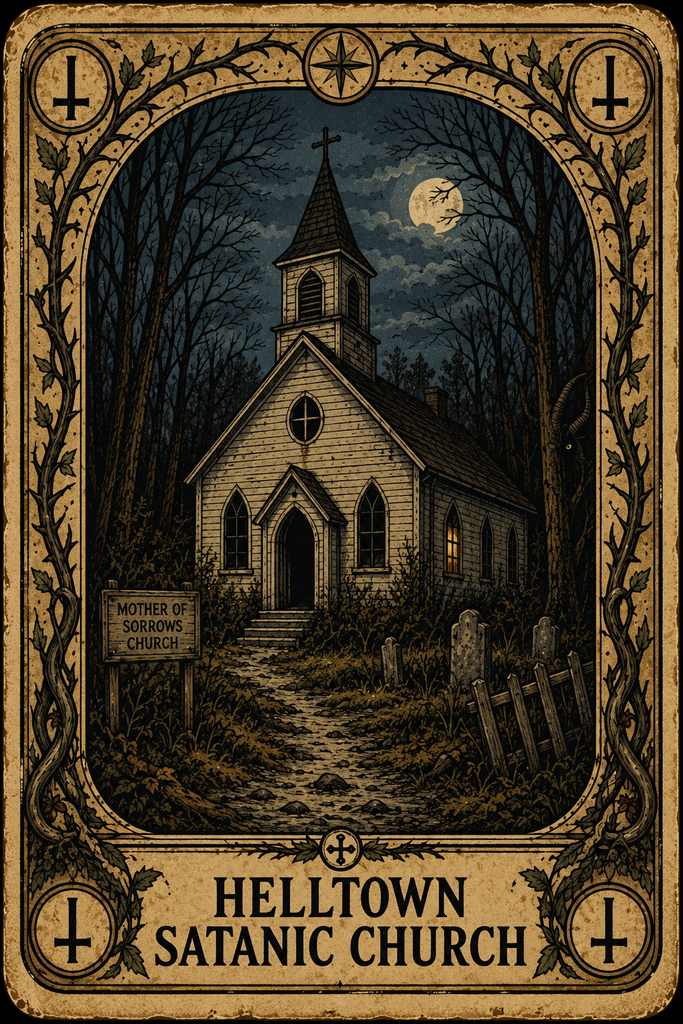
The Helltown Satanic Church legend centers on a church in Boston Township. Atlas Obscura and Ohio folklore sources list it among Helltown’s signature stories. Retellings focus on inverted crosses, secret rituals, and nighttime activity around the church. Ohio Forgotten identifies the real site as Mother of Sorrows Church.
Later accounts tied the church to nearby cemetery stories and wider rumors about Helltown. Ghosts of Ohio says internet retellings helped multiply those stories. Cleveland Magazine also found that visitors still came looking for the church and other haunted sites.
Helltown Crybaby Bridge (Boston Township, Cuyahoga Valley)
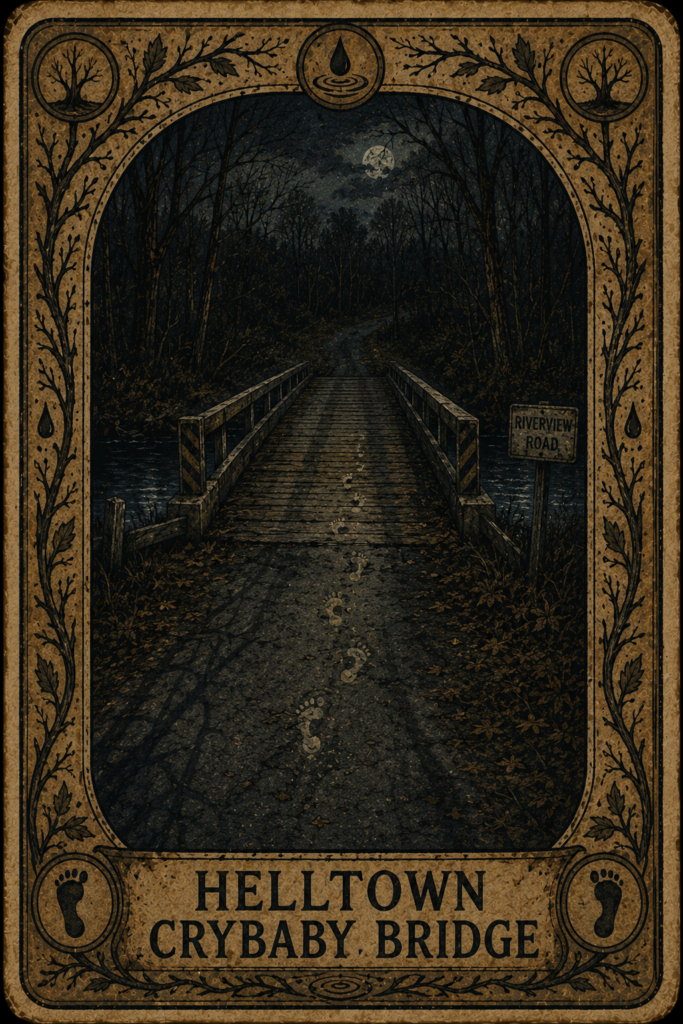
Helltown Crybaby Bridge is a roadside haunting legend in Boston Township, within the wider Helltown story cluster. Ohio Forgotten places the bridge off Riverview Road, crossing the Cuyahoga River into Boston Township. The usual story says a child was thrown from the bridge and died in the river below.
The legend developed an elaborate nighttime ritual involving a parked car, spare keys, and a walk away. Visitors were told the car would be running when they returned, with dusty child footprints outside. Atlas Obscura also records the crying-child and footprint versions among Helltown’s best-known stories. The present bridge was built in 1999, replacing an older covered bridge damaged repeatedly by floods.
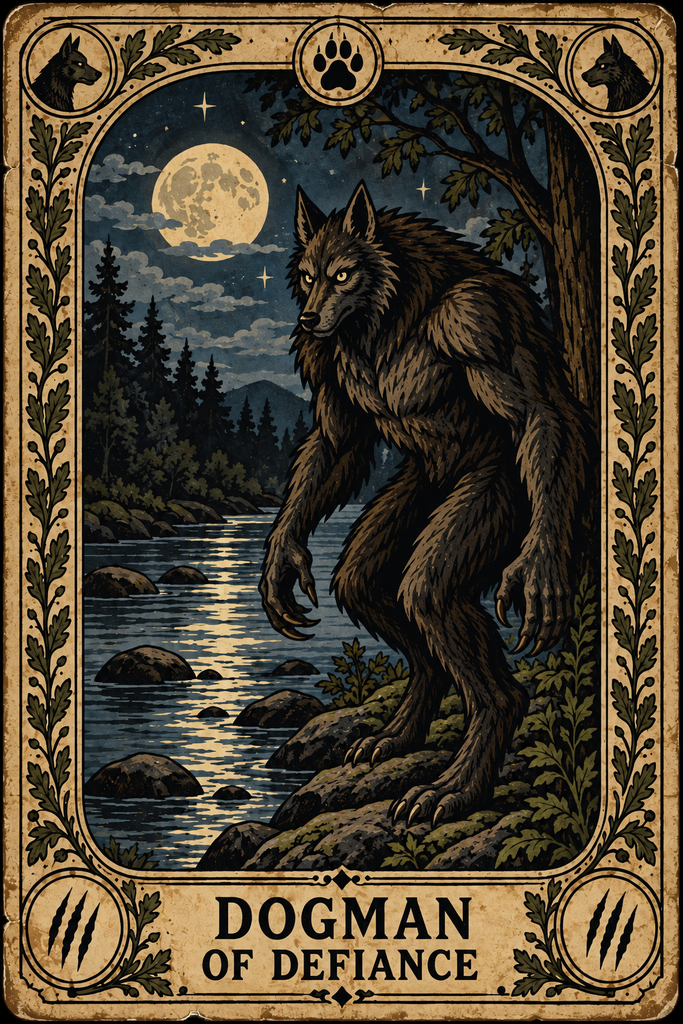
Dogman of Defiance (Defiance, Northwestern Ohio)
The Dogman of Defiance is a 1972 monster legend centered on railroad yards near downtown Defiance. Ohio Magazine says railroad worker Ted Davis first reported the creature on July 25. He described huge hairy feet, fangs, and a tall figure wearing blue jeans and carrying a large stick. Five days later, coworker Tom Jones reported seeing the same hairy figure near the tracks.
Defiance police received three reports within about a week and opened an investigation. Police chief Donald Breckler said the sightings concerned officers because the figure reportedly carried a club. The Toledo Blade covered the case on August 3, 1972, calling the figure a “werewolf.” Later retellings adopted the Dogman name for the same brief Defiance sighting cluster.