Pennsylvania
Pennsylvania’s folklore draws from Native traditions, colonial history, and the haunting character of its forests, rivers, and mountains. The Alleghenies and Appalachians host legends of giant serpents, ghostly figures, and cryptid sightings that echo through the region’s valleys and ridges.
Towns and backroads add their own stories, from colonial tales of apple-stealing goblins to lumber camp phantoms whispered about by loggers. Pennsylvania’s cryptid lore reflects a blend of superstition, local pride, and the quiet unease carried by deep woods and shadowed hillsides.
The Squonk (Northern Pennsylvania Hemlock Forests)
The Squonk is a Pennsylvania fearsome critter associated with the state’s northern hemlock forests. William T. Cox gave the earliest known printed description in his 1910 book Fearsome Creatures of the Lumberwoods. Cox described a retiring creature that traveled at twilight and dusk, covered in loose skin, warts, and moles. It wept constantly, leaving a tear-stained trail hunters could follow. When cornered or frightened, the Squonk could dissolve completely into tears and bubbles.
The Squonk later entered Pennsylvania festivals and sports branding. Johnstown’s Squonkapalooza celebrates the creature alongside Appalachian and Americana folklore. Visit Johnstown listed the 2025 festival as a free, all-ages cryptid carnival. In April 2026, the Lehigh Valley IronPigs announced a Squonk alternate identity. The team played as the Lehigh Valley Squonk on June 6, 2026, defeating Rochester 3–2.


The Albatwitch (Chickies Rock and Columbia, Lancaster County)
The Albatwitch is a small, hairy humanoid tied to Chickies Rock near Columbia, Pennsylvania. AP describes it as a four-foot, man-like creature from the Chickies Rock area. Stories say it lives in trees, steals apples from picnickers, and throws fruit at people. Local explanations often read the name as “apple-snitch.” Atlas Obscura traces documented Albatwitch newspaper reports around Columbia to the 1920s.
Most reported sightings center around Columbia and the Susquehanna River corridor. Albatwitch Day began in 2014 with Rick Fisher and historian Chris Vera. AP reported that the Columbia Preservation Society held the festival in Columbia. Atlas Obscura reported more than 5,000 visitors at the 2024 festival. Fisher also shared a 2024 sighting report from Fishing Creek Nature Preserve.

Raystown Ray (Raystown Lake, Huntingdon County, Pennsylvania)
Raystown Ray is a lake monster legend from Raystown Lake in Huntingdon County, Pennsylvania. The U.S. Army Corps constructed the present dam from 1968 to 1973. The lake opened for recreation in 1974 and covers 8,300 surface acres. Folklore accounts describe Ray as a large, serpent-like shape in the water. Reports mention dark forms below the surface, sudden turbulence, and unexplained movement.
The Huntingdon County Visitors Bureau calls Raystown Ray the region’s most widespread legend. WJAC reported that lake visitors often hear stories about something large under the water. Ranger Jude Harrington compared Ray’s legend to the Loch Ness Monster story. Raystown Ray now appears through local merchandise, songs, web archives, and regional tourism writing.

The Suscon Screamer (Suscon Road, Pittston Township, Luzerne County)
The Suscon Screamer is a roadside legend from Suscon Road in Pittston Township, Luzerne County. Older tellings center on the former Susquehanna Railroad Bridge, also called Boo-Boo Bridge or the Black Bridge. Stories describe a screaming woman, jilted bride, prom-night victim, asylum runaway, or mother and child. Other versions make the Screamer an animal-like creature with a shriek from the woods. One version instructs drivers to honk three times beneath the old bridge site.
Pennsylvania Haunts & History collected Suscon stories in 2008, including reader accounts from former residents. One reader said police found no cause after a family heard screams near the missing bridge. Uncharted History later placed the vanished underpass near the 1000 block of Suscon Road. That article links later retellings to Patricia Emlaw’s 1969 murder in Luzerne County. Pennsylvania court records confirm Emlaw’s death and David Ash’s murder conviction.

Broad Top Snake (Broad Top Mountain, Huntingdon County, Pennsylvania)
The Broad Top Snake is a giant-serpent legend from Broad Top Mountain in Huntingdon County, Pennsylvania. Huntingdon County History preserves a lumberjack tale said to have circulated since the 1800s. In it, a man sits on what looks like a fallen log until the “log” begins moving. Local descriptions give the snake an 18-to-20-foot length and yellow markings around its neck and eyes. Raystown tourism preserves additional versions involving roads, caves, abandoned mines, and an escaped circus serpent.
Huntingdon County History also records 1950s strip miners reporting an unusually large snake on Broad Top. Travelers told of hitting apparent logs that later slithered from the road. In 1974, the Tyrone Daily Herald published Ron Morgan’s account of a forty-foot Broad Top serpent. Morgan returned to the legend in “The Broad Top Snake Story” for Timber Transfer in summer 2024.

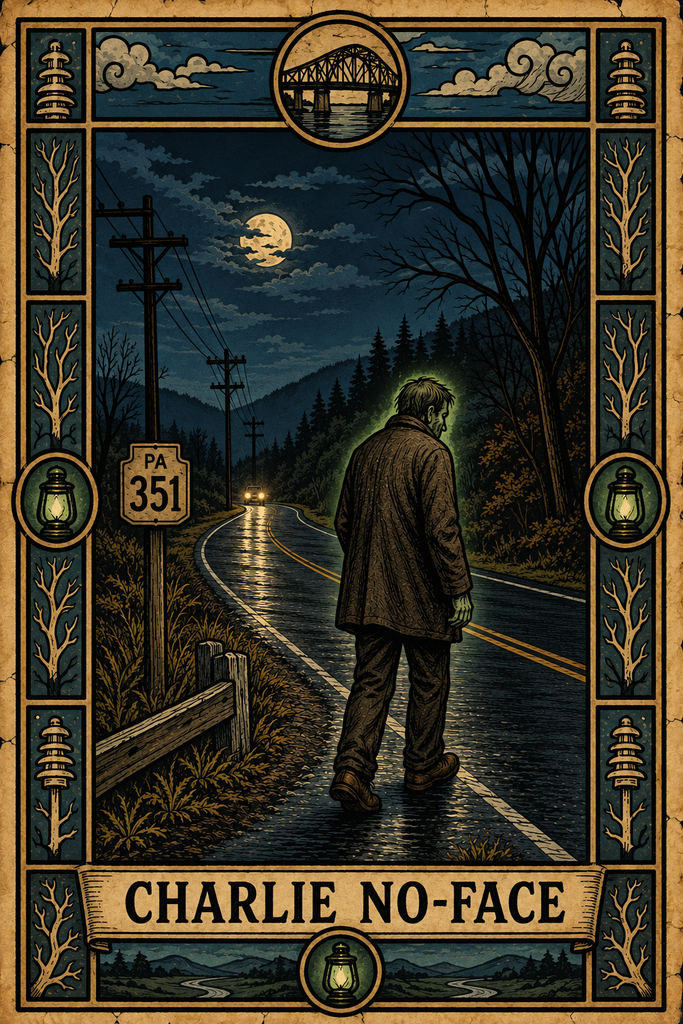
Charlie No-Face (The Green Man) (Beaver County, Route 351 Area)
Charlie No-Face, also called the Green Man, is a western Pennsylvania roadside legend built around Raymond Robinson. On June 18, 1919, eight-year-old Robinson climbed the Morado Bridge near Beaver Falls to inspect a bird’s nest. He contacted a high-voltage transmission line and suffered severe injuries to his face and one arm. Robinson later lived near Koppel and took long nighttime walks along Route 351 toward New Galilee.
By the 1950s and 1960s, teenagers regularly drove the road hoping to meet him. Some stopped for photographs or conversation and brought beer or cigarettes. Local recollections describe those trips as a Beaver County rite of passage. Later stories transformed Robinson into a green-skinned apparition associated with ghostly encounters and abandoned railroad tunnels. WQED notes that the famous Green Man Tunnel was never part of Robinson’s actual walking route.
Kecksburg UFO (Kecksburg, Westmoreland County)
The Kecksburg UFO legend began on December 9, 1965, in Westmoreland County, Pennsylvania. People across several states and Canada reported a fireball in the evening sky. In Kecksburg, witnesses described soldiers, a crash site, and an acorn-shaped object.
NASA later agreed to search archives after journalist Leslie Kean filed a FOIA lawsuit. A mock-up based on witness descriptions stands behind the Kecksburg Volunteer Fire Department. The Kecksburg UFO Festival reached its 20th annual event in 2025. TribLive reported parades, vendors, a UFO conference, and national visitors at the festival.

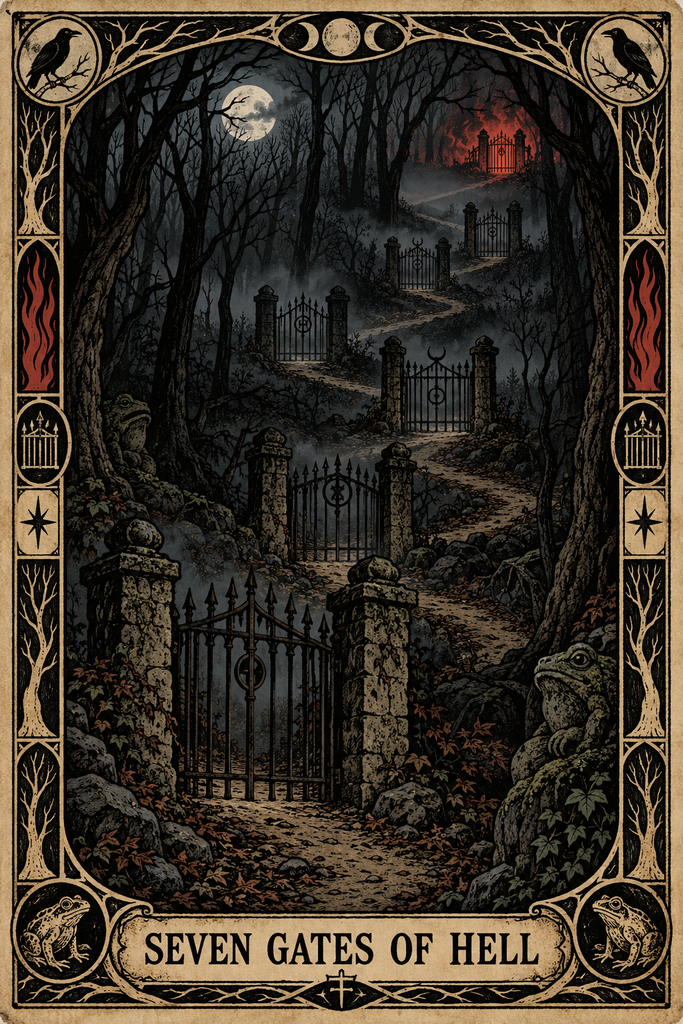
Seven Gates of Hell (Hellam Township, York County)
The Seven Gates of Hell is a York County urban legend tied to woods off Trout Run Road. One version describes an asylum burning, releasing patients who were trapped among seven gates. Another describes an eccentric doctor building gates along a road into the woods. Both versions say only the first gate appears by daylight. Those reaching the fifth never return, while passing the seventh leads directly to Hell.
Hellam Township stated that no asylum existed there and that the local doctor built only one gate. Local recollections show Toad Road stories circulated among York County teenagers by the 1960s. Residents remembered stone frog-like grotesques near a wooded lane, adding another feature to the area’s lore. The legend later appeared in books, newspaper columns, and Jason Banker’s 2012 horror film Toad Road.
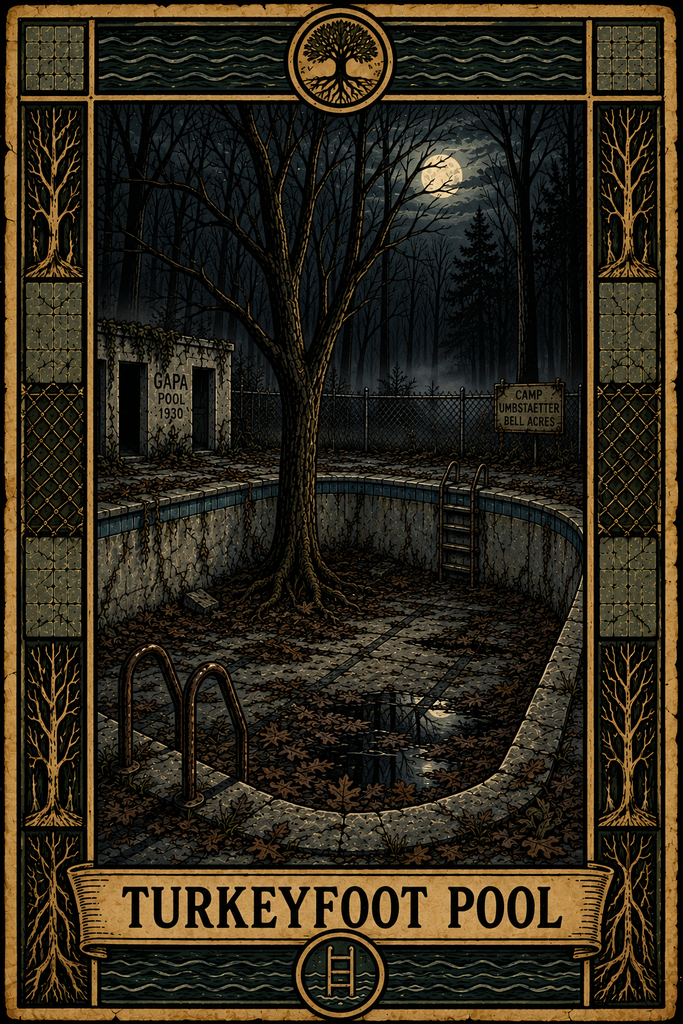
Turkeyfoot Pool (Bell Acres / Sewickley Valley, Pennsylvania)
Turkeyfoot Pool is a local haunted-place legend tied to the former GAPA pool on Turkeyfoot Road in Bell Acres. Bell Acres history says the cement pool opened in 1930 at Boy Scout Camp Umbstaetter. The Greek American Progressive Association bought the camp in 1948 and continued operating the pool and picnic grounds. The GAPA pool later served mostly Sewickley and Leet Township residents before the property became Bell Acres Nature Park.
Local haunting stories survived after the pool closed, with several competing explanations for the site’s reputation. One says a young man died after diving into the drained pool at night. Others involve mafia activity, a murdered family, or unexplained violence around the abandoned grounds. An Iron City Paranormal account records damaged changing rooms and visitors feeling watched. No contemporary record establishes one origin story. Bell Acres now preserves the former camp property within its 200-acre-plus nature park.
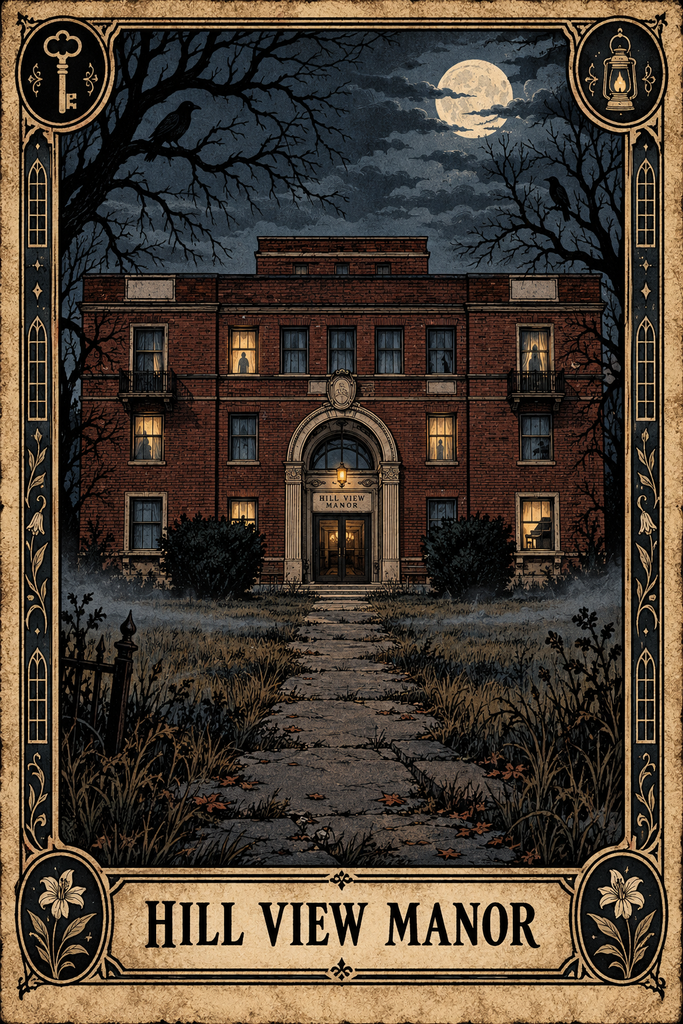
Hill View Manor (New Castle, Pennsylvania)
Hill View Manor opened in 1926 as the Lawrence County Home for the Aged near New Castle. It housed elderly, destitute, and mentally ill residents, with some children documented during the Depression. Lawrence County Memoirs says a 1977 expansion brought new nursing facilities and the Hill View Manor name. The county closed the facility in February 2004 after years of financial difficulty.
Haunting stories focus on former residents, staff, patient rooms, hallways, and the boiler room. Lawrence County Memoirs records legends involving Jeffrey, Mary Virginia, and Eli Saari, who died in the boiler room. Visitors leave small gifts in Mary Virginia’s room, while other reports describe voices, shadows, and unexplained movement. Hill View Manor now offers day tours, public investigations, private investigations, and special events.