Vermont
Vermont cryptids and folklore include lake monsters, mountain creatures, ghost stories, roadside legends, and strange local traditions. Lake Champlain and Lake Memphremagog support long-running monster stories along Vermont’s western and northern borders.
Northfield has its Pigman legend, while Stowe’s Emily’s Bridge became a modern haunted-site tradition. Glastenbury Mountain carries wild-man stories, cursed-place legends, and tales later grouped with the Bennington Triangle. These traditions range from nineteenth-century newspaper reports to twentieth-century rumors and modern regional folklore.
Champ (Lake Champlain / Vermont–New York Border)
Champ is a lake-monster legend associated with Lake Champlain along Vermont and New York. An 1819 newspaper account described Captain Crum seeing an enormous creature near Bulwagga Bay. Reports multiplied during the nineteenth century, often describing serpentine bodies, long necks, humps, or large heads. In 1873, P.T. Barnum offered a reward for the capture of the Lake Champlain serpent. Separately, Nulhegan Abenaki tradition includes Gitaskog, a horned serpent associated with Lake Champlain.
In 1977, Sandra Mansi photographed a long-necked shape while visiting the Vermont shore with her family. Her photograph became the best-known image associated with Champ after its later publication. Vermont adopted a symbolic resolution protecting Champ in 1982, followed by similar action in New York. The Vermont Lake Monsters baseball club still uses Champ as its mascot.

Pigman of Northfield (Northfield / Devil’s Washbowl)
The Pigman is a Northfield legend tied to an early-1970s high school dance and Devil’s Washbowl. Vermont Public interviewed local resident Jeff Hatch, who remembered classmates returning terrified from a nearby sandpit. They described a human-sized, white-haired figure running on two legs with a pig-like face. Folklorist Joe Citro later learned the story from Hatch and included Pigman in his Vermont monster research.
Hatch connected later Pigman searches with an abandoned pig farm and the wooded Devil’s Washbowl area. Seven Days reported that Hatch and other locals explored the area while the story spread. Vermont Folklife describes Pigman as a longstanding part of Northfield local culture. In 2026, Vermont Folklife began pursuing a Legends & Lore marker for the creature with town support.

The Awful (Richford and Berkshire / Franklin County)
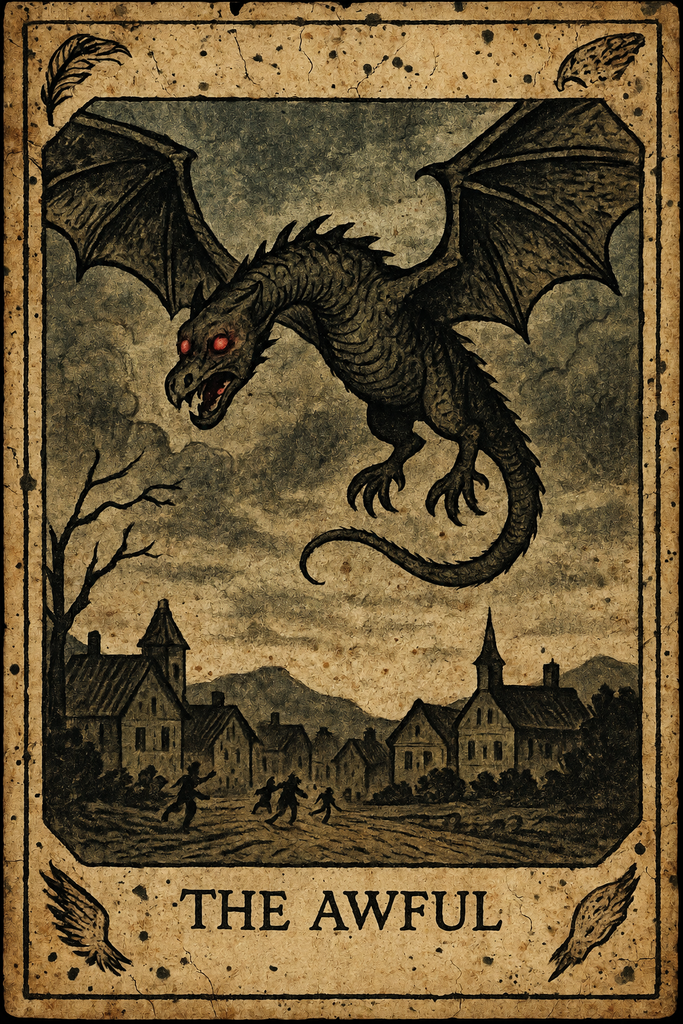
The Awful is a winged-creature legend associated with Richford and Berkshire in Franklin County, Vermont. The documented source trail begins with H.P. Albarelli Jr.’s 2006 article in the County Courier. Albarelli said locals traced sightings to 1925 and described a griffin-like creature with huge gray wings and claws. He also claimed H.P. Lovecraft investigated the reports during a Vermont visit. Folklorist Joe Citro later questioned that Lovecraft connection and found no contemporary evidence supporting the story.
Albarelli’s follow-up article collected later accounts from Richford-area residents. Lisa Maskell recalled seeing a huge winged creature near the Trout River when she was a child. Another resident described low screams and heavy wingbeats around East Richford. In 2025, Vermont Public revisited The Awful while discussing Franklin County cryptid stories.
The Ghost of Emily’s Bridge (Stowe / Gold Brook Bridge)
Emily’s Bridge is the haunted reputation of Stowe’s Gold Brook Bridge, a covered bridge built around 1840. The Vermont Historical Society dates the ghost story’s emergence to the late 1960s or early 1970s. Versions say a young woman named Emily died there after romantic heartbreak, by suicide or accident. The society found no evidence that anyone named Emily died at the bridge. Vermont Public traced early written versions to a local teenager’s paper later used by historian Bob Hagerman.
Later visitors reported voices, apparitions, strange lights, and scratches appearing on vehicles crossing the bridge. Vermont Public notes that teenagers were already visiting the site for thrills as the story spread. Folklorist Joe Citro popularized Emily’s story further in his 1997 book Passing Strange. Seven Days records later stories of clawed vehicles, ghostly figures, lights, and photographic orbs. The bridge appeared on Travel Channel’s Most Terrifying Places in America in 2018.

Catamount (Green Mountains / Statewide Vermont)
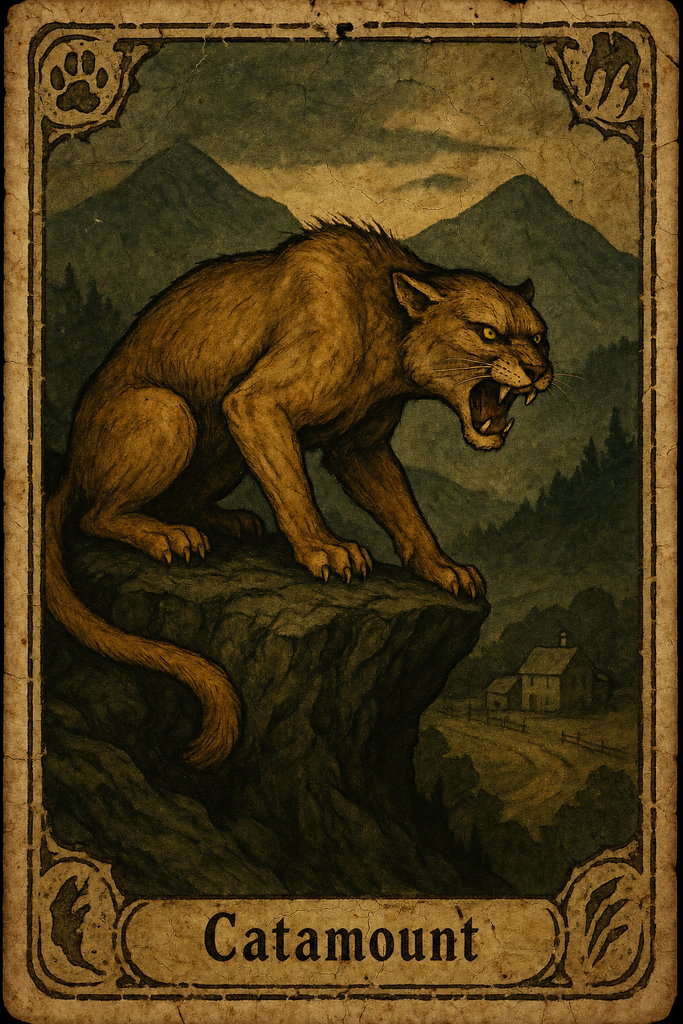
The catamount, or mountain lion, once lived throughout Vermont and became both feared predator and state symbol. Vermont established bounties on mountain lions in 1787 as farmers expanded into forested habitat. The Vermont Historical Society says Alexander Crowell killed Vermont’s last documented catamount in Barnard on November 24, 1881. Newspaper reports called it the “Monster Panther,” and the mounted animal toured New England.
In 1934, Reverend William J. Ballou began collecting Vermont panther sightings after finding large feline tracks near Chester. He organized the Irrepressible and Uncompromising Order of Pantherites around those reports. Vermont Fish and Wildlife still receives dozens of mountain-lion reports annually, without confirmed evidence of a resident population. The Barnard Panther remains in the Vermont Historical Society collection in Montpelier.
Memphre, Lake Memphremagog Monster (Lake Memphremagog / Newport and Derby)
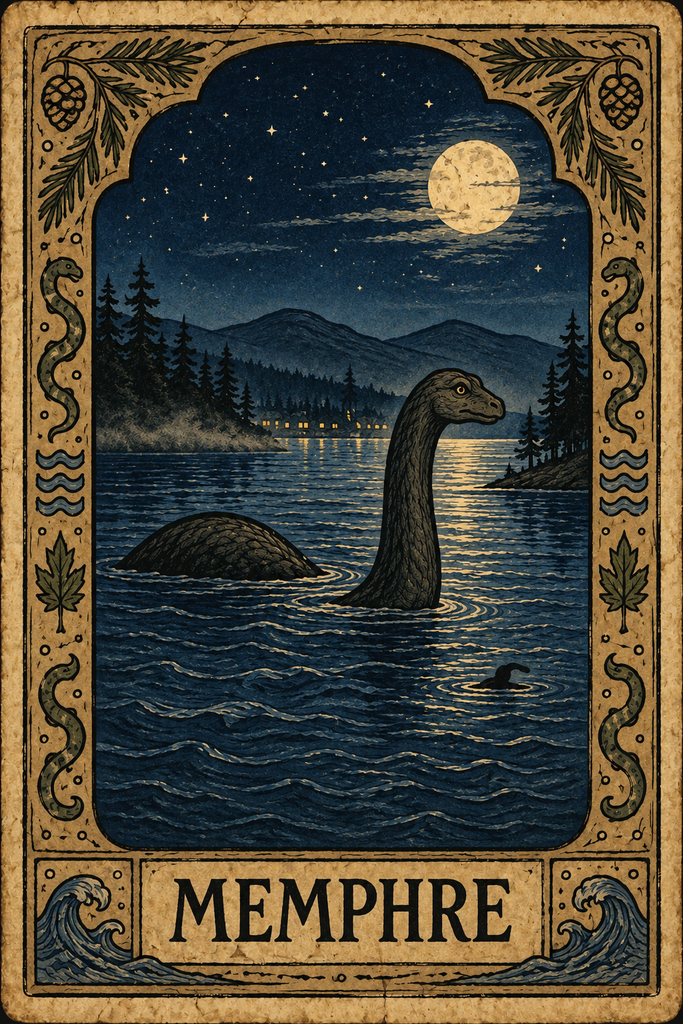
Memphre is a lake-monster legend from Lake Memphremagog, spanning Vermont and Quebec. A Quebec Anglophone Heritage Network history cites an 1816 document describing early serpent reports. The same source quotes an 1847 Stanstead Journal notice about a strange sea-serpent-like animal in the lake. Later descriptions commonly portray a long, dark creature with humps, a long neck, or a horse-like head.
Newport historian Barbara Malloy reported sightings in 1983 and again in 2003. A 2003 Associated Press report said Malloy photographed a dark object making a wake in 1989. Quebec researcher Jacques Boisvert later popularized the name Memphre and collected reported encounters around the lake. Since 2011, In Search of Memphre has sent marathon swimmers between Newport and Magog. The cross-border event still uses the monster as part of its identity.
Glastenbury Wild Man / Bennington Monster (Bennington and Glastenbury Mountain)
The Glastenbury Wild Man comes from reports circulating around Bennington in 1867. Later research describes an unkempt man who reportedly hid in the surrounding forest. Stories said he followed women, peered through windows, exposed himself, and sometimes carried a pistol. Rumors placed his shelter among caves or boulders outside town.
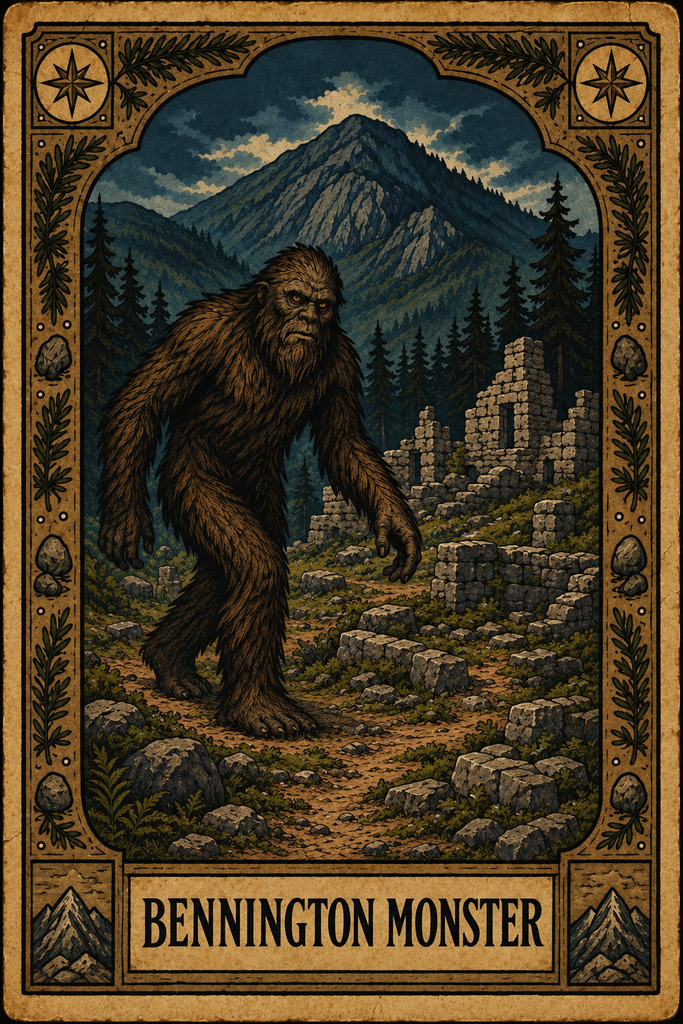
Later retellings transformed the older wild-man story into the hairy, Bigfoot-like Bennington Monster. Author Joe Citro incorporated that monster into his broader Bennington Triangle material during the 1990s. Vermont Public reported in 2025 that Citro connected the Triangle with an older Sasquatch-like local story. The Bennington Monster now usually appears alongside Glastenbury disappearances, ghost-town stories, and other Triangle legends.
Man-Eating Stone of Glastenbury Mountain (Glastenbury Mountain Area)
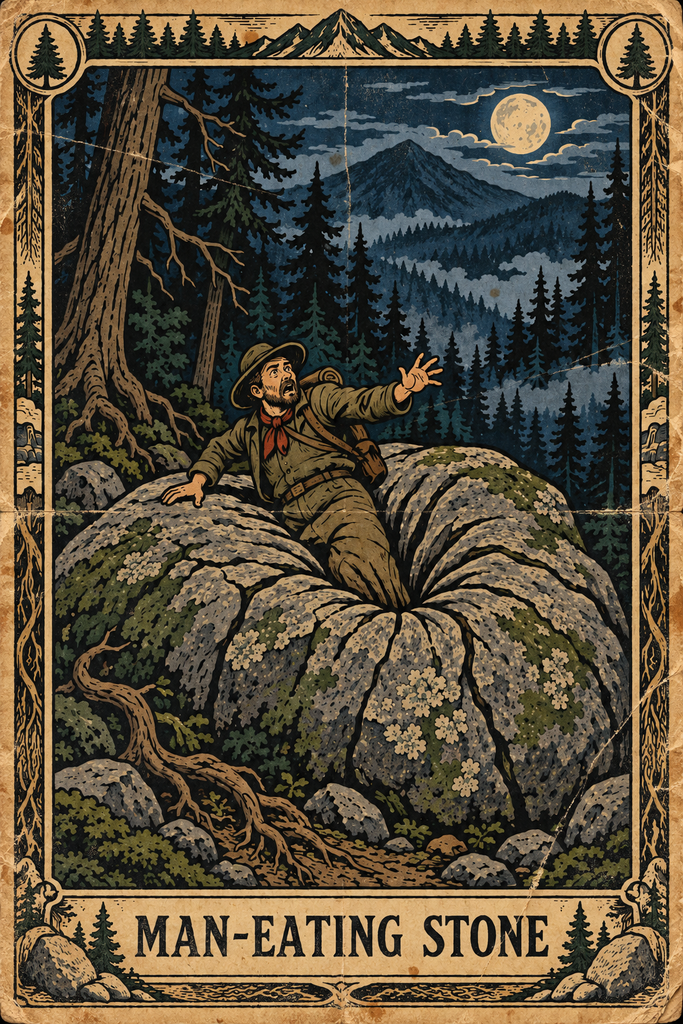
The Man-Eating Stone is a modern Glastenbury Mountain legend introduced by Joseph A. Citro in 2009. In The Vermont Monster Guide, Citro described a large rock that becomes soft beneath a person’s feet. The stone then swallows anyone standing upon it. Citro connected the creature-like rock with Glastenbury disappearances and the wider Bennington Triangle.
Later retellings repeated the stone among Glastenbury Mountain’s supernatural stories. The New England Historical Society placed it alongside disappearances reported between 1945 and 1950. Citro and artist Stephen R. Bissette included the Man-Eating Stone as a dedicated mountain entry. Seven Days covered their Vermont Monster Guide when it appeared in 2009.