France
France’s cryptids, monsters, and ghost stories draw on different traditions across Brittany, Normandy, Poitou, Provence, and the mountainous interior. Breton folklore describes the Ankou, a figure associated with death, while Normandy tells of Rouen’s dragon-like Gargouille. Fairy legends, haunted places, and reports of strange animals also belong to particular towns, rivers, forests, and rural districts.
French legends spread through medieval romances, religious festivals, oral storytelling, and newspaper reports. In Poitou, medieval authors connected the serpent-woman Mélusine with the legendary history of the Lusignan family. In Provence, Tarascon preserves its Tarasque legend through traditional processions featuring a large dragon effigy. Farther inland, reports of the Beast of Gévaudan spread beyond the region during deadly attacks between 1764 and 1767.
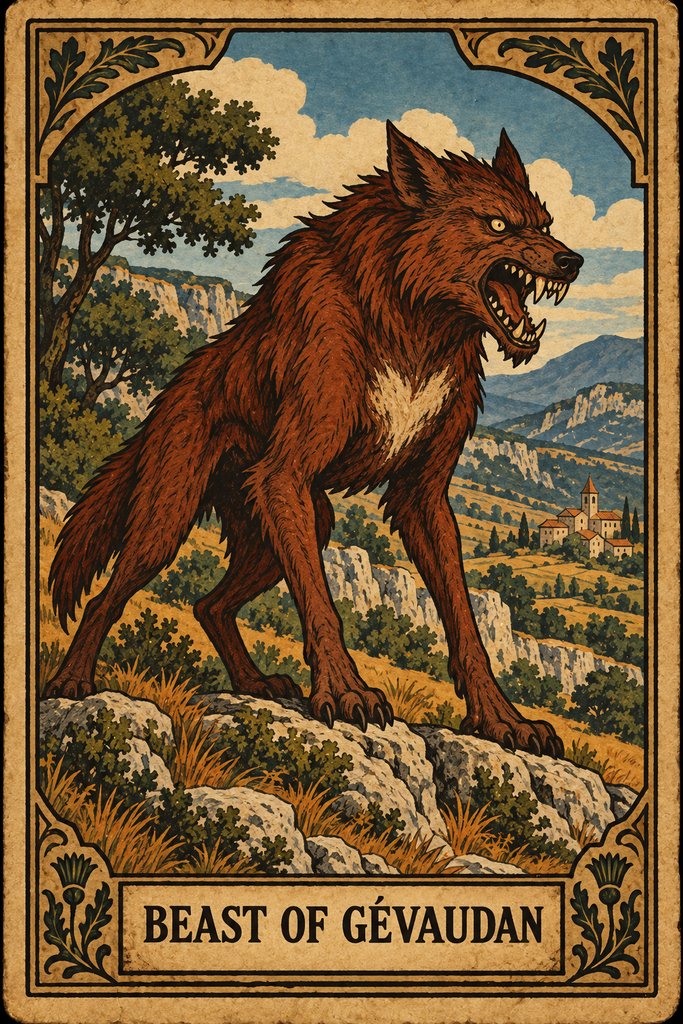
Beast of Gévaudan (Gévaudan / Lozère)
From 1764 to 1767, the Beast of Gévaudan terrorized villages across the mountainous Gévaudan region of southern France. Nearly one hundred deaths were attributed to it, with women and children among the victims. Witnesses described a creature larger than a wolf, reddish-haired, huge-mouthed, and sometimes as large as a calf. As hunts failed, stories increasingly cast the Beast as something unnatural, cunning, or supernatural. Peasants, soldiers, professional hunters, and men sent by Louis XV repeatedly failed to end the attacks.
Royal gunbearer François Antoine killed a huge wolf in September 1765, and Versailles celebrated the Beast’s apparent destruction. Yet the killings continued despite the royal hunters’ apparent victory. On June 19, 1767, Jean Chastel saw the Beast approach during a hunt organized by the Marquis d’Apcher. Its examination described a wolf-like but extraordinary animal, with strange proportions and a white heart-shaped chest mark. More than 300 people reportedly came to see the carcass, and the attacks ceased after Chastel’s shot. In later local legend, Chastel killed the Beast with blessed silver ammunition while invoking the Virgin Mary. The story later inspired monuments, museums, novels, and the 2001 film Brotherhood of the Wolf.
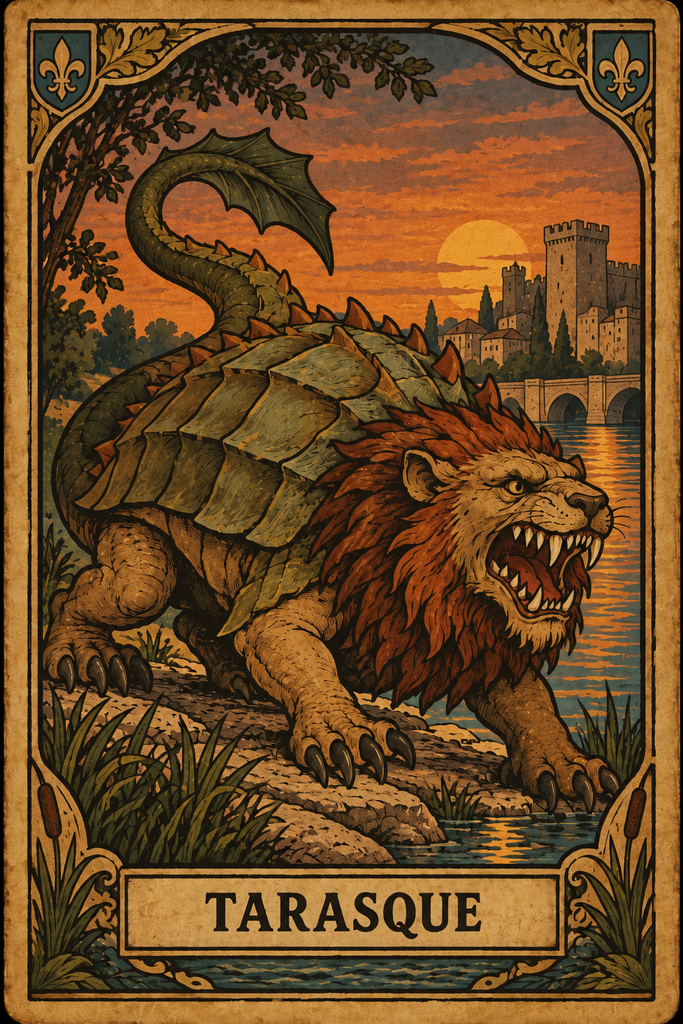
Tarasque (Tarascon / Provence)
In medieval legend, the Tarasque haunted the Rhône near Tarascon, devouring travelers and wrecking boats from its riverside lair. The Golden Legend calls it half beast and half fish, larger than an ox and longer than a horse. It had a lion’s head, sword-like teeth, a serpent’s tail, and a body protected like armor. The story says it came from the sea, born from Leviathan and the monstrous Bonacho. Saint Martha found it eating a man, sprinkled it with holy water, and confronted it with the cross. Tamed like a sheep, the Tarasque followed Martha by her girdle before townspeople killed it with spears.
Tarascon made the monster its own, surrounding it with religious processions, public games, effigies, sculptures, and local stories. King René codified the Tarasque festivities in 1474, linking the creature to Pentecost celebrations and Saint Martha. During the traditional course, Tarascaires animate the huge effigy and swing its tail among the crowd. Tarascon still holds its Fêtes de la Tarasque each June, including a grand parade and the monster’s procession. UNESCO includes Tarascon’s tradition among the Processional Giants and Dragons of Belgium and France.
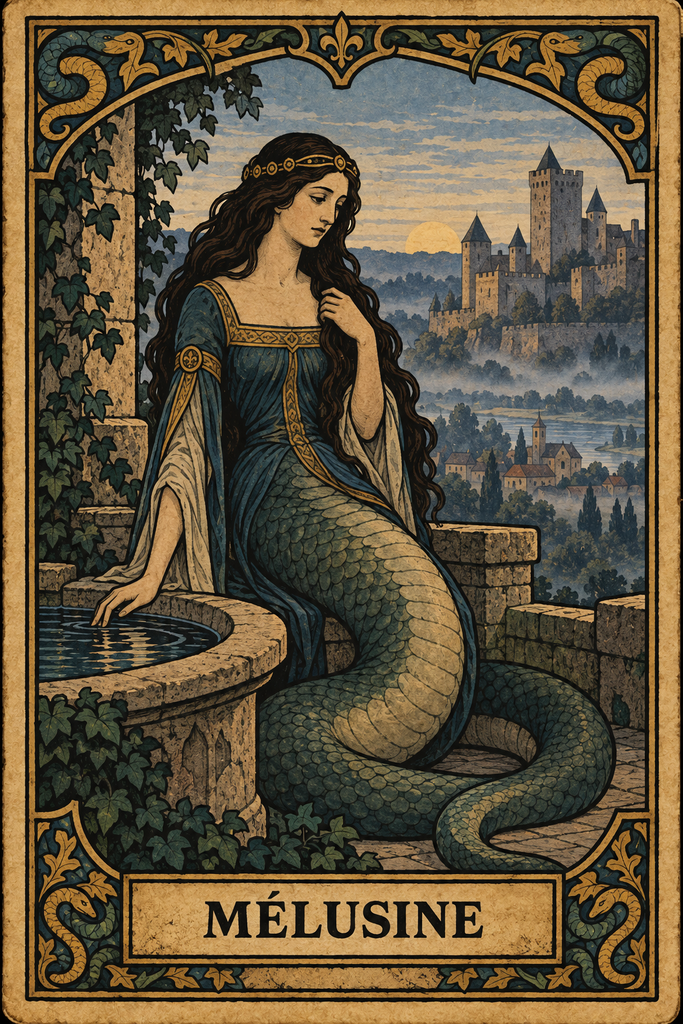
Mélusine (Lusignan / Poitou)
Mélusine is a fairy woman bound to Lusignan, Poitou, and the legendary ancestry of the Lusignan dynasty. In Jean d’Arras’s romance, her mother Pressine curses her after Mélusine helps imprison her father inside a mountain. The curse turns Mélusine serpent-bodied below the waist every Saturday. She marries Raymondin only after he promises never to seek her that day. She bears ten sons, each marked by some strange feature, and becomes a prodigious builder across Poitou. Castles, churches, towns, and the fortress of Lusignan itself rise through her supernatural labor.
Raymondin eventually spies through a hole and sees his wife bathing, woman above the waist and enormous serpent below. She forgives his spying because he keeps her secret. After their son Geoffrey burns Maillezais Abbey, Raymondin publicly blames Mélusine and calls her a serpent. That second betrayal ends their marriage. Mélusine becomes a winged dragon, circles Lusignan’s towers, cries out, and vanishes into the air. Legend says she later returned before Lusignan family deaths or changes of the castle’s lord. Today, Lusignan marks her story with seven representations inside the old ramparts.
Ankou (Brittany)
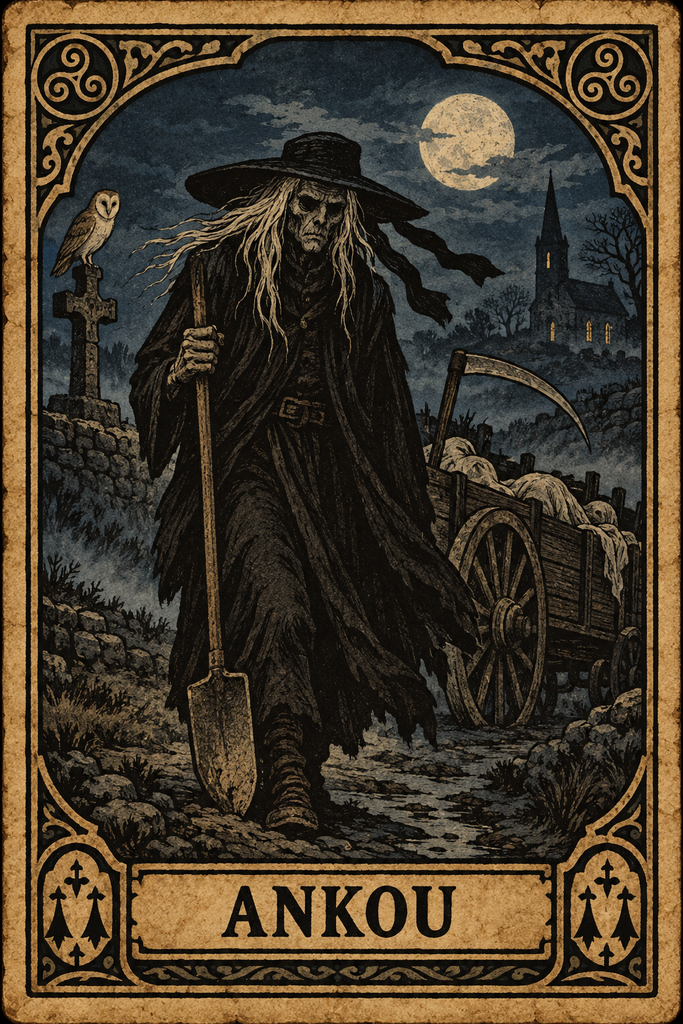
In Breton tradition, the Ankou is death’s worker, gathering the dead rather than embodying Death itself. In parts of Lower Brittany, the year’s last dead person became the parish Ankou for the following year. Other districts named the year’s first dead instead, giving each parish its own changing collector of souls. Anatole Le Braz described him as skeletal or gaunt, with long white hair beneath a broad black hat. He travels at night in the creaking karr an Ankou, with helpers opening gates and loading the dead. Hearing its badly greased wheels was taken as a warning that death would soon visit the neighborhood.
The Ankou’s cart carries souls toward the Otherworld, with the Monts d’Arrée strongly associated with his passage. Later folklore often gives him a scythe, although older Breton images show other weapons and tools. Barn owls could serve as another omen, their cries earning the name lapous an Ankou, the Ankou’s bird. Churches and ossuaries preserved the figure in sculpture, painting, and funerary imagery across western Brittany. A fifteenth-century wooden Ankou survives at Saint-Milliau church in Ploumilliau, carrying a shovel and scythe.
Gargouille of Rouen (Rouen / Normandy)
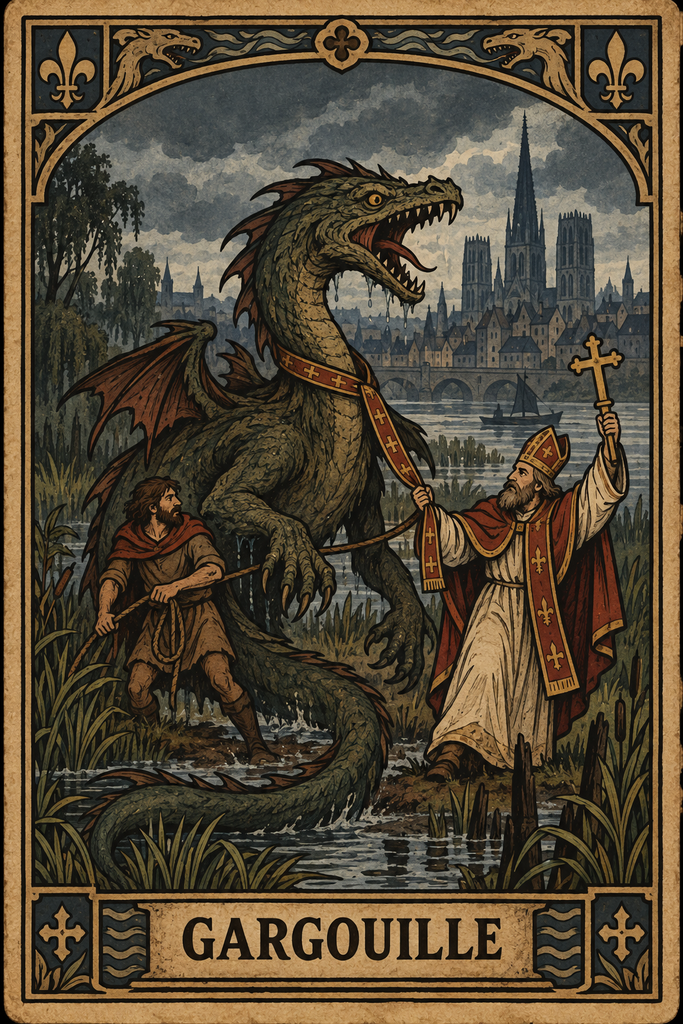
Rouen legend says La Gargouille haunted the Seine marshes, devouring animals and people near the city. Saint Romain, Rouen’s seventh-century bishop, asked the frightened townspeople to help him confront the dragon. Only a condemned prisoner agreed, after Romain promised him freedom if they survived. At the monster’s lair, Romain subdued it with the sign of the cross. He looped his stole around its neck and ordered the prisoner to lead it into Rouen. The crowd burned the captive Gargouille before the cathedral, and the prisoner received his pardon.
Rouen later connected the victory with the Privilege of Saint Romain, recorded by 1210. Each Ascension, cathedral canons could pardon one prisoner, who ceremonially raised the saint’s reliquary three times. By the late fourteenth century, surviving texts explicitly joined the privilege to Romain’s victory over the Gargouille. Later processions even carried a wicker dragon through the city, surrounded by noisy crowds. Nineteenth-century accounts describe rabbits, foxes, or piglets placed inside its mouth for amusement. Rouen still preserves Saint Romain and the dragon in paintings, sculpture, and cathedral imagery.
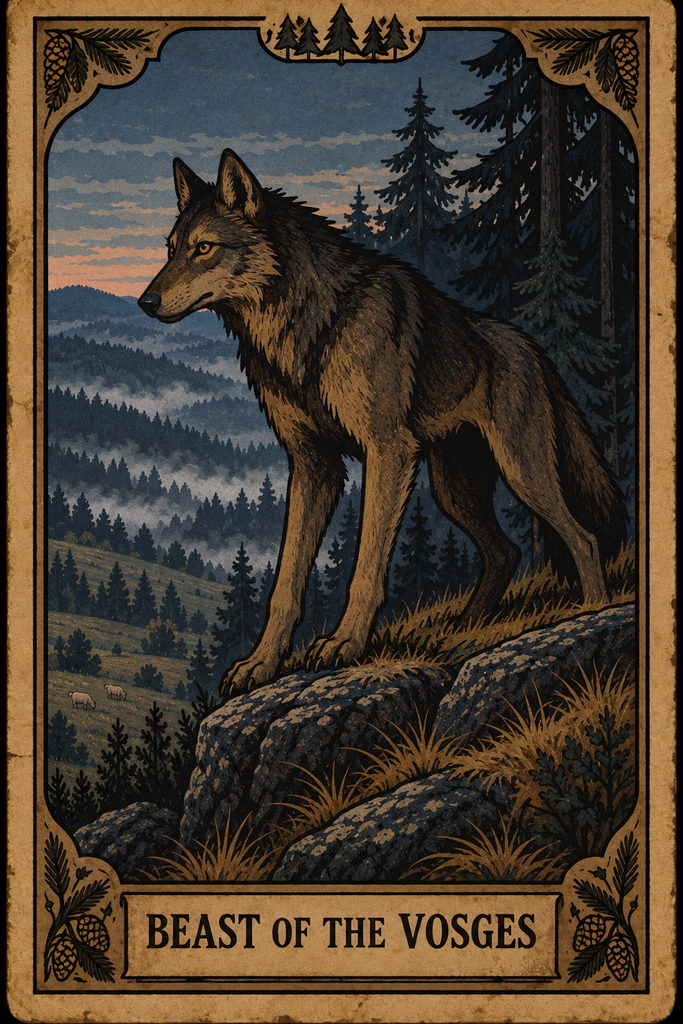
Beast of the Vosges (Vosges Massif / Grand Est)
The Beast of the Vosges appeared in March 1977, after seven sheep were found dead at Domèvre-sur-Durbion. Attacks spread across the Vosges, killing sheep, goats, cattle, and other livestock over the following months. Witnesses described a large, clever animal that looked something like a dog or wolf. Authorities organized repeated hunts using hunters, gendarmes, soldiers, and guards. One major hunt in April involved 260 men. The Beast was reportedly driven from cover several times, but always escaped.
Some blamed a wolf, while others suggested feral dogs, a circus animal, or something stranger. French television followed the mystery throughout 1977 and 1978. Witnesses described the Beast as huge, cunning, and dog-like, while reports spread far beyond the Vosges. Nearly 300 farm animals were eventually linked to the attacks. The Beast was never officially captured or killed, and the attacks faded in early 1978. Colmar’s Natural History Museum featured the case in June 2026 during a program about regional predators.