Italy
Italy cryptids, folklore, monsters, and ghost stories change dramatically from the Alps to Sicily. Northern mountain traditions include dragons, wild creatures, witches, and strange beings associated with remote valleys. Naples has mischievous household spirits, while southern Italy and Sicily add sea legends, haunted places, and supernatural figures. Many stories remain closely tied to individual villages, festivals, lakes, mountains, and old neighborhoods.
Lombardy has Tarantasio, a dragon once said to haunt a vanished lake near the Adda River. In the Alpine village of Andrista, the Badalisc is a strange horned beast captured during an annual winter festival. Naples has the Munaciello, a unpredictable “little monk” spirit said to haunt homes and leave money. Sicily tells of Colapesce, a legendary swimmer whose story became tied to the island and surrounding sea.
Tarantasio (Lake Gerundo / Lombardy)
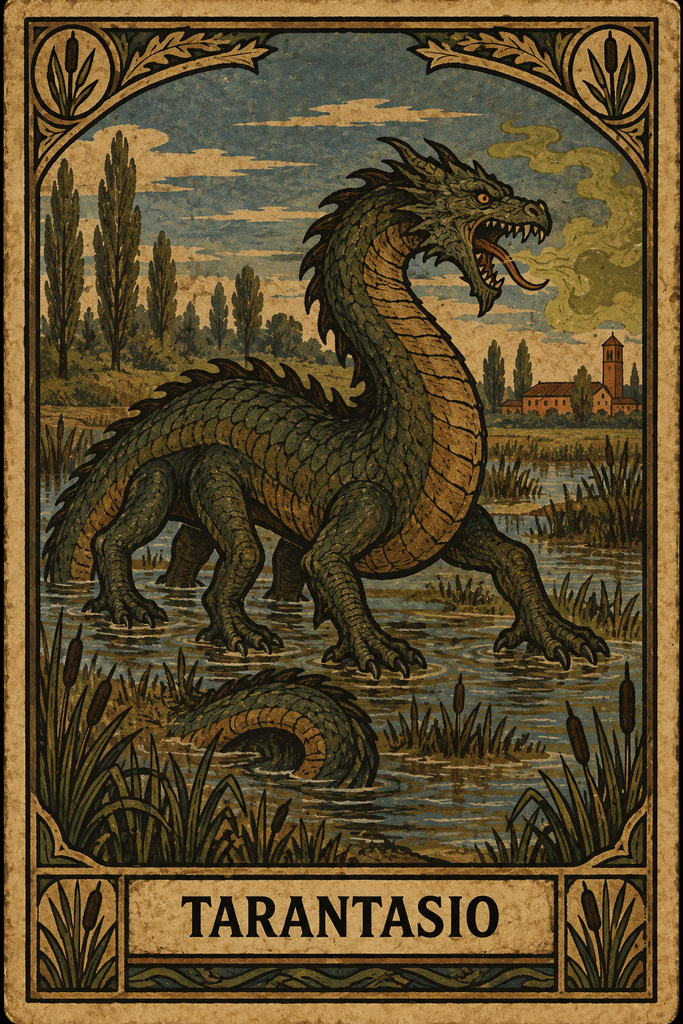
Tarantasio is a dragon from Lombard folklore, said to have lived in the vanished Lake Gerundo. Popular tradition places the lake between Cassano d’Adda and Pizzighettone along the Adda River. The Lombardy regional government describes Tarantasio as a six-legged dragon haunting its marshy waters. Stories say it came ashore to eat animals and children. Its poisonous breath fouled the water and spread disease among nearby communities.
One Parco Adda Sud tradition says a brave knight, considered the Visconti family’s founder, finally killed Tarantasio. Afterward, he adopted the serpent as his family’s emblem. Another story says people carried the dragon’s body to a Lombard church as a trophy. A regional park guide also connects Tarantasio with the six-legged, fire-breathing dog emblem of Agip, now Eni.
Badalisc (Andrista / Val Camonica, Lombardy)
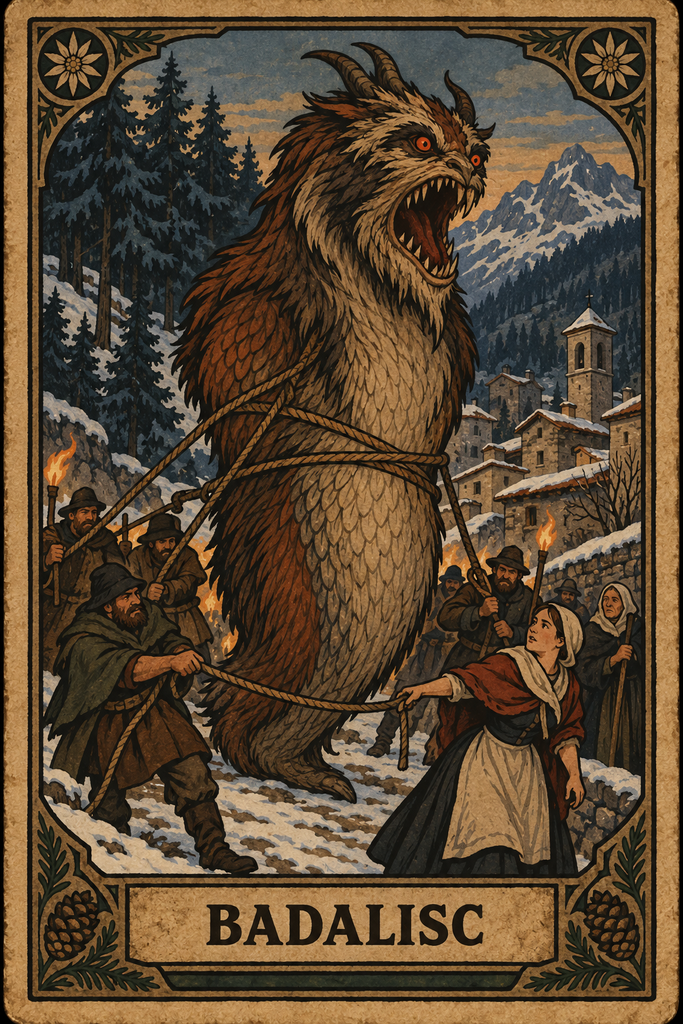
The Badalisc is a strange horned beast said to live in the forests above Andrista in Lombardy. Its body mixes traits of a goat, serpent, owl, and lynx, with a huge mouth and glowing red eyes. Adamello Regional Park describes the creature as large, upright, and almost limbless beneath its sack-like body. Each January, villagers enter the woods, capture the Badalisc, tie it up, and bring it into Andrista. The procession includes shepherds, old women, and a young woman used as bait for the beast.
The celebration peaks with the ’ntifunada, a satirical speech supposedly delivered by the captured Badalisc. An interpreter reads its accusations aloud, exposing village secrets, misbehavior, and scandals without directly naming the guilty. After dancing and food, the villagers release the Badalisc back into the woods. The same source says the Church once opposed the tradition because it considered the creature pagan. Women who watched the ritual could even be denied Communion at Epiphany Mass.
Munaciello (Naples / Campania)
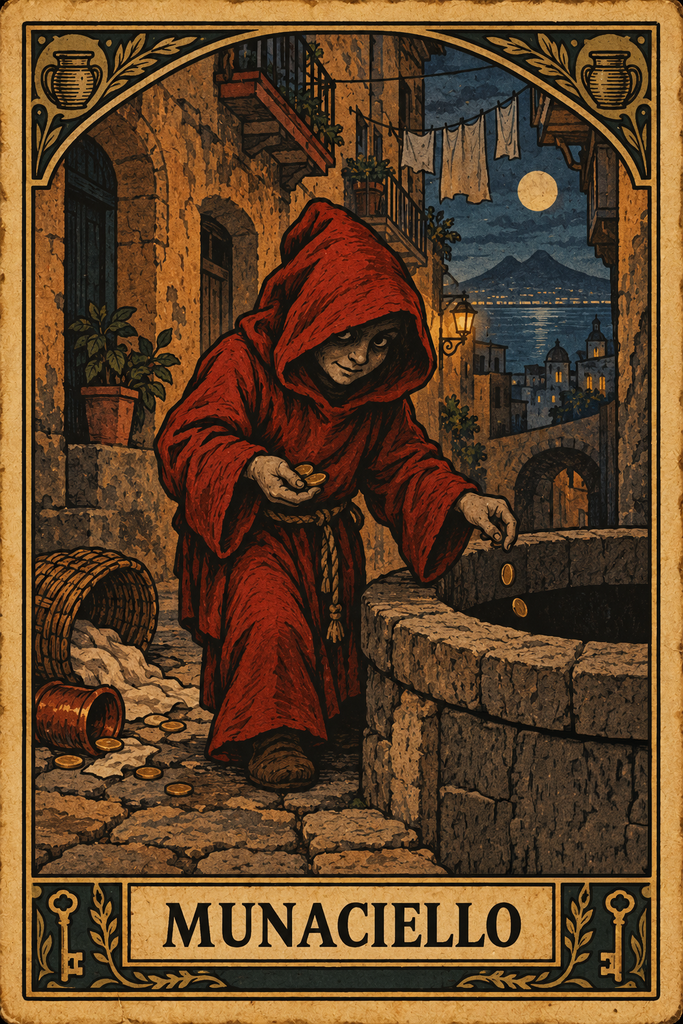
The Munaciello, or “little monk,” is a small hooded spirit from the old neighborhoods of Naples. Stories describe him as child-sized, monk-like, and capable of helping or tormenting a household. Naples’ underground tunnels and wells are closely tied to the legend. City material links him to water workers called pozzari, who wore hooded clothes and entered homes through wells. He might hide objects, spoil food, make noises, or leave money in unexpected places.
Matilde Serao’s 1895 Leggende napoletane gives the Munaciello a darker human origin. Her story begins with a forbidden romance in fifteenth-century Naples and a child born after his father’s murder. The boy remains unusually small and is dressed like a monk, earning the nickname Munaciello. After he disappears, stories say his spirit returns to the city’s narrow streets and old houses. Serao says a red hood brought good luck, while a black hood warned of trouble. People also asked him for lottery numbers, protection, husbands, sweets, and other favors.
Janare (Benevento / Campania)
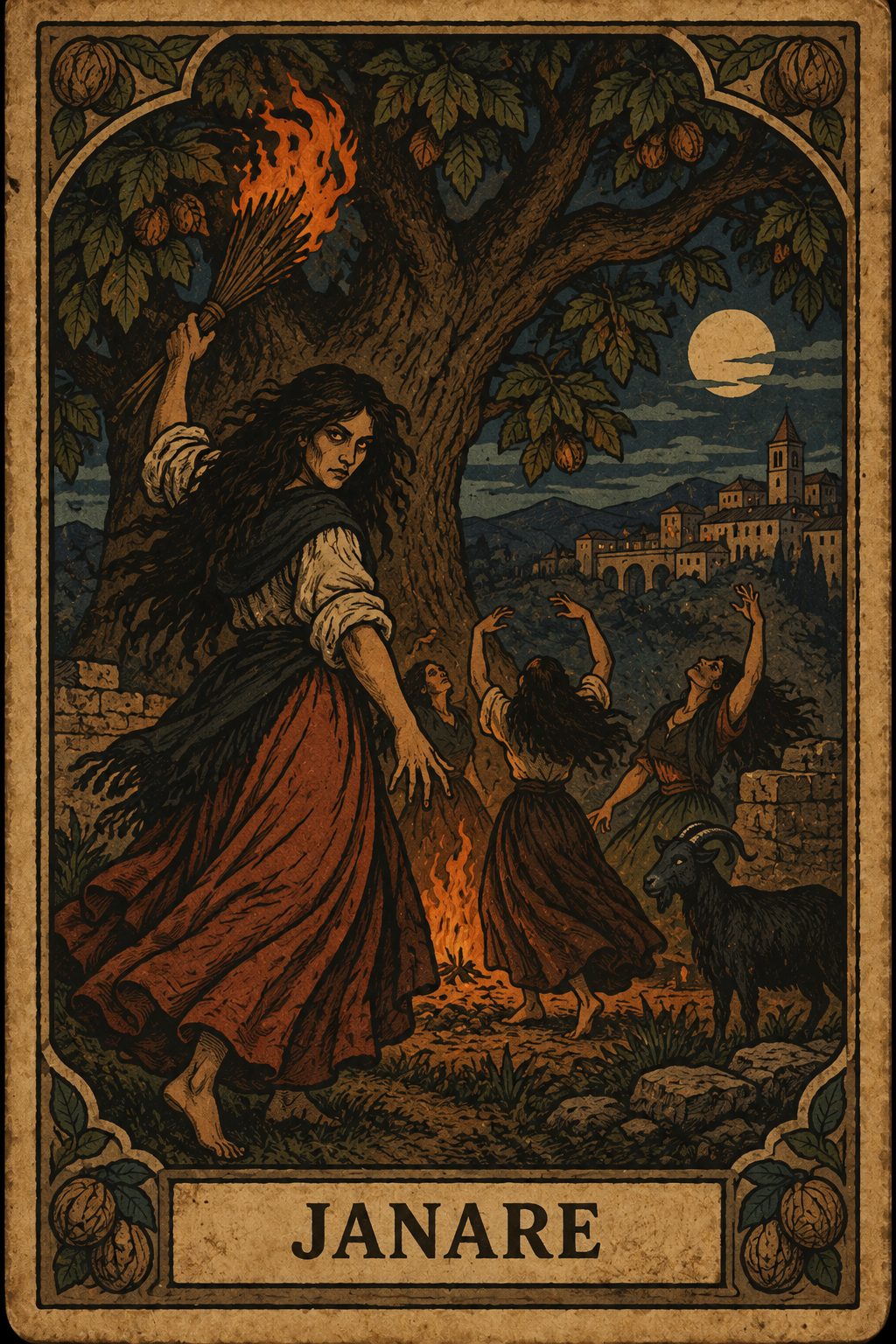
Janare are witch figures from Benevento folklore, famous for gathering beneath the legendary Walnut Tree of Benevento. Stories say they traveled at night across water and wind, sometimes riding goats or carrying burning brooms. At the walnut, they danced, sang, and performed magical rites away from ordinary village life. The City of Benevento connects the legend with older Lombard rituals once practiced near the city. According to legend, Bishop Barbatus had the walnut destroyed after condemning the ceremonies held there.
Later stories say the witches continued returning to the vanished tree long after its destruction. Treccani records that witches from everywhere gathered there each year on Saint John’s night. Benevento became so closely identified with witch folklore that Janare remain part of the city’s cultural identity. In September 2020, the Janua Museum of Witches featured guided readings and stories about Janare and rural healing traditions.
Anguane (Trentino and Veneto / Italian Alps)
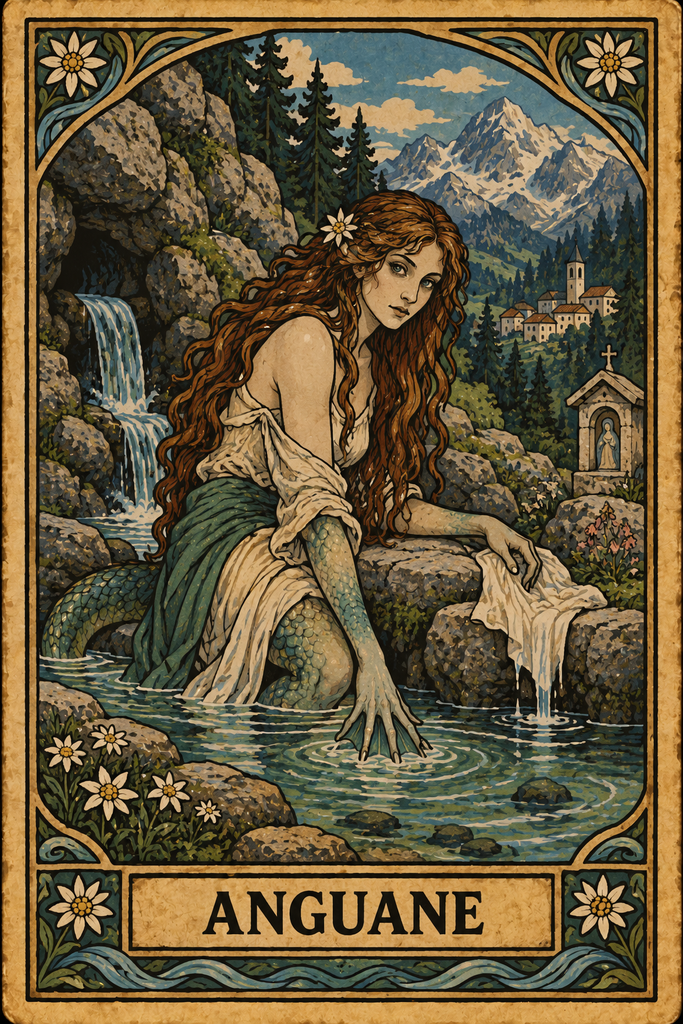
Anguane are female water spirits from Alpine folklore, especially traditions in Trentino and the Veneto. They live near springs, streams, lakes, caves, and wooded valleys. Trentino Cultura describes them as mysterious water beings, sometimes compared with ancient nymphs or even otters. In Veneto, they may appear as beautiful young women with reptile or fish-like features. Some stories say they wash clothes at wells or let out piercing cries.
Anguane can help humans, but relationships with them often come with strict rules. Trentino stories tell of marriages ending when a husband breaks a condition set by his supernatural wife. Other traditions credit Anguane with teaching people spinning, cheese-making, and other useful crafts. Veneto folklore places them around springs and caves in Lessinia, where they could frighten travelers. One legend says a spring burst from rock because an Anguana lived inside it.
Colapesce (Messina / Sicily)
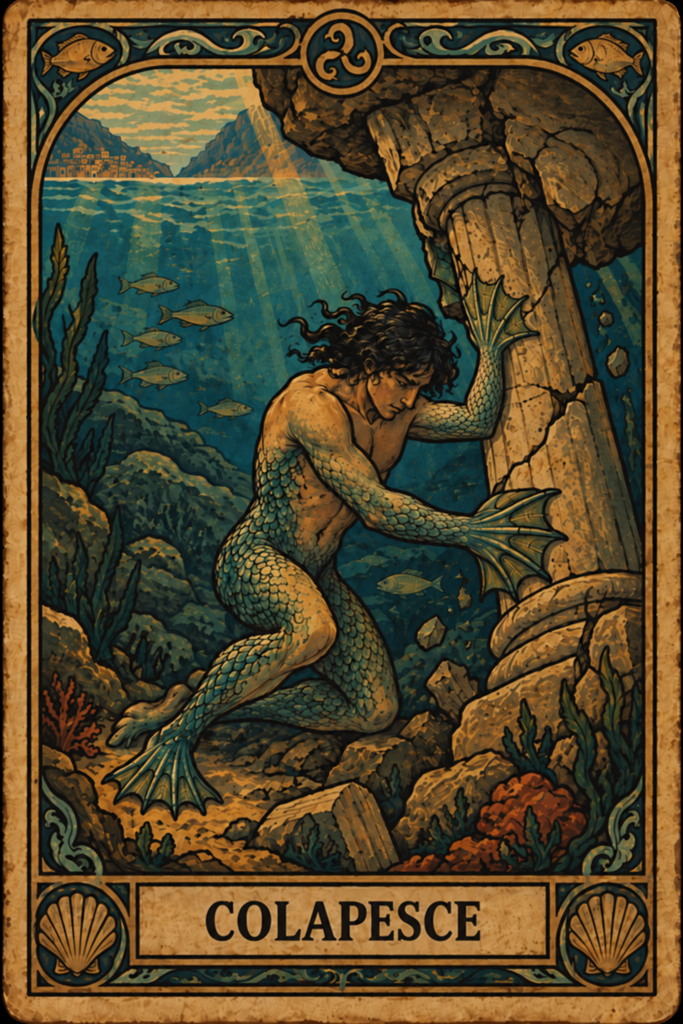
Colapesce is a legendary Sicilian swimmer from Messina whose love of the sea eventually transforms him. One tradition says his angry mother curses him to become a fish. Treccani describes scales covering his body and his hands and feet becoming webbed. His swimming becomes extraordinary, and stories say he spends days underwater exploring the Strait of Messina. Treccani records versions of the legend in Sicily by the thirteenth century.
News of his abilities eventually reaches the king of Sicily, who decides to test him. The ruler throws valuable objects into dangerous waters and orders Colapesce to retrieve them. In some versions, the ruler is Emperor Frederick II. During his final dive, Colapesce discovers three great columns supporting Sicily beneath the sea. One is damaged, and later tradition says he stays underwater to hold it up himself. Modern Sicilian tradition still says Colapesce supports the island and keeps it from sinking.