Spain
Spain cryptids, folklore, monsters, and ghost stories vary sharply across the peninsula and its island territories. Galicia and Asturias preserve spectral processions, death omens, serpent-like monsters, and beings associated with mountains, caves, forests, and waterways. Basque traditions have their own giants, witches, forest beings, and supernatural figures closely connected with the natural landscape.
Regional languages and local traditions have helped preserve distinctive bodies of folklore across Spain. Catalonia adds its own dragons, water beings, witches, and household spirits, while the Canary Islands preserve traditions rooted in pre-Hispanic Guanche culture. On Tenerife, Guanche belief placed Guayota within Mount Teide, tying the supernatural directly to the islands’ volcanic landscape.
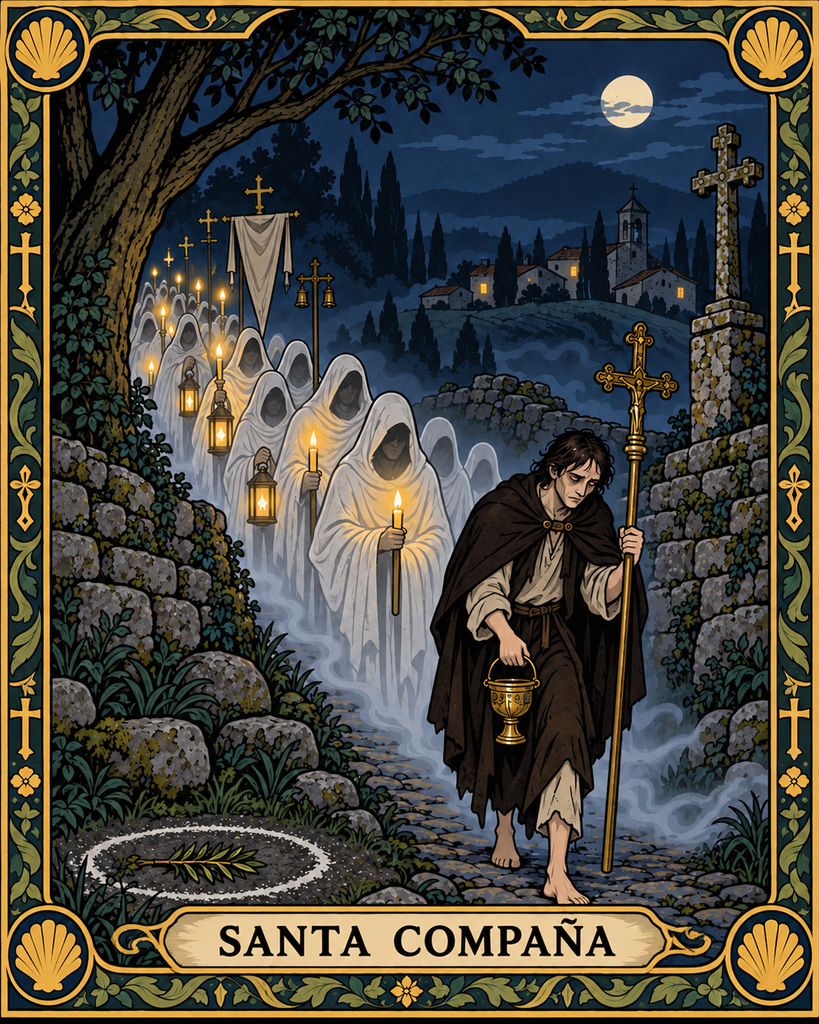
Santa Compaña (Galicia)
Santa Compaña is a Galician tradition describing a nocturnal procession of souls traveling parish roads after midnight. The Galician encyclopedia says a living person leads them, carrying a parish cross and holy water. The procession may announce an approaching death, sometimes appearing as a supernatural preview of the victim’s funeral. Other names include Estadea, Hoste, and Procesión das Ánimas.
The living guide reportedly weakens, loses color, and falls ill after repeated nights among the dead. Escape comes by passing the cross and holy water to another traveler encountered along the route. Folklore collected by Antonio Fraguas also describes bells, lanterns, candles, and protective circles drawn on the ground. The Real Academia Galega also records estantiga as a synonym for Santa Compaña.
Basajaun (Basque Country)
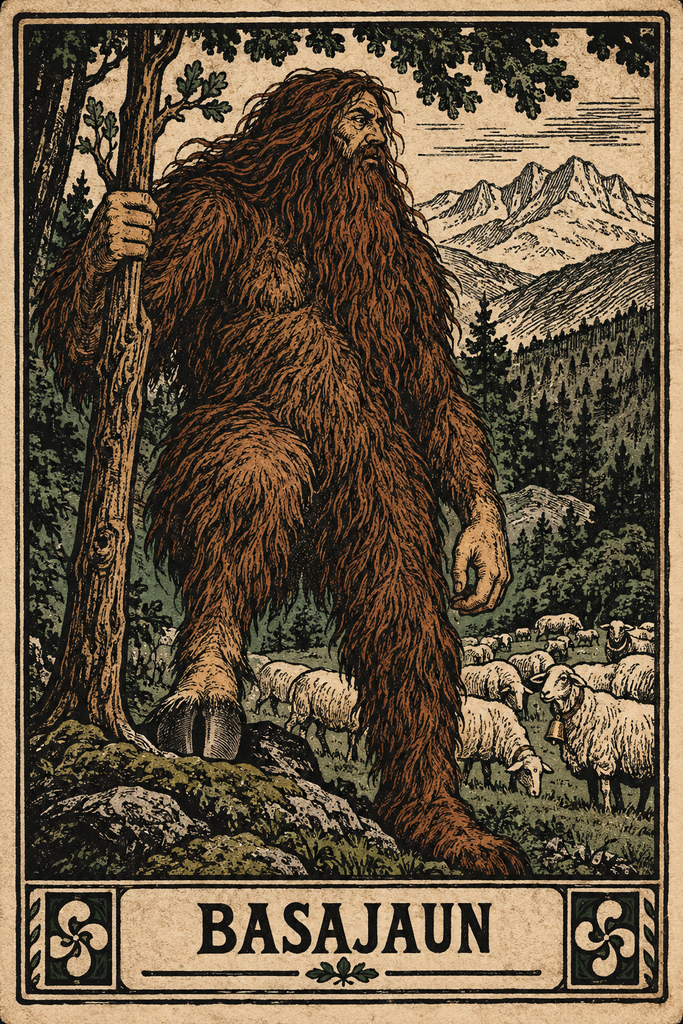
Basajaun, meaning “Lord of the Forest,” is a giant woodland being from Basque mythology. Basque government material describes him as long-haired, immensely strong, and covered with hair, with one hoof-like foot. He lives in deep forests or caves and often appears as a protector of shepherds and their flocks.
Basajaun warns shepherds of approaching storms and keeps wolves away while the flocks rest. Some traditions say sheep announce his presence by shaking their bells, allowing shepherds to sleep safely. In return, shepherds leave him bread, which he collects while they sleep. Other stories make Basajaun the keeper of agricultural knowledge later obtained through Martin Txiki’s trickery. A Basque Government publication recounts Martiniko stealing wheat seeds from Basajaun near Ataun.
Cuélebre (Asturias)
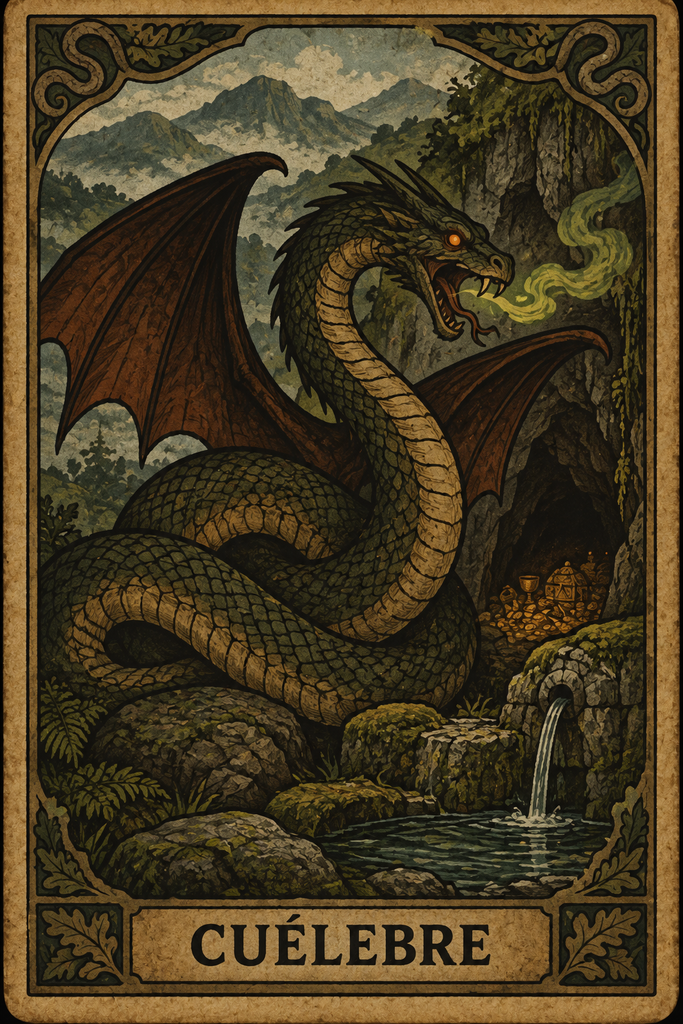
Cuélebre is a giant winged serpent from Asturian folklore, associated with caves, forests, fountains, and hidden treasure. A University of Oviedo study describes scales, fiery eyes, batlike wings, and a deadly breath. The Asturian-language dictionary also records attacks on people and animals and scales hard enough to repel bullets. Some traditions say only the throat can be wounded fatally.
Cuélebres often guard treasure or enchanted figures, sometimes appearing in traditions involving xanas. The RAE’s historical dictionary traces written examples of the creature to Asturian publications from 1862. The creature remains prominent in public presentations of Asturian mythology. The Camín Encantáu in Llanes features a life-size Cuélebre carving among figures from Asturian oral tradition.
Dip (Pratdip / Catalonia)
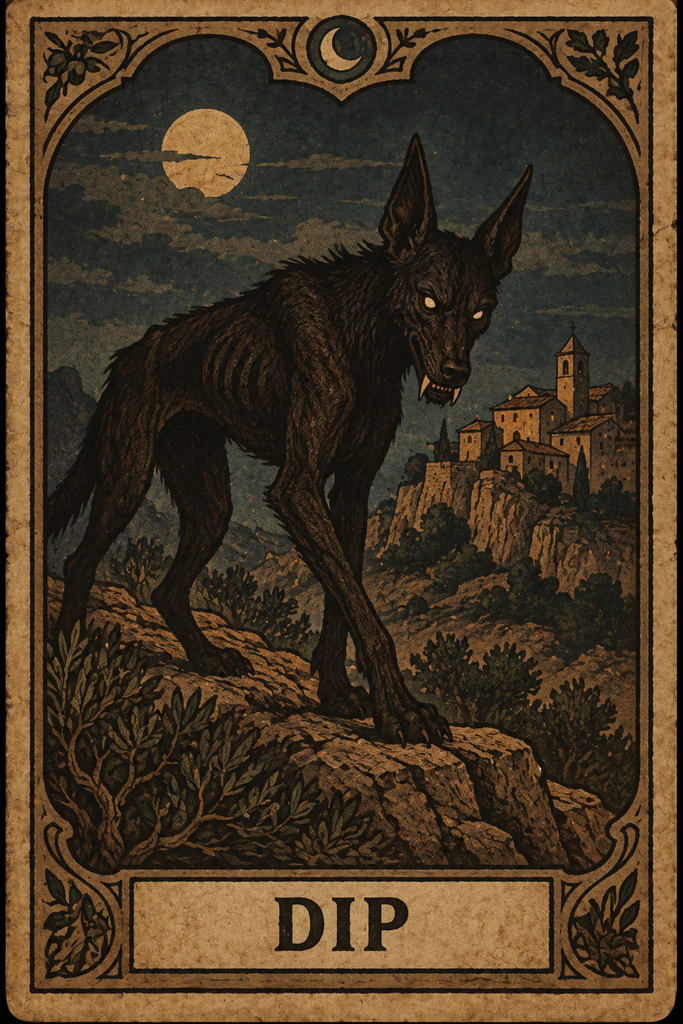
The Dip is a dog-like supernatural being associated with Pratdip in Catalonia’s Baix Camp region. The municipality of Pratdip describes Dips as mythological beings with vampiric traits once believed to inhabit the area. Local tradition connects the creatures with the town’s name, although the municipality also records a different linguistic explanation.
The Dip has become a civic emblem as well as a folklore figure. Pratdip’s official coat of arms depicts a black dog and explicitly identifies it as the town’s Dip emblem. The municipality links that emblem to a Dip depicted on Santa Marina’s Renaissance altarpiece, dated 1602. The altarpiece is now preserved in Pratdip’s parish church. Joan Perucho later drew on the legend in his 1960 novel Les històries naturals, according to Enciclopèdia Catalana.
Dragon of Banyoles (Banyoles / Catalonia)
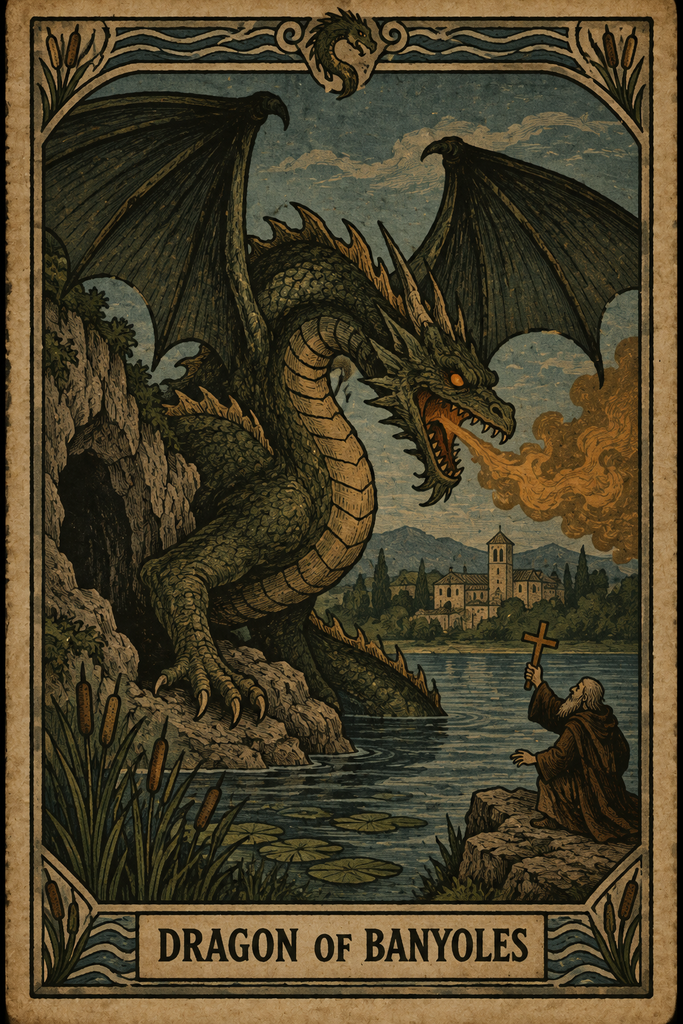
The Dragon of Banyoles is a winged monster associated with Lake Banyoles in Catalonia’s Pla de l’Estany region. Local tradition places its lair in the Clot del Drac, a fissure near the lake. Some versions describe bony spines, fiery eyes, and foul breath that poisoned water and sickened people. Terrified villagers reportedly sacrificed children to satisfy its appetite. The hermit Sant Mer eventually subdued the dragon through prayer and led it into town.
Some retellings say Sant Mer made the dragon vegetarian, ending its attacks on people and livestock. Folklorist Àngel Vergés also records a 1927 version featuring a hero armed with a mirrored shield. In 2018, Banyoles published an illustrated retelling by Txell Darné and Joan Gómez. The city’s 2019 Aloja medieval fantasy fair exhibited a new dragon festival figure at the Archaeological Museum.
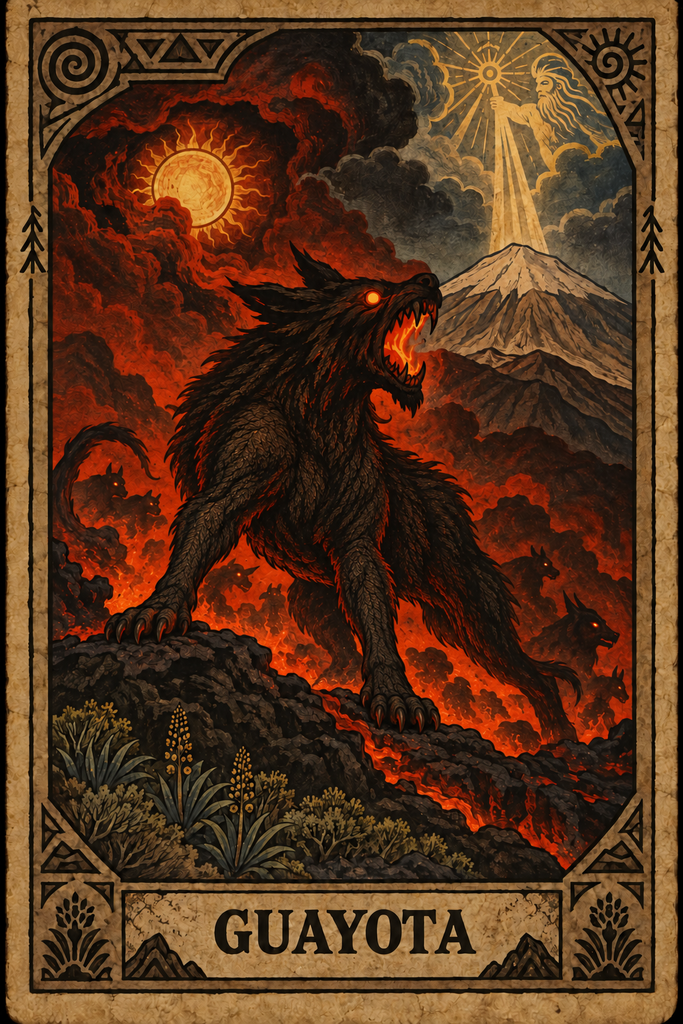
Guayota (Mount Teide / Tenerife, Canary Islands)
Guayota is a feared supernatural being associated with the Indigenous Guanche traditions of Tenerife and Mount Teide. In 1594, chronicler Alonso de Espinosa recorded Guayota as a demon inhabiting the volcanic underworld of Echeyde. Some later retellings describe him emerging from the volcano as a fierce black dog, accompanied by dark canine beings called Tibicenas.
In a retelling presented by Teide National Park, Guayota abducts Magec, the sun, and imprisons him inside the volcano. Darkness covers Tenerife, and the Guanches appeal to Achamán, their supreme celestial being. Achamán defeats Guayota, frees Magec, and seals the malevolent being inside Mount Teide. The story identifies the mountain’s pale summit cone, called Pan de Azúcar, as the seal imprisoning Guayota.