Poland
Polish cryptids and folklore range from medieval city monsters to mountain spirits, ghosts, lake creatures, and modern urban legends. Poland’s traditions developed across the Baltic coast, central lowlands, Carpathians, Sudetes, and historically distinct cities. The State Ethnographic Museum in Warsaw preserves extensive documentation of Polish rituals, customs, oral traditions, and regional culture. Contemporary folklore also thrives in cities, where scholars recognize urban legends as a distinct Polish storytelling tradition.
Some Polish legends are closely tied to particular landscapes, cities, and periods of history. Kraków’s Wawel Dragon belongs to a much older tradition of legendary monsters associated with important places. Mountain folklore developed differently in the Sudetes and Carpathians, where supernatural figures became attached to forests, peaks, and local communities. Twentieth-century Poland produced another kind of folklore through urban legends, strange encounters, and stories shaped by modern roads, reservoirs, and cities.
Wawel Dragon (Kraków / Lesser Poland)
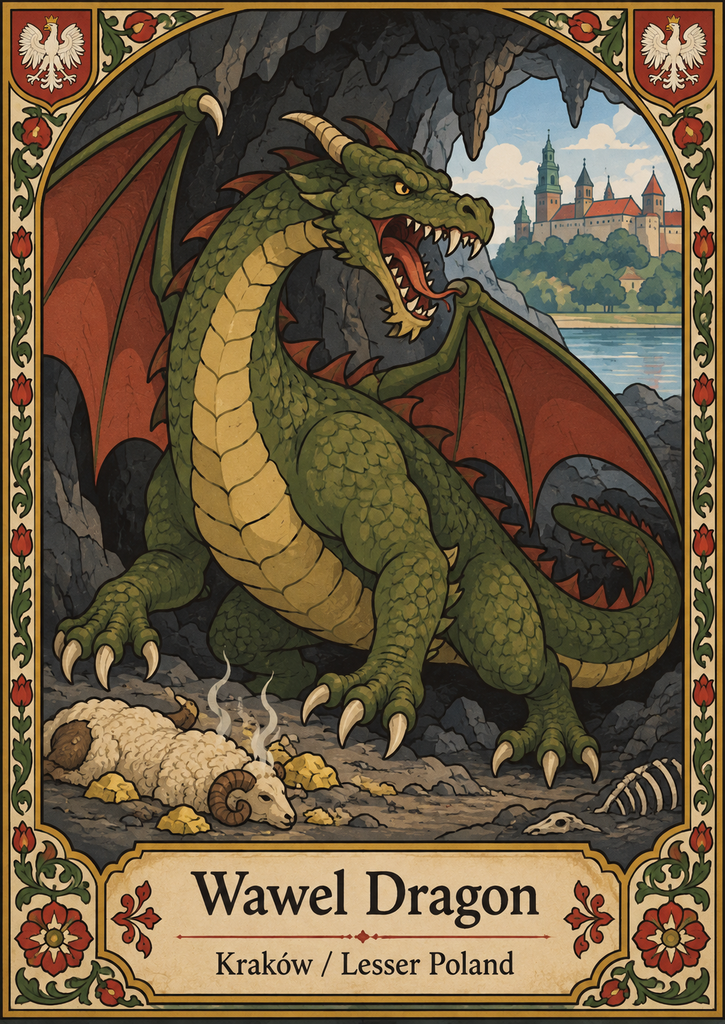
The Wawel Dragon is a legendary monster associated with a cave beneath Wawel Hill by the Vistula River. Wincenty Kadłubek recorded the oldest surviving version around the turn of the thirteenth century. He described a fierce, ravenous creature that demanded cattle and threatened to devour people when offerings failed. The sons of Krak, Kraków’s legendary founder and ruler, kill the monster using sulfur-filled bait. Jan Długosz later made Krak himself the dragon’s killer. Sixteenth-century chronicler Joachim Bielski introduced Skuba, the clever shoemaker who slays the dragon in today’s best-known version.
The actual Smocza Jama cave extends about 270 meters beneath Wawel Hill, with an 81-meter visitor route. Bronisław Chromy’s bronze dragon statue was installed beside the cave in 1972. The six-meter sculpture periodically breathes real fire through a gas installation. Wawel now incorporates the cave and legend into its “Looking for the Dragon” visitor route.
Warsaw Basilisk (Warsaw Old Town)
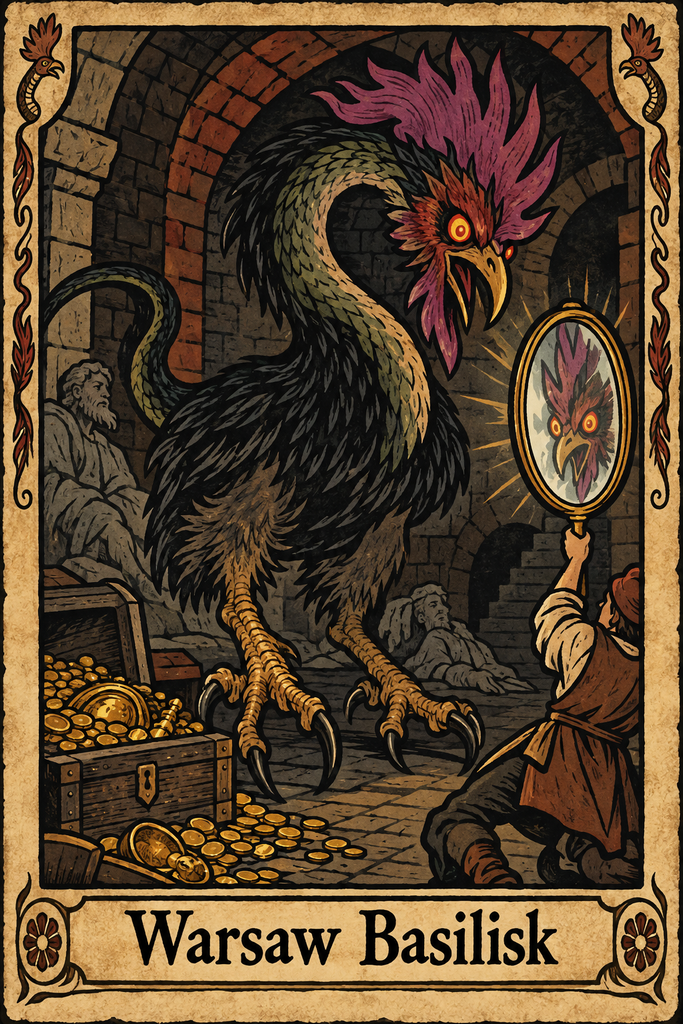
Warsaw’s Basilisk was said to inhabit a cellar on Krzywe Koło Street in the Old Town. Descriptions vary, combining serpent, rooster, dragon, and other monstrous features. Its gaze could kill victims or turn them to stone, depending on the version. Stories often place treasure in the cellar, drawing victims toward the creature. A mirror finally defeats the Basilisk when its deadly gaze is reflected back upon itself.
Modern retellings variously make the victor a prisoner, tailor, shoemaker, or girl named Magda. The Museum of Warsaw continues presenting the Basilisk among the city’s established legends. A 1950s sgraffito at Old Town Market Square 4 shows a shoemaker raising a mirror toward the creature. Official Warsaw tourism material still directs visitors to Krzywe Koło as the creature’s legendary home.
Liczyrzepa (Karkonosze / Lower Silesia)
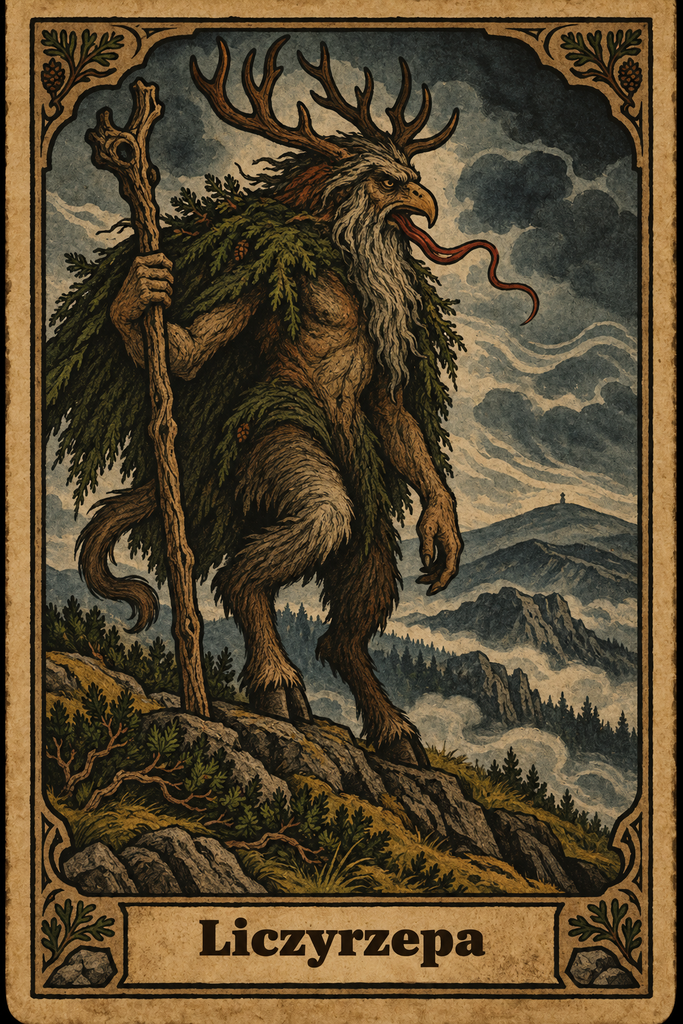
Liczyrzepa is a Polish name for the Mountain Spirit associated with the Karkonosze along the Czech border. Older traditions portray him as a capricious mountain ruler who controls weather, changes shape, and leads travelers astray. Later stories increasingly cast him as a guardian who rewards good behavior and punishes greed or disrespect. Martin Helwig’s 1561 map of Silesia depicts Rübezahl as a bizarre horned mountain demon. The figure has goat legs, deer antlers, an eagle’s beak, a dragon’s tongue, tail, and staff.
German and Czech traditions also know the Mountain Spirit as Rübezahl and Krakonoš. One legend tells how he abducted a princess and transformed turnips into servants for her. She escaped by persuading him to count the remaining turnips, leaving him with a mocking nickname. Józef Sykulski’s 1945 collection helped popularize Liczyrzepa in Polish after World War II. Today, Karkonoskie Tajemnice in Karpacz presents the Mountain Spirit’s legends through an interactive exhibition.
Black Volga (Across Poland)
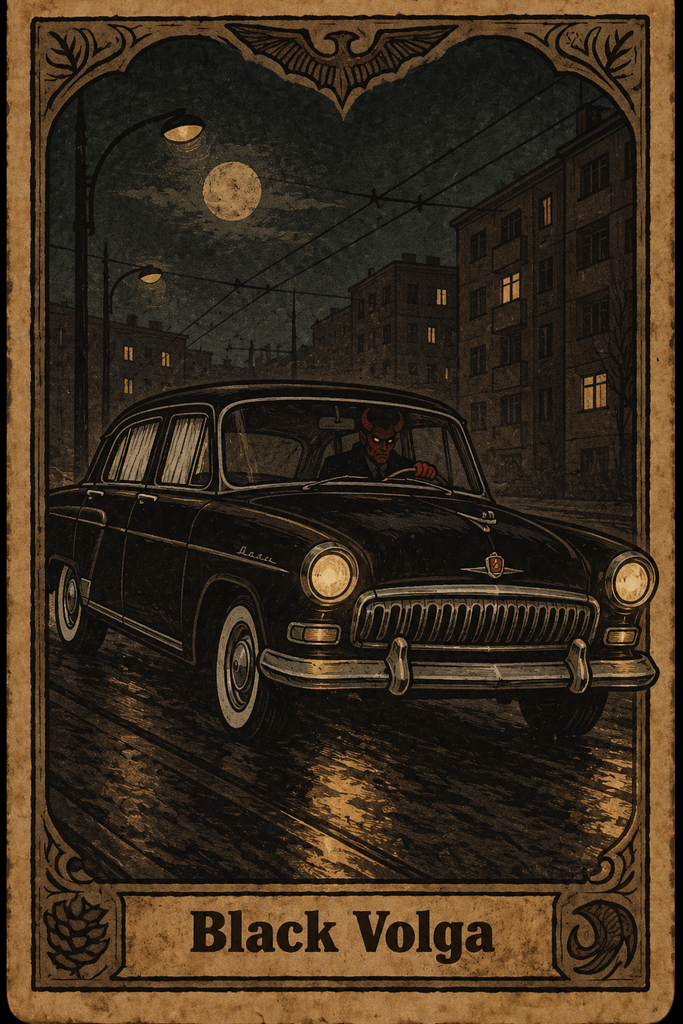
The Black Volga was a frightening Polish urban legend widely told during the 1960s and 1970s. Volgas were large, expensive cars associated with officials and elites in communist Poland. Stories described a black Soviet-made Volga prowling city streets and abducting children or other pedestrians. Drivers changed between versions, appearing as priests, nuns, Satanists, vampires, or even the Devil. Some stories claimed kidnapped victims were drained of blood for wealthy people suffering from leukemia.
The story spread beyond Warsaw and became familiar across communist-era Poland. Details changed between cities, giving the mysterious car different passengers, victims, and purposes. In one Częstochowa version, a stranger left the car and asked someone for the time. The person was then supposedly doomed to die exactly 24 hours later. Later versions sometimes replaced the aging Volga with newer black cars, including BMWs and Porsches.
Paskuda (Zegrze Reservoir / Masovia)
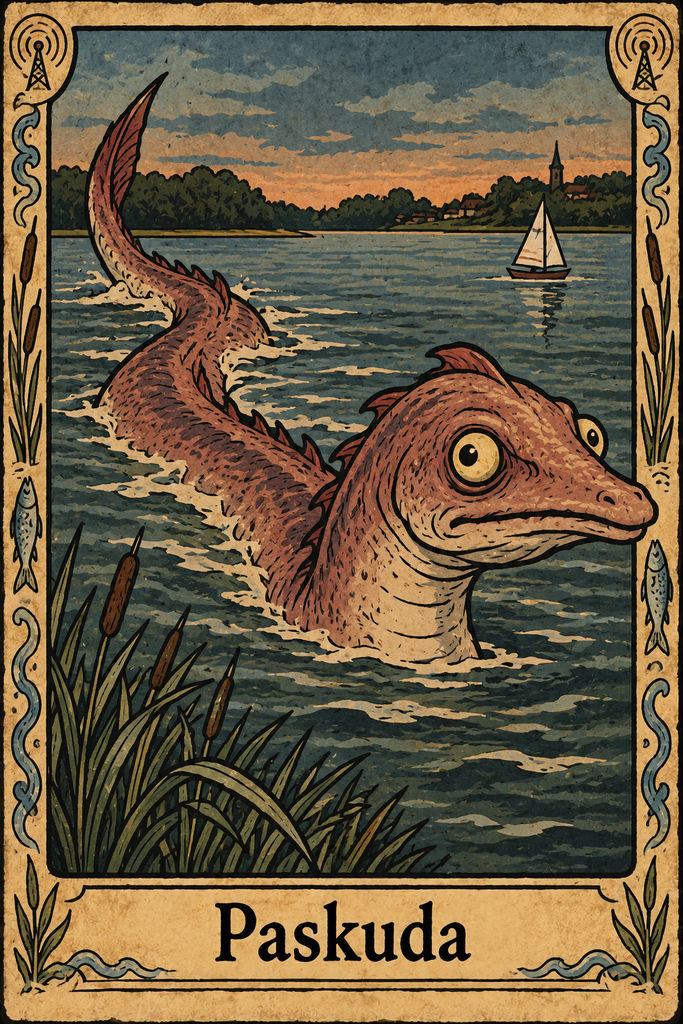
Paskuda is a modern lake-monster legend from Zegrze Reservoir, about thirty kilometers north of Warsaw. Polish Radio’s Lato z Radiem helped popularize the creature during the early 1980s. Witnesses soon reported a large aquatic animal with a prominent head, long body, and pointed tail. As radio and newspaper coverage grew, more people claimed they had seen the monster. The stories often compared Paskuda with Scotland’s Loch Ness Monster.
Polish journalists created and promoted Paskuda as a playful local lake-monster story. Polish Radio later recalled that panic led some mothers to remove children from camps beside the reservoir. The joke outlived the original campaign through songs, cartoons, contests, and later searches. In 2021, firefighters and radio reporters searched the reservoir with sonar during a playful revival. A Mazovian tourism guide even recorded a joking 2023 sighting near Euzebia Isle.
Emilcin UFO Encounter (Emilcin / Lublin Voivodeship)
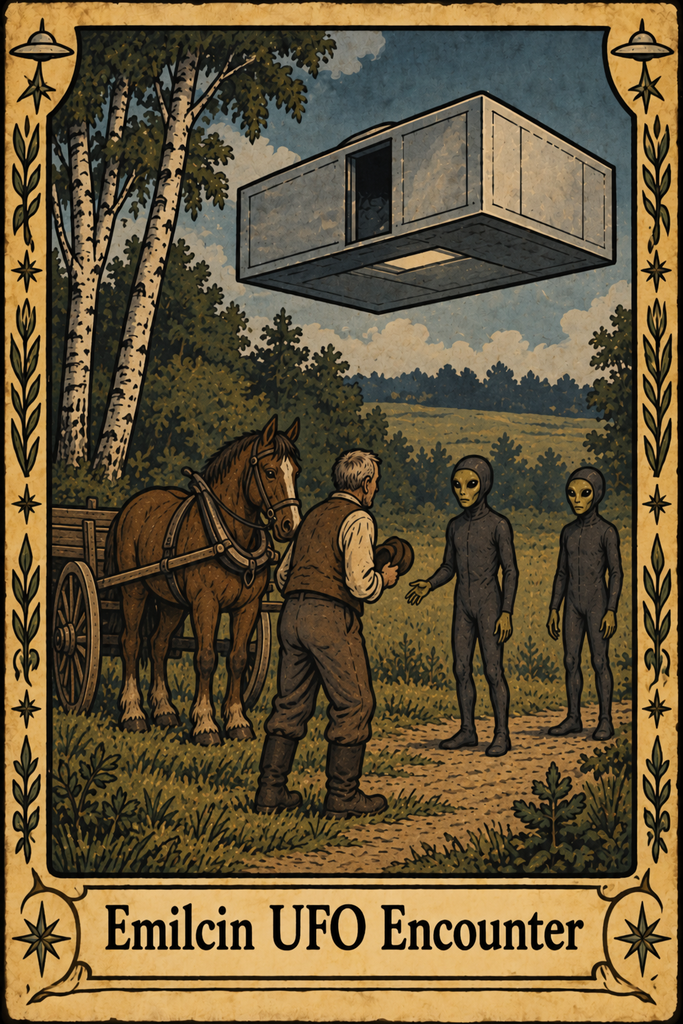
On May 10, 1978, farmer Jan Wolski reported meeting two strange beings while traveling by cart near Emilcin. He described small figures in dark coveralls, with olive-colored skin, slanting eyes, and speech he could not understand. Wolski said the beings rode with him to a clearing, where a silver craft hovered above the ground. He entered the craft and said the beings examined his body before releasing him. After returning home, he told his family, and neighbors went to inspect the clearing.
The Emilcin story became one of Poland’s best-known UFO encounter accounts. A monument commemorating Wolski’s reported encounter has stood in Emilcin since 2005. Polish Radio has preserved the story through archival recordings and later programs about the case. UFO enthusiasts have also organized gatherings in the village around the encounter’s anniversary. In May 2025, Emilcin hosted its second revived Ufological Picnic around the event’s forty-seventh anniversary.