Greece
Greece cryptids, folklore, monsters, and ghost stories stretch across mountain villages, islands, coastlines, caves, springs, and old cemeteries. Greek traditions include revenants, seasonal goblins, dangerous neraides, sea beings, wandering spirits, and strange creatures living outside settled places. Folklorists have recorded these stories across mainland Greece and the islands, including detailed traditions from Naxos and other Aegean communities.
Many Greek supernatural stories are closely tied to place or season. Kallikantzaroi emerge during the twelve days of Christmas, while vrykolakes belong to traditions surrounding death and burial. Neraides appear around lonely springs, caves, and mountain paths, while Crete has its own ghostly legends. At Frangokastello, the Drosoulites are said to march toward the fortress each May. These traditions give Greece a folklore landscape shaped by village life, Orthodox customs, island culture, and strong regional identities.
Kallikantzaroi (Across Greece)
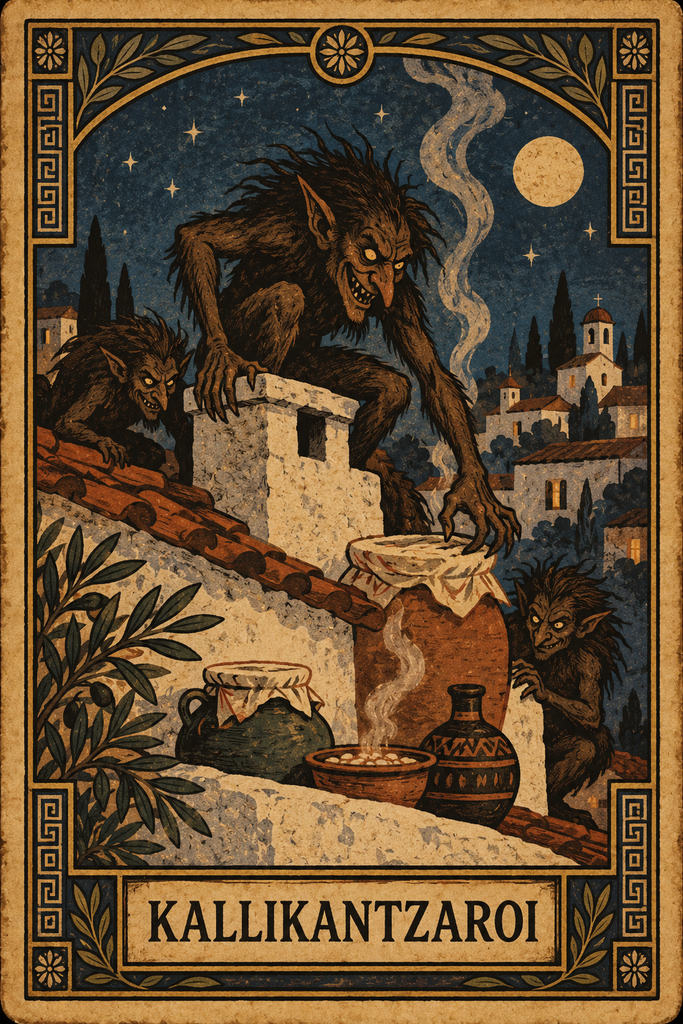
Kallikantzaroi are mischievous supernatural beings who emerge during the twelve days between Christmas and Epiphany. Greek tradition says they spend the rest of the year underground, sawing at the tree supporting the world. Just before the tree falls, Christmas arrives and they rush above ground to trouble people instead. Stories describe them as ugly, hairy, misshapen, or animal-like, although their appearance changes from place to place. They steal food, frighten travelers, foul household supplies, and cause trouble around homes and villages.
Regional traditions gave families different ways to keep the Kallikantzaroi away during the Christmas season. On Kea, people burned fragrant fava beans so the creatures would avoid entering through the chimney. Other stories warn that they spoiled uncovered food or water, so households carefully covered their containers. At Epiphany, priests bless homes and waters, and the Kallikantzaroi flee back beneath the earth. There they discover the world-tree healed, forcing them to begin their endless sawing all over again.
Vrykolakas (Across Greece)
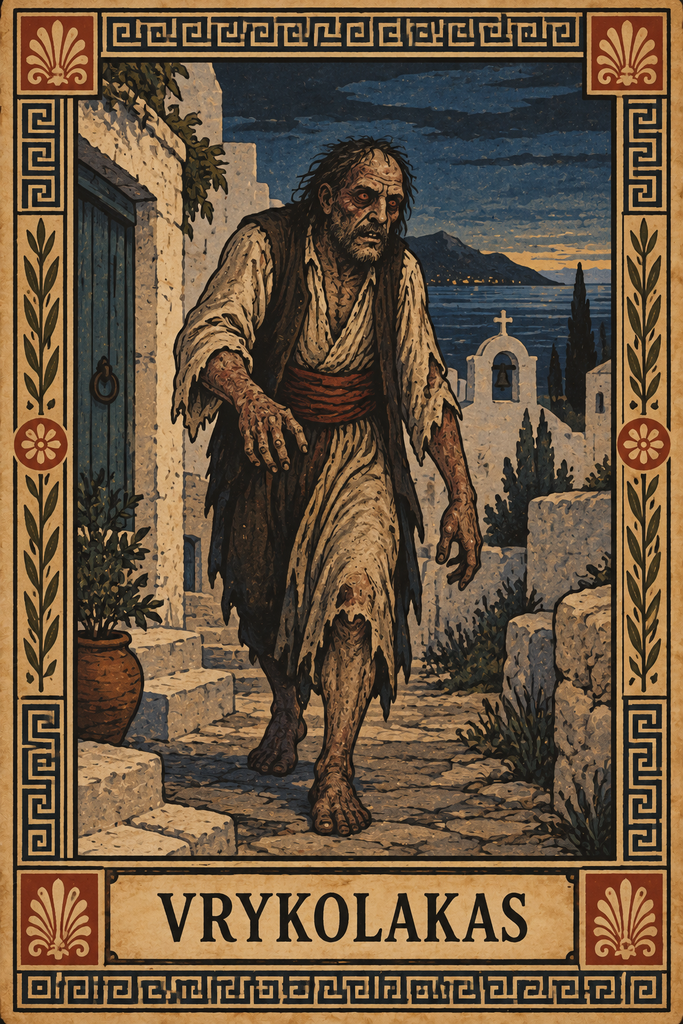
The Vrykolakas is a restless corpse in Greek folklore, feared across the mainland and islands. Stories say a person might return after excommunication, violent death, improper burial, or a curse. Older accounts describe bodies that remain swollen, firm, and strangely undecayed after burial. Some Greek traditions describe Vrykolakes roaming at night, crushing sleepers, spreading sickness, or frightening whole communities. Others warn of the dead knocking at doors and calling the living by name.
One famous case unfolded on Mykonos in 1701, when villagers blamed a murdered man for nightly disturbances. Tournefort’s published account says residents reported him entering homes, moving furniture, extinguishing lamps, and attacking people. The community opened his grave, removed his heart, and later burned the body when the disturbances continued. Afterward, reports of the revenant stopped. Folklore collections record prayers, exhumation, burning, and many regional names for the returning dead. These include forms such as vourkolakas, vourvoulakos, and the Cretan katahanas.
Neraides (Across Greece)
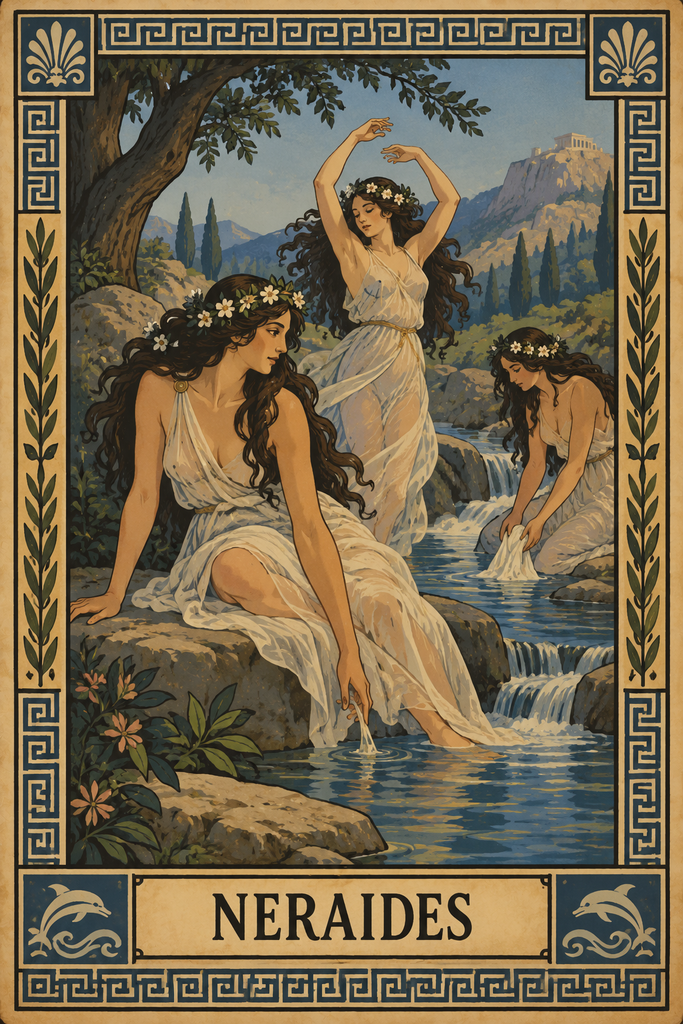
Neraides are female supernatural beings found across Greek folklore, especially near springs, rivers, caves, mountains, and lonely places. Many stories describe them as beautiful women who dance, sing, or wash clothes beside water. Academy of Athens records place them dancing and singing at night in isolated places. Other traditions say they appear at noon, especially during the heat of summer. On Meganisi, folklore collected in 1958 placed them around threshing floors at night and midday.
Meeting Neraides could be enchanting, dangerous, or both. Cretan traditions warn that people who encounter them may lose their speech, become sick, or lose their senses. One recorded belief warns travelers not to speak when Neraides appear. Other stories tell of people stumbling upon their dances or hidden gatherings and suffering afterward. Some villages called particular caves, springs, or clearings neraïdotopoi, places where Neraides were believed to gather.
Drosoulites (Frangokastello / Crete)
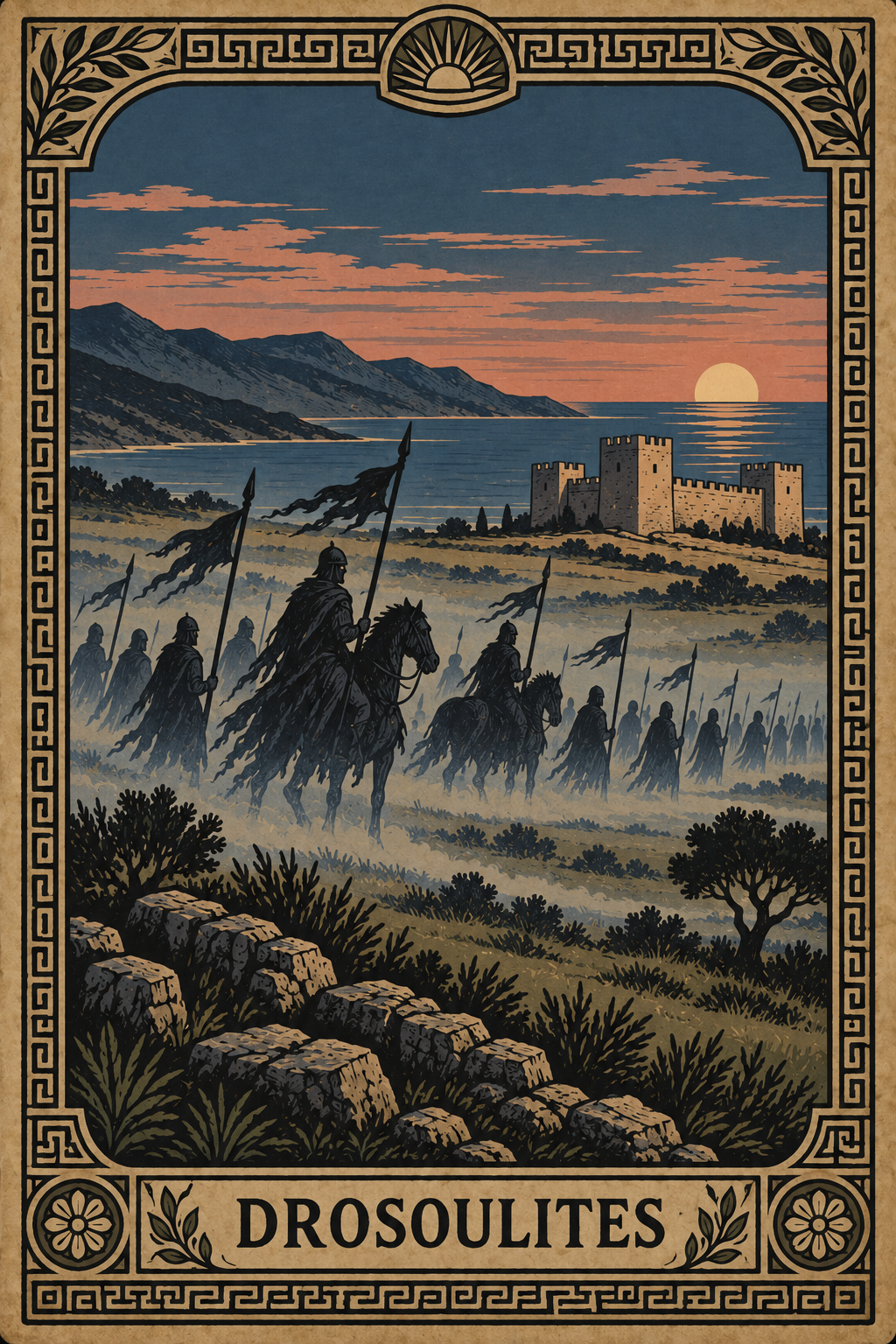
The Drosoulites are ghostly warriors said to appear near Frangokastello on Crete’s southern coast each spring. Local tradition identifies them as fighters killed in the Battle of Frangokastello on May 17, 1828. Crete’s historical archive records that Hatzimichalis Dalianis and many rebels died fighting Ottoman forces around the fortress. According to the legend, their bodies were left unburied until windblown sand covered them.
Near dawn in late May, witnesses describe dark human shapes moving silently across the plain toward the castle. Some appear on foot, while others seem mounted or armed. Local tradition places their route from Agios Charalambos toward the fortress before they fade near the sea. They are called Drosoulites, or “dew men,” because they appear with the cool morning dew. Official Greek tourism material says the shadows return around the battle’s May anniversary.
Mora (Epirus, Peloponnese, and Elsewhere)
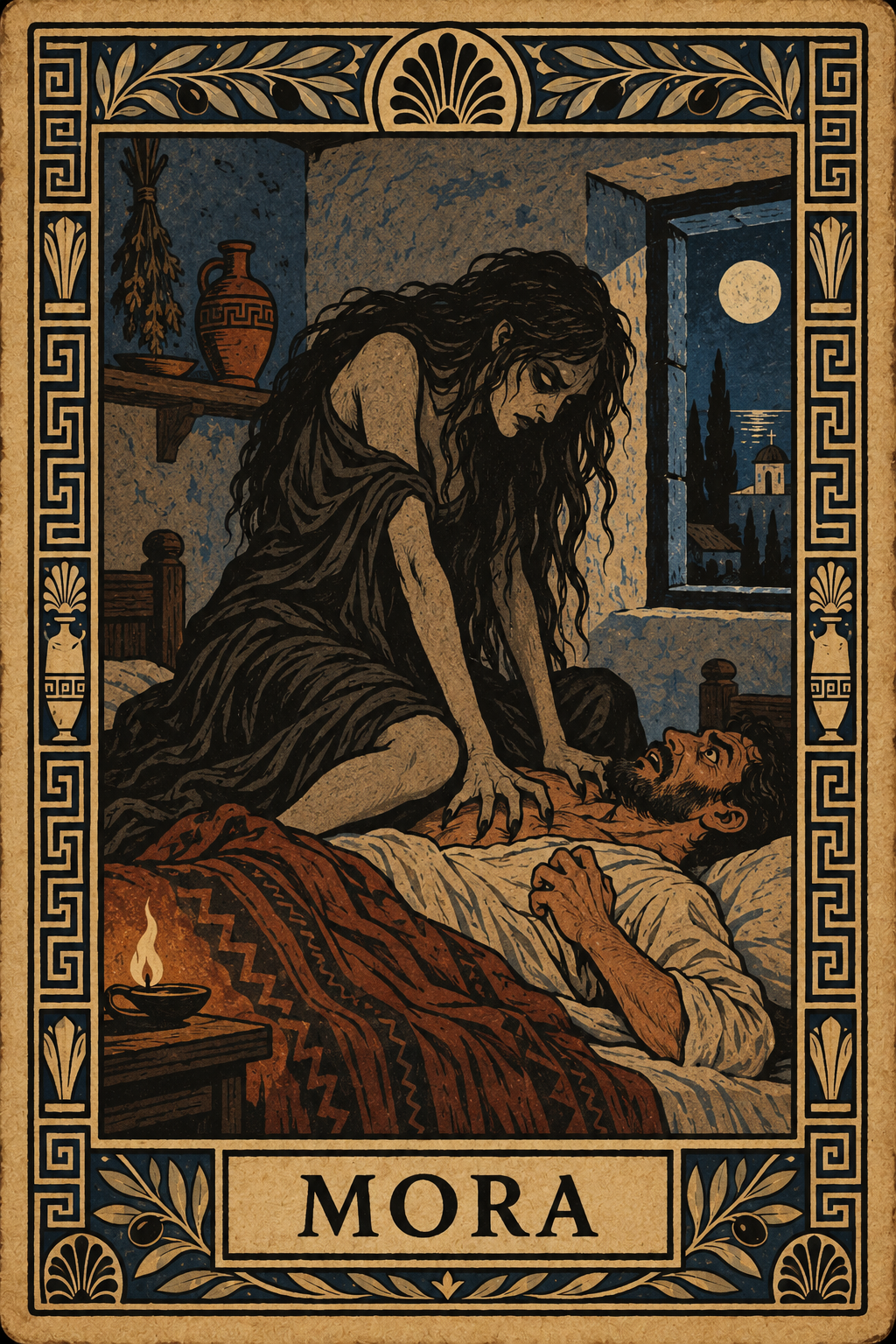
Mora is a night spirit in Greek folklore that attacks people while they sleep. Academy of Athens records from Epirus identify Mora directly with the nightmare. In Arcadia, one account says she comes during sleep, presses people down, strikes them, and leaves marks. Victims may try to rise but cannot move beneath her weight. Similar records from Messenia call being “caught by Mora” the nightmare.
Folklorist Nikolaos Politis recorded an Athens variant in his 1904 collection of Greek traditions. There, Mora was a powerful female lamna who wandered at night and sat heavily on sleeping people’s chests. The sleeper groaned beneath her weight, but someone awake enough could fight back. Politis recorded that anyone who seized her cap could demand money or property in exchange for returning it.
Gorgona of Alexander (Greek Seas)
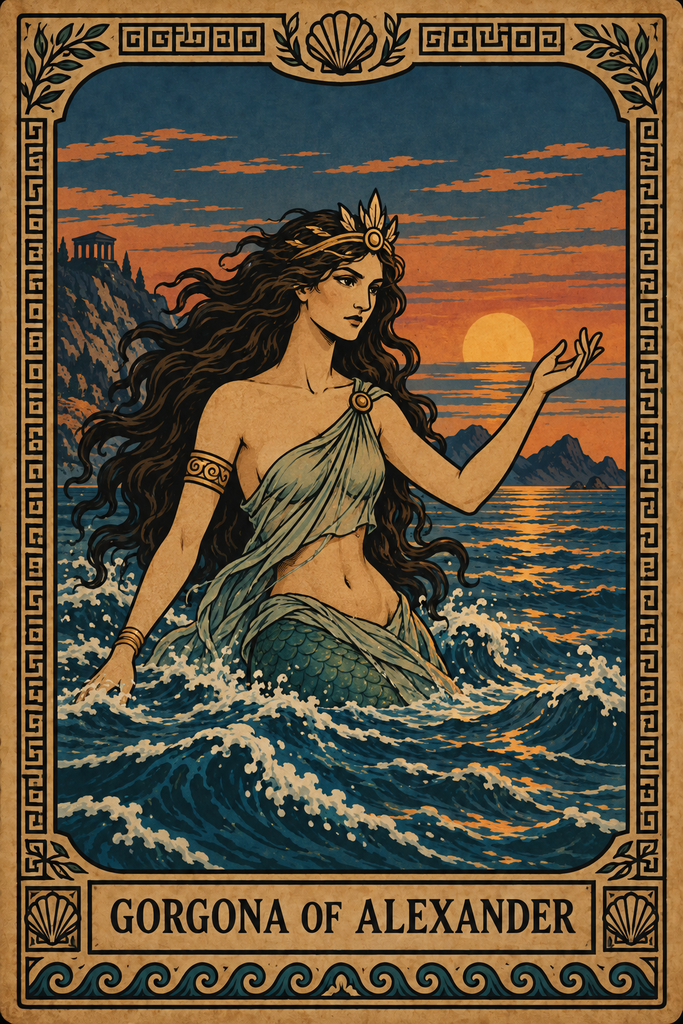
The Gorgona of Alexander is a Greek sea legend about Alexander the Great’s immortal sister. She wanders the open sea as a mermaid, stopping ships and questioning their crews. Greek educational material says she asks sailors whether King Alexander still lives. The safe answer is, “He lives and reigns and rules the world.” Hearing this, the Gorgona rejoices and lets the ship continue. A wrong answer can enrage her, raising a storm and sinking the vessel.
Stories differ about how she became a mermaid. One Cretan tradition says she drank the water of immortality meant for Alexander. After she spilled the rest, a giant fish swallowed her from the feet to the armpits. Unable to digest an immortal woman, the fish fused with her and made her half human, half fish. In that version, she emerges on February 2 and questions passing sailors about her brother. The legend later entered Greek literature, including Andreas Karkavitsas’s story The Mermaid.