Iceland
Iceland’s cryptids, monsters, and ghost stories are closely associated with lava fields, isolated farms, mountain valleys, lakes, and North Atlantic coasts. Folklore describes hidden people living inside rocks and hills, trolls roaming remote country, dangerous water horses, restless ghosts, and strange sea creatures. Many accounts belong to particular farms, river crossings, cliffs, and stretches of water.
During the nineteenth century, collectors such as Jón Árnason gathered Icelandic folktales from oral traditions, preserving stories of supernatural encounters. Familiar activities could bring people into contact with extraordinary beings, whether crossing an icy river, moving a stone, or fishing at sea. Seasonal traditions also feature Grýla, the child-eating Christmas ogress, while East Iceland has the legendary Lagarfljót Worm. Reports about the lake creature reached national television again in 2012.
Lagarfljótsormurinn (Lagarfljót / East Iceland)
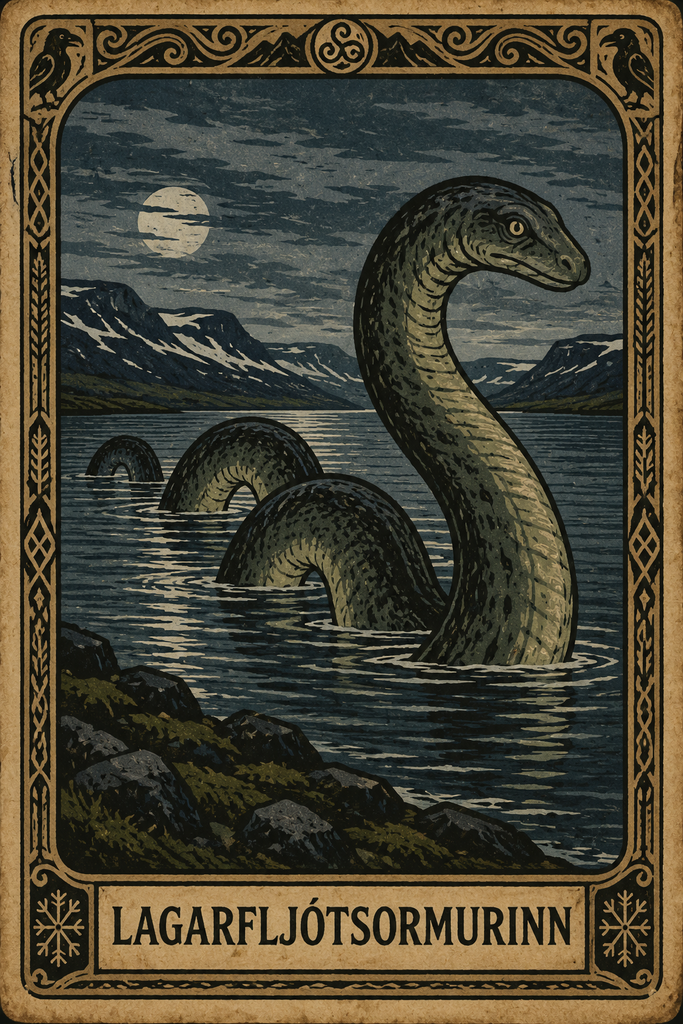
Lagarfljótsormurinn is a legendary lake monster said to live in Lagarfljót, a long lake in East Iceland. The creature is first mentioned in Icelandic annals from 1345. Later folklore tells of a girl who placed a small worm with a gold ring. When the worm grew huge instead of the gold, she threw both into the lake. It kept growing, poisoned the shore, and attacked people and animals crossing the water. Two Finns were summoned to kill it, but they could only bind it beneath the lake.
The bound monster was still said to raise great humps above the water, warning of hardship or major events. Sightings continued for centuries, and local stories kept the creature closely tied to Lagarfljót. In February 2012, farmer Hjörtur Kjerúlf filmed a long, twisting shape moving through Jökulsá í Fljótsdal. The river flows into Lagarfljót, and the footage quickly revived interest in the monster. RÚV reported the video nationally, giving the old lake legend a new burst of attention.
Huldufólk (Across Iceland)
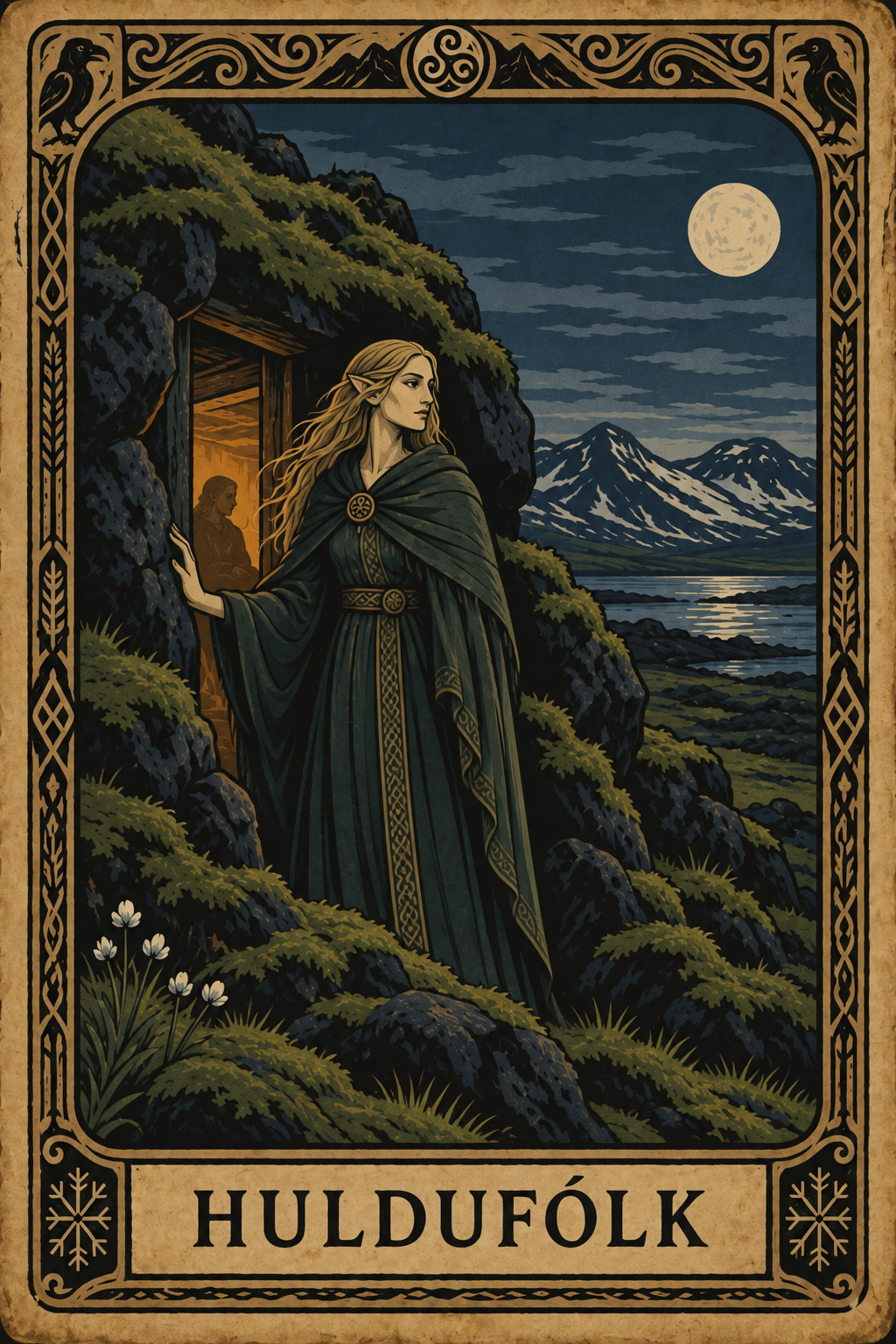
Huldufólk, meaning “hidden people,” are supernatural humanlike beings said to live inside hills, rocks, and cliffs across Iceland. Today, huldufólk and elves are often treated as the same beings in Icelandic folklore. Folklore records describe them appearing in dreams to warn people, ask for food, or request help with childbirth. Other stories tell of romances, stolen children, and visits inside hidden homes. People who damaged their rocks or hills could face illness, accidents, or other misfortune.
Some places became especially famous for hidden people. At Álfaborg in Borgarfjörður eystri, tradition says a queen of the hidden people lives inside the hill. Stories there also describe marriages between local people and hidden inhabitants. In 2015, road workers relocated a 90-ton stone from the planned Álftanesvegur road. Some considered it an elf chapel, and officials said they wanted to respect those beliefs.
Grýla (Across Iceland)
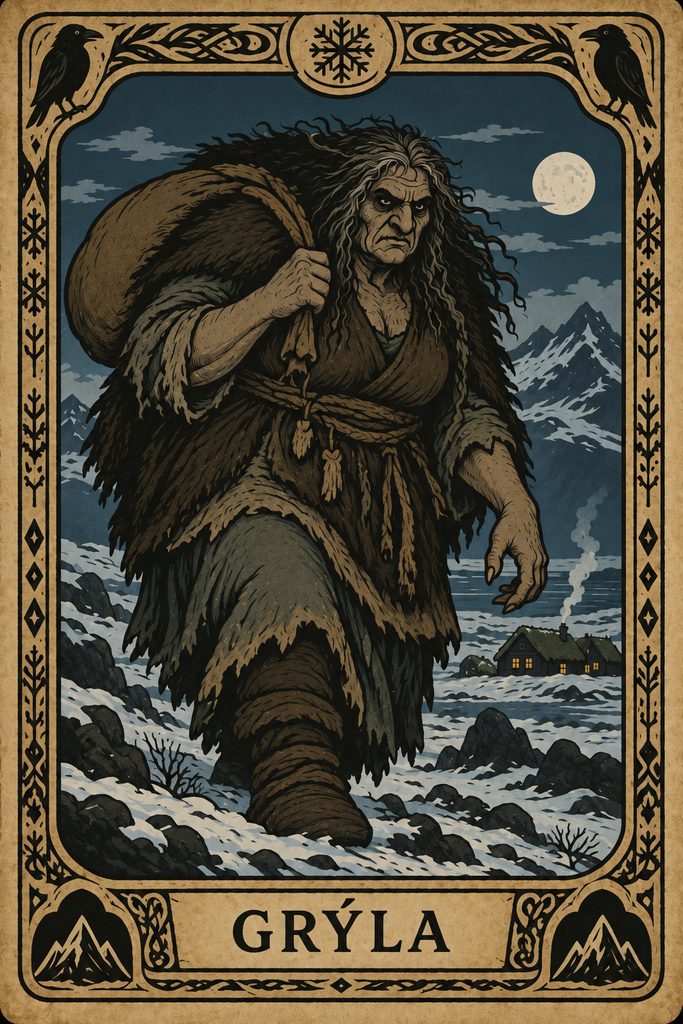
Grýla is a huge ogress from Icelandic folklore, feared long before she became part of Christmas traditions. Medieval sources mention her as a terrifying troll-woman, but do not connect her with Christmas. One old verse even gives her fifteen tails. By the seventeenth century, poems place Grýla at Christmas, roaming farms and hunting badly behaved children. She asks farmers for naughty children to eat, turning her into a frightening warning for Icelandic youngsters.
Later stories make Grýla the mother of the Yule Lads and wife of the troll Leppalúði. A seventeenth-century poem calls the Yule Lads their children and describes the family as dangerous. Grýla is often pictured carrying children away and eating them during the Christmas season. Songs and stories about her remained part of Icelandic Christmas culture for centuries. The National Museum of Iceland still features Grýla in its seasonal programs.
Nykur of Stóravatn (Vatnadalur / Westfjords)
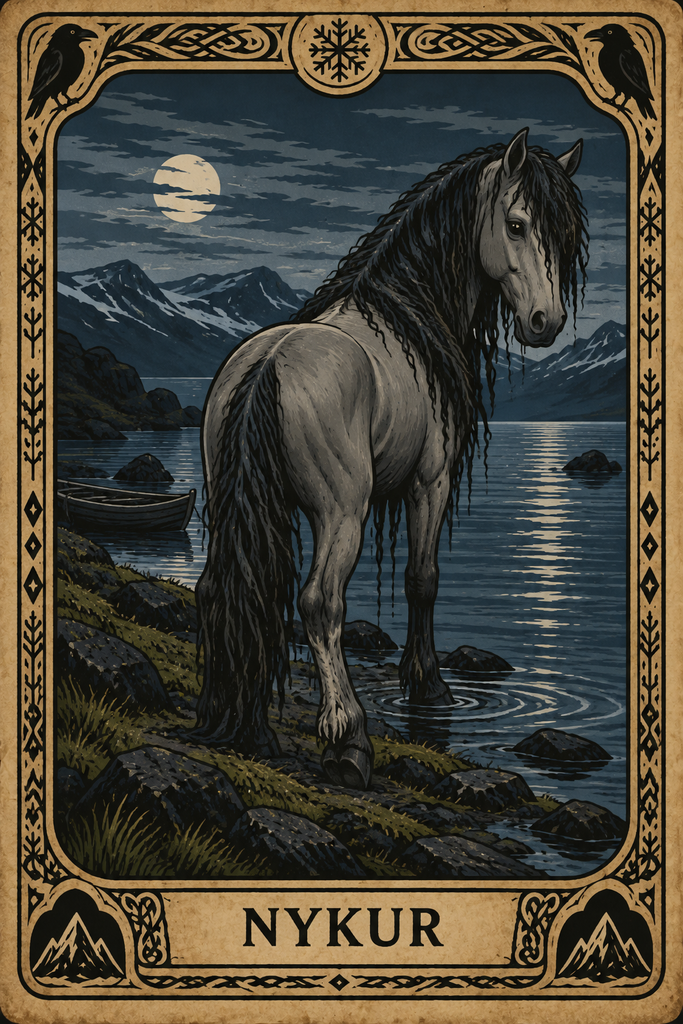
The Nykur is a dangerous water horse in Icelandic folklore, said to live in lakes and rivers. It usually appears as a gray horse, but its hooves point backward. Icelandic folklore says it tries to lure people onto its back before charging into the water. Calling the creature by name could make it flee. Stories of Nykur horses appear in many parts of Iceland.
At Stóravatn in Vatnadalur, people said a Nykur lived beneath rocks on the lake’s western side. One shepherd saw a strange gray horse grazing beside the farm horses near the water. A woman went to fetch it, but the horse had vanished, and locals said it returned to the lake. The same local account warned that boats should leave Stóravatn before late afternoon. When a farmer and his son later drowned there, the Nykur was blamed for their deaths. Afterward, the widow was said to declare that nobody should prosper keeping a boat there.
Marbendill (Coasts of Iceland)
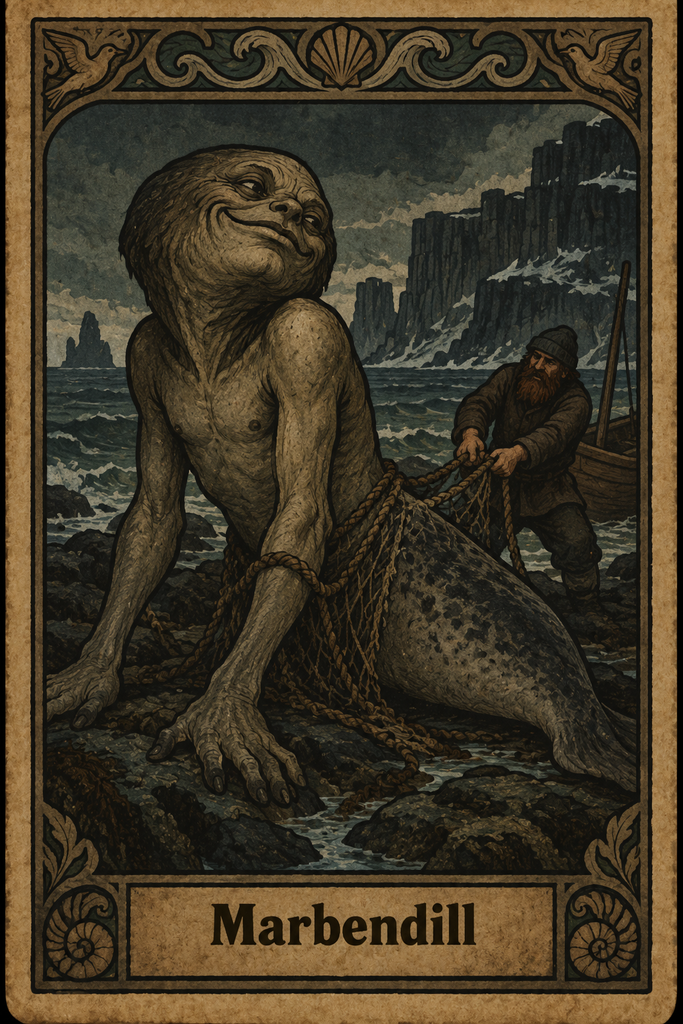
The Marbendill is an Icelandic sea being, usually described as partly human and partly fish or seal-like animal. One nineteenth-century account gives it a huge head, long arms, and a seal-like body below the waist. Stories usually begin when a fisherman accidentally hooks one and refuses to release it. Folklore says a captive Marbendill may trade secret knowledge, prophecy, or even a wish for freedom.
One famous tale explains the Icelandic saying, “Then the Marbendill laughed.” A farmer catches one at sea, and the silent creature laughs three times while being carried home. It laughs when the farmer welcomes his wife, strikes his loyal dog, and curses a mound after stumbling. Before returning to the sea, the Marbendill explains what the farmer failed to see. His wife is false, his dog truly loves him, and treasure lies beneath the cursed mound. The farmer digs into the mound, finds the treasure, and finally returns the Marbendill to the sea.
Deacon of Myrká (Myrká / Hörgárdalur)
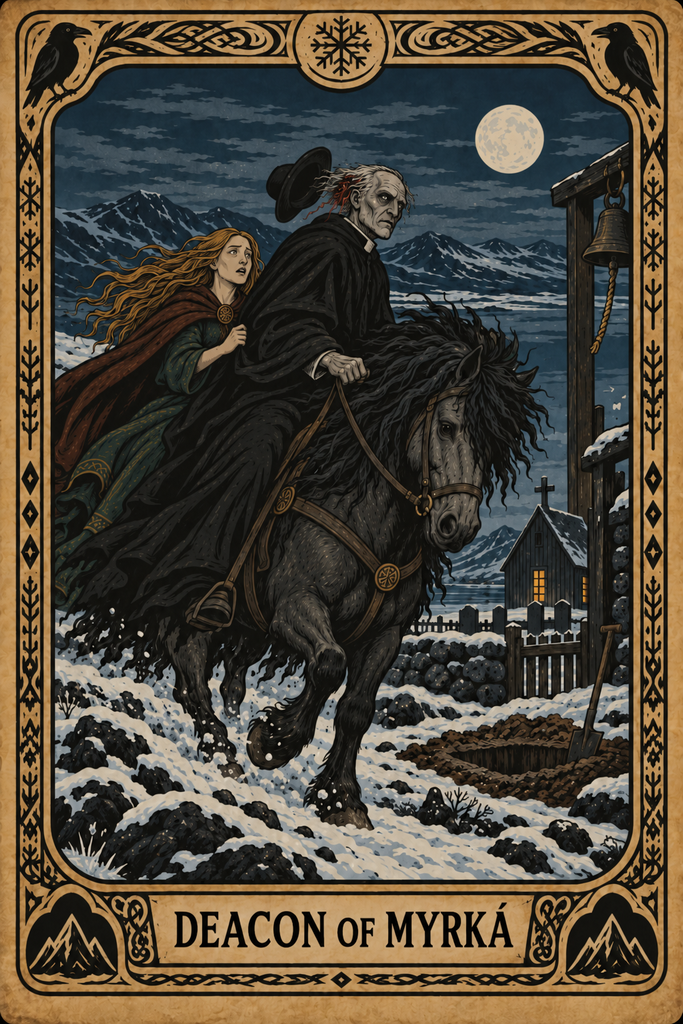
The Deacon of Myrká is one of Iceland’s best-known ghost stories, set in Hörgárdalur in North Iceland. In the tale, a young deacon promises to collect his sweetheart Guðrún for Christmas at Myrká. On his return journey, breaking river ice kills him beside the Hörgá River. Guðrún never hears of his death, so she accepts when he arrives for her on Christmas Eve. During the moonlit ride, his hat slips and reveals the fatal wound on the back of his head. He calls her “Garún” because, in the legend, ghosts cannot pronounce Guð, the Icelandic word for God.
The dead deacon carries Guðrún toward Myrká churchyard, where an open grave waits beside the gate. She realizes he intends to take her into the grave and collapses beside the cemetery entrance. As she falls, she grabs the church bell rope and rings it, causing the ghost to disappear. Another recorded telling says the deacon tumbles into the grave while Guðrún escapes. The story entered nineteenth-century folklore collections and became one of Iceland’s most famous ghost tales. Artist Ásgrímur Jónsson later pictured the spectral ride in a 1916–1918 work.