Maine
Maine folklore rises from rocky coastlines, deep forests, and inland lakes, where isolation fuels ghost stories, sea legends, and cryptid encounters. Wabanaki traditions, colonial-era tales, and centuries of maritime history all shape the state’s haunted and mysterious reputation.
Fishing villages, fog-shrouded lighthouses, and the vast North Woods each carry their own legends. From sea serpents to wilderness creatures, Maine cryptids and folklore reflect the rugged terrain and unforgiving seasons that define the state.
Specter Moose (Lobster Lake and the North Woods, Maine)
The Specter Moose belongs to Maine North Woods lore around Lobster Lake. Reports from the 1890s described a gray-white bull of impossible size. Stories gave it huge antlers, great height, and immense weight.
Hunters said bullets failed, and the animal charged men into cover. Later reports spread it toward Katahdin, Roach River, and other northern waters.

Pocomoonshine Lake Monster (Pocomoonshine Lake / Washington County)
The Pocomoonshine Lake Monster is a giant-serpent legend associated with Pocomoonshine Lake in Washington County. An 1882 Calais Times report described enormous serpent-like tracks near the Machias Chain Lakes in nearby Wesley. Later local tradition placed similar huge trails around Pocomoonshine and toward neighboring Crawford Lake. The Alexander-Crawford Historical Society records residents recalling the monster and its tracks around the lake.
Modern Maine accounts describe a serpent thirty to sixty feet long, sometimes moving between lakes overland. The creature’s enormous trail through the woods became one of the legend’s most distinctive features. Local recollections describe long, curving tracks associated with the creature.

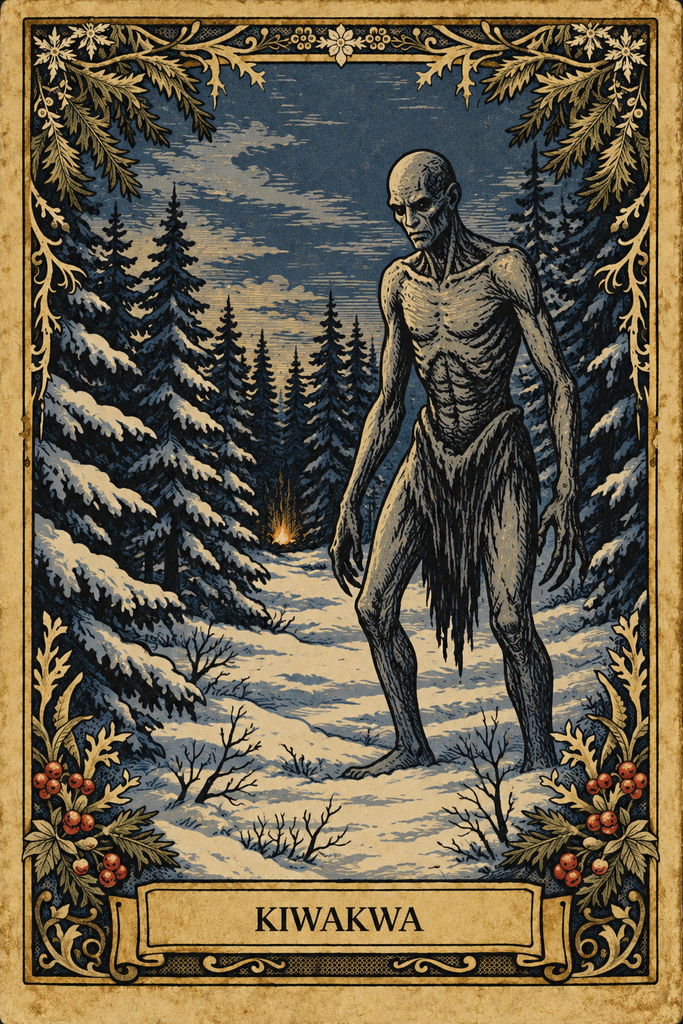
Kiwakwa (Maine and the Wider Wabanaki Cultural Region)
Kiwakwa, or Giwakwa, is an ice-hearted cannibal giant in Abenaki and Penobscot traditions. Related Kewahqu traditions also appear among Passamaquoddy communities in Maine. Wabanaki sources describe many Kiwakwa as humans transformed through cannibalism, possession, or refusing food to starving people. Their hearts become ice, and their strength grows with the ice inside them.
Charles Godfrey Leland recorded detailed Passamaquoddy Kewahqu stories in his 1884 collection. One account describes hunters recognizing a transformed man traveling north because warmer country no longer suited him. Another describes giants growing as tall as trees and uprooting trees as weapons. Their icy hearts could resemble tiny human figures and could sometimes be removed through medicine.
Pemaquid Point Lighthouse Haunting (Pemaquid Point Light, Bristol, Maine)
Pemaquid Point Lighthouse stands in Bristol, Maine, above dangerous ledges and wreck water. Local ghost tradition centers on a wet woman in a red shawl. She appears near the keeper’s house fireplace, shivering and distressed.
Visitors who stayed in the keeper’s house later reported lights switching on by themselves, doors slamming, and unexplained noises upstairs. The red-shawled woman is usually seen near the fireplace, soaked and shivering in period clothing. Local retellings connect her to the many wrecks off Pemaquid Point, where storms repeatedly drove ships onto the rocks.
