Nebraska
Nebraska cryptids include strange animal reports, river creatures, phantom lights, roadside legends, and unusual stories from the Great Plains. The Platte River, Sandhills, farmland, wooded river corridors, and small rural communities give many of these traditions a distinctly local setting.
The state’s folklore also includes Pawnee, Otoe-Missouria, and other Indigenous traditions alongside later settler stories and modern sightings. Some legends belong to specific rivers or towns, while others developed along isolated roads, ranch country, and the broad central plains.
Alkali Lake Monster (Walgren Lake near Hay Springs, Nebraska)
The Alkali Lake Monster, later called the Walgren Lake Monster, is a lake-creature legend near Hay Springs, Nebraska. History Nebraska traces the first published reports to the Hay Springs News in 1921. Stories described a huge animal surfacing in the lake, then still known as Alkali Lake. In 1923, J. A. Johnson reported a forty-foot gray-brown creature resembling a massive alligator with a horn.
The 1923 story spread widely after Nebraska newspaperman John G. Maher promoted it to newspapers outside the state. Later versions gave the monster the mock-Latin name Giganticus Brutervious and increasingly extravagant powers. Mari Sandoz included the legend in Old Jules, and Nebraska’s Federal Writers’ Project retold it in 1938. Hay Springs later celebrated the creature through commemorative merchandise, keeping the monster attached to local folklore.

Febold Feboldson (Gothenburg and central Nebraska)
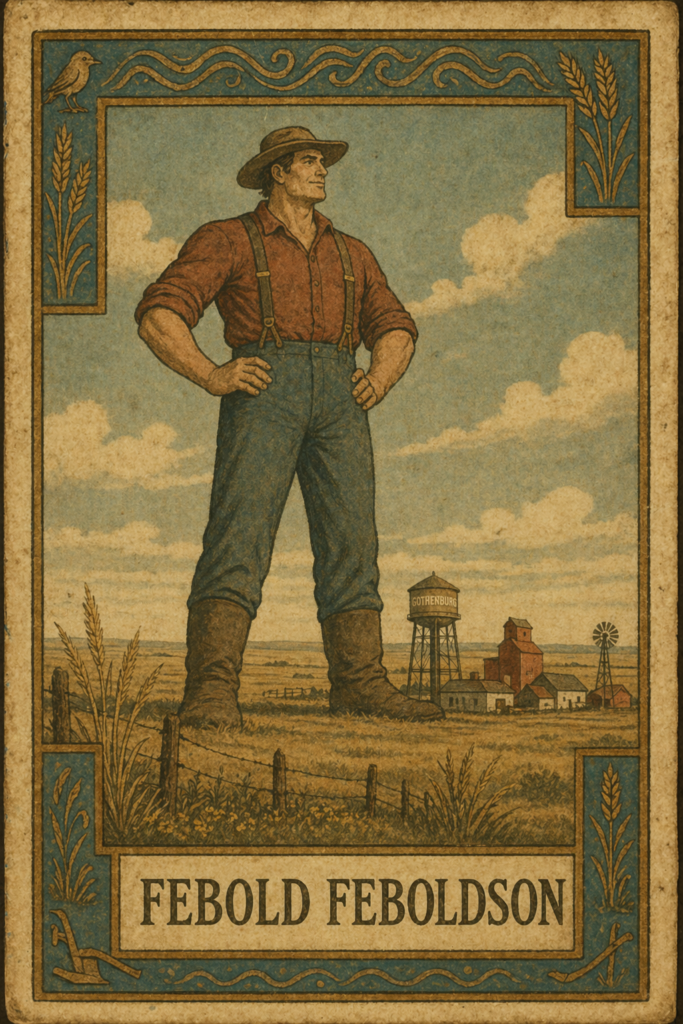
Febold Feboldson began as a Nebraska tall-tale hero in Gothenburg during the 1920s. Wayne T. Carroll created him while writing humorous columns for the Gothenburg Independent. Carroll patterned Febold partly after Paul Bunyan, but made him a giant Swedish-American plainsman instead. Febold battled droughts, tornadoes, floods, brutal winters, and other Nebraska hardships through absurd feats of strength and ingenuity. History Nebraska traces the character’s development through Gothenburg newspapers.
After Carroll left Gothenburg in August 1928, Don P. Holmes continued publishing Febold stories weekly through 1935. The Federal Writers’ Project included Febold in its 1937 Nebraska Folklore series. One famous tale has Febold creating rain by heating lakes until their water forms clouds. Paul R. Beath later collected the stories in his 1948 book Febold Feboldson: Tall Tales from the Great Plains.
Seven Sisters Road (Road L near Nebraska City, Otoe County)
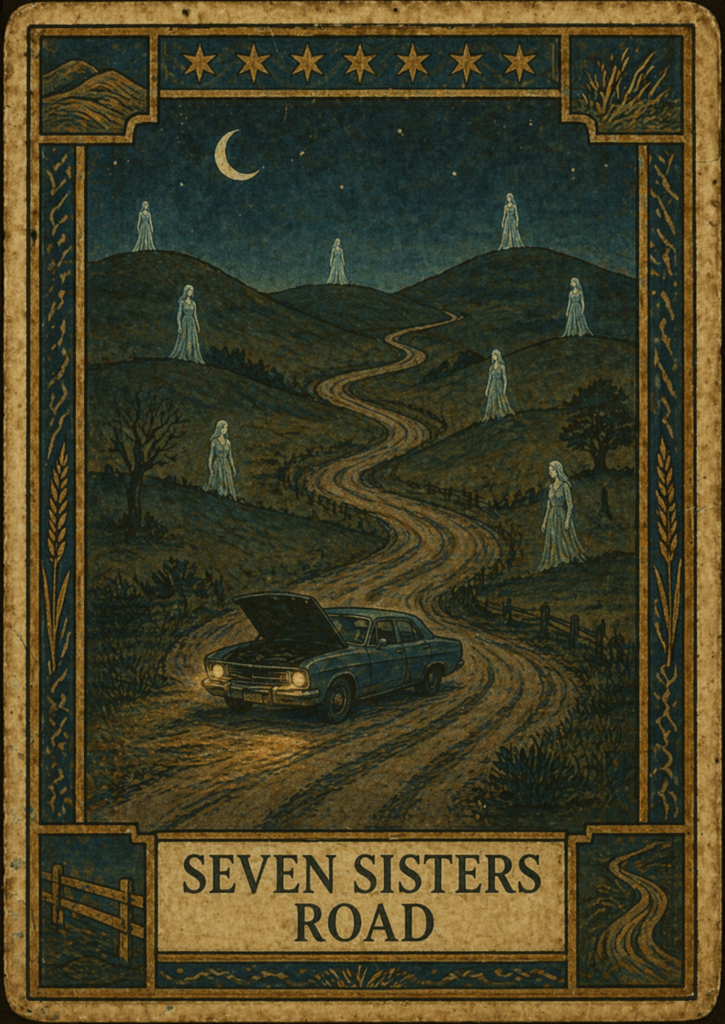
Seven Sisters Road is a haunted-road legend attached to Road L near Nebraska City in Otoe County. KETV identifies the local road as Road L and recounts the story behind its nickname. In the legend, a man leads seven sisters or daughters onto separate hills and hangs them from trees. Versions identify the killer as either their father or brother.
Nighttime stories focus on screams, failing headlights, stalled engines, and batteries suddenly losing power. Visit Nebraska says drivers report unexplained car trouble and screams along the road after dark. KETV likewise records reports of vehicle malfunctions, drained batteries, and women screaming. The station still included Seven Sisters Road in its eastern Nebraska haunted-road guide in 2026.
Stairs to Hell (Hummel Park, North Omaha)
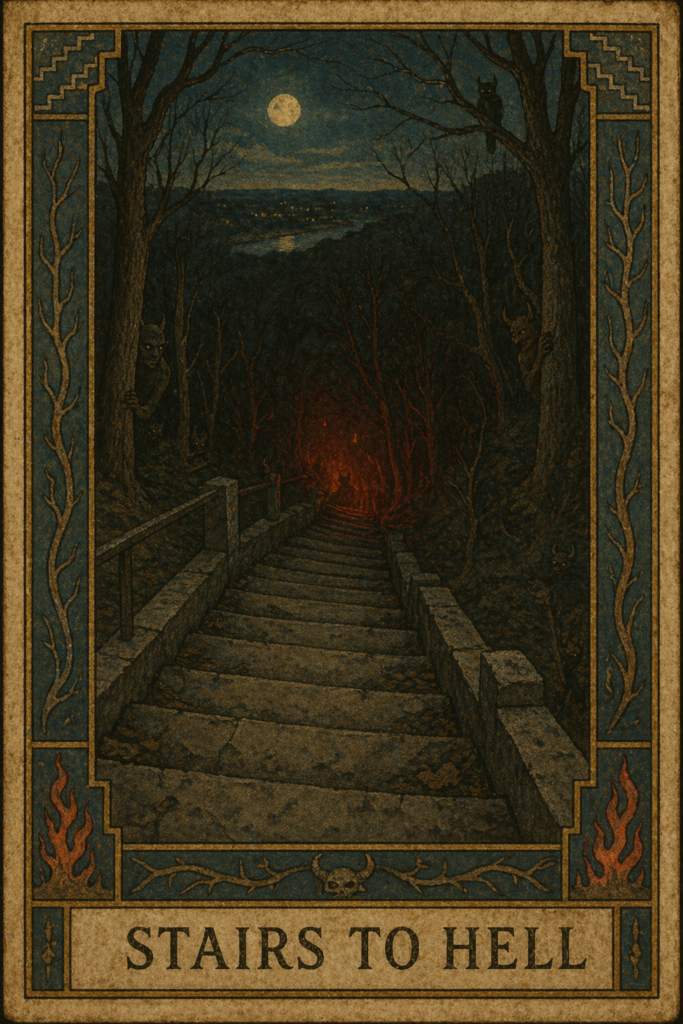
Hummel Park in North Omaha contains a long staircase known locally as the “Stairs to Hell.” North Omaha History says Civilian Conservation Corps workers installed the stairs during 1930s park improvements. The legend says visitors cannot count the same number of steps going up and down. Some versions connect the shifting count with a descent toward Hell.
The staircase remains a ritual challenge for visitors, who repeatedly test the changing-count story. 3 News Now included the stairs in a 2022 Omaha attractions guide, inviting visitors to count them. North Omaha History records 188 steps and notes that deterioration has made counting inconsistent. The staircase remains one of Hummel Park’s best-known local legends.
Forest Lawn Cemetery Chapel Haunting (Forest Lawn Cemetery, North Omaha)
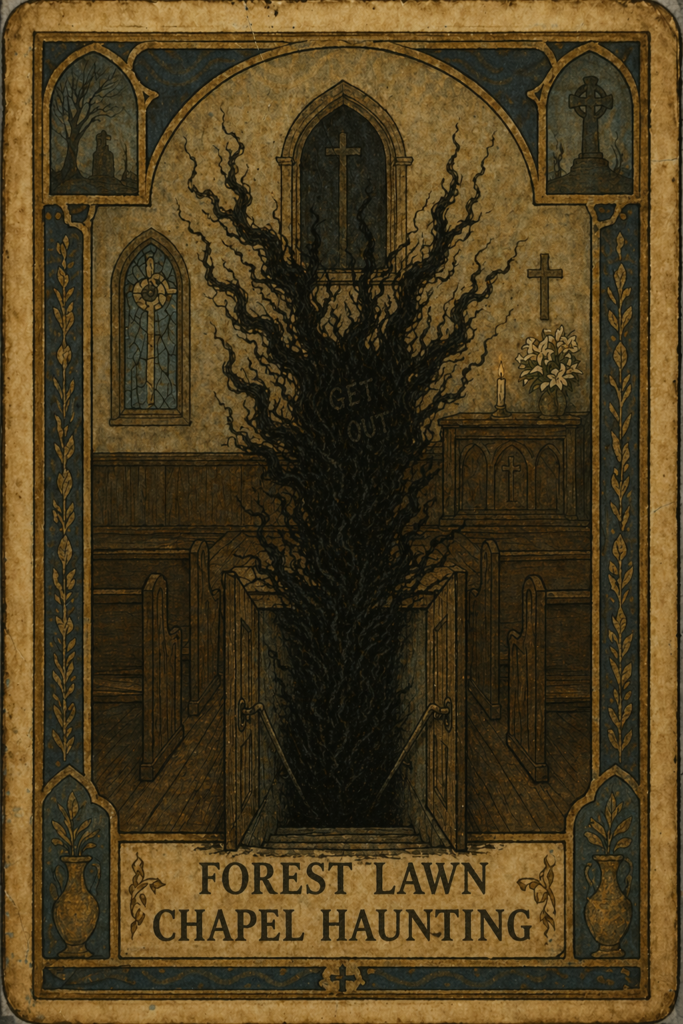
Forest Lawn Cemetery was founded in 1885 and now covers more than 300 acres in North Omaha. Its historic chapel was built in 1913, with a basement originally housing the cemetery crematory. Local haunting stories center on that basement. North Omaha History records a black shadow blocking a doorway and another shadow moving across a wall. Investigators also recorded a voice telling them to “get out.”
Other accounts describe sudden illness, weak knees, electric sensations, and hair being pulled inside the chapel. KETV repeated the legend in 2024, describing a shadowy mass said to roam the basement. Forest Lawn restored the chapel in 1990. The building remains in use for funerals and weddings.