Romania
Romania cryptids, monsters, ghosts, and supernatural folklore come from traditions formed across mountains, forests, farmland, and old regional communities. Stories vary across Transylvania, Moldavia, Wallachia, the Carpathians, and other parts of the country. Romanian folklore includes restless dead, dangerous spirits, weather-workers, forest beings, and creatures linked to water or the night. Many stories grew alongside village customs and beliefs that connected everyday life with an unseen supernatural world.
The traditional calendar gave many of these beings particular times, places, and roles. Strigoi traditions became especially important around Saint Andrew’s Eve, when protective customs guarded homes against wandering spirits. Other traditions connected beings such as the Iele and Solomonari with storms, dangerous winds, forests, water, and changing seasons.
Strigoi (Across Romania)
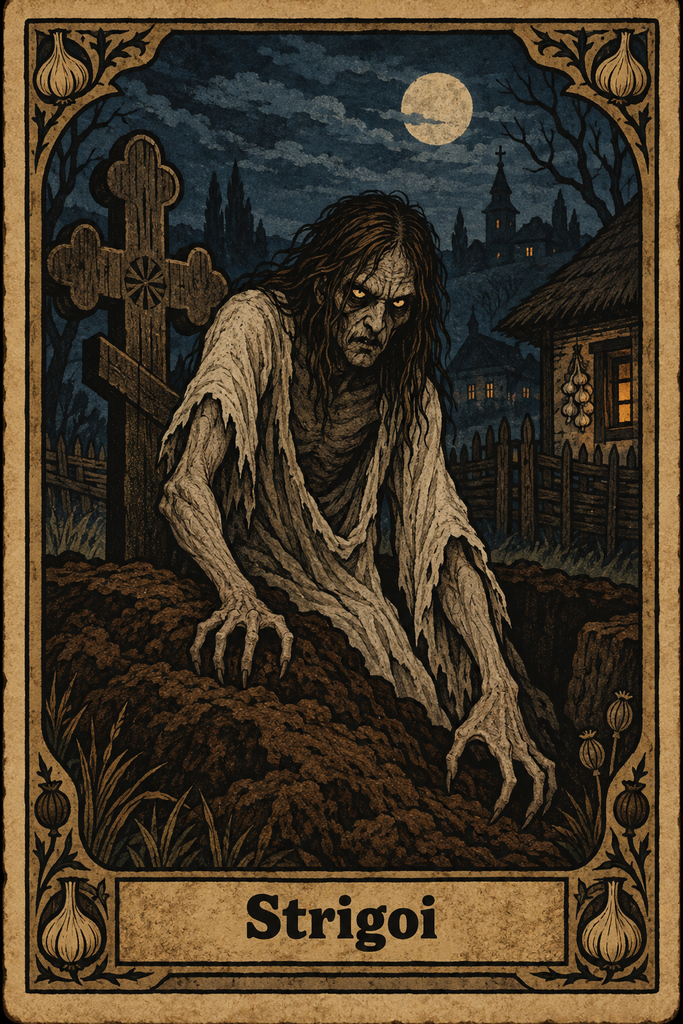
Strigoi are dangerous supernatural beings in Romanian folklore, appearing as both living people and restless dead. Traditional accounts describe living strigoi whose souls leave their bodies at night to cause harm. Dead strigoi may rise from graves, return to their families, spread illness, or attack people and livestock. Some stories say they steal milk, weaken crops, or drink blood and vitality from the living.
People used many protections against strigoi, including garlic, incense, salt, poppy seeds, thorns, and special burial practices. Saint Andrew’s Eve carried particular danger, and families rubbed garlic on doors, windows, and sometimes their bodies. Other customs targeted suspected strigoi after death by staking, reburying, or placing protective objects with the corpse. Regional traditions also associated strigoi with Saint George’s Eve, Pentecost, and other dangerous nights.
Iele (Across Romania)
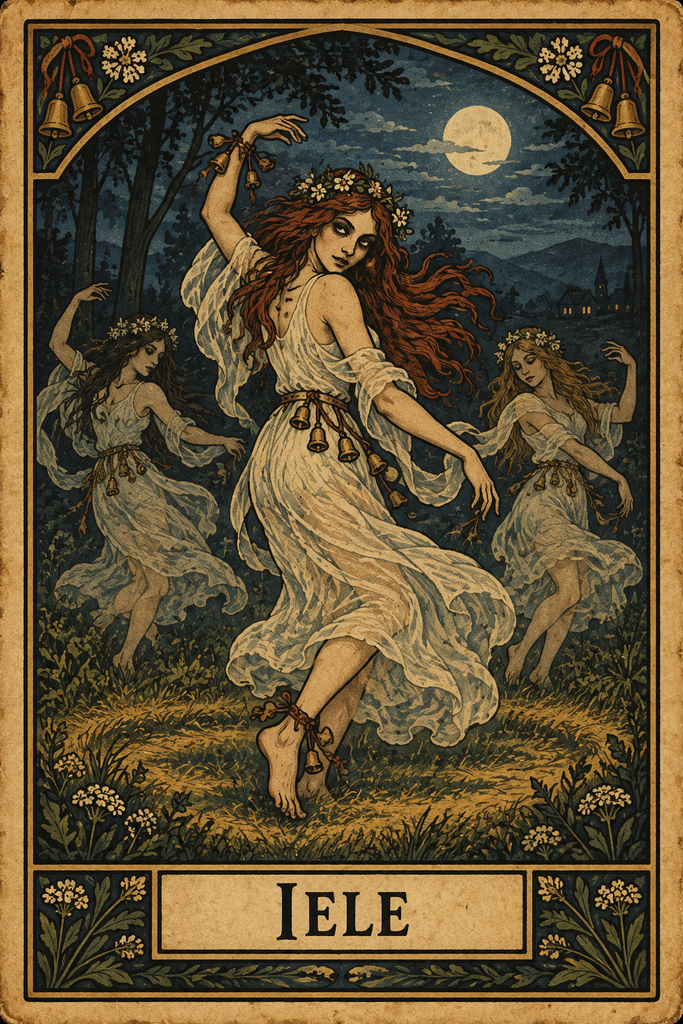
Iele are female supernatural beings in Romanian folklore, often appearing as beautiful young women who dance at night. Traditional accounts place them in forests, clearings, fields, near water, and other isolated places. They may wear white or transparent clothing, carry bells, or appear as glowing lights moving through the air. People who hear their songs or enter their dances risk illness, muteness, deafness, blindness, or paralysis. The grass where they danced could appear flattened, yellowed, or scorched.
People often avoided speaking the Iele’s names directly and used respectful names such as Frumoasele, or the Beautiful Ones. Garlic and certain herbs could protect against them or help people they had harmed. In Olt, Călușari dancers performed around sick people to drive away Iele that people believed caused the illness. UNESCO added the Căluș ritual to its Representative List in 2008.
Muma Pădurii (Forests Across Romania)
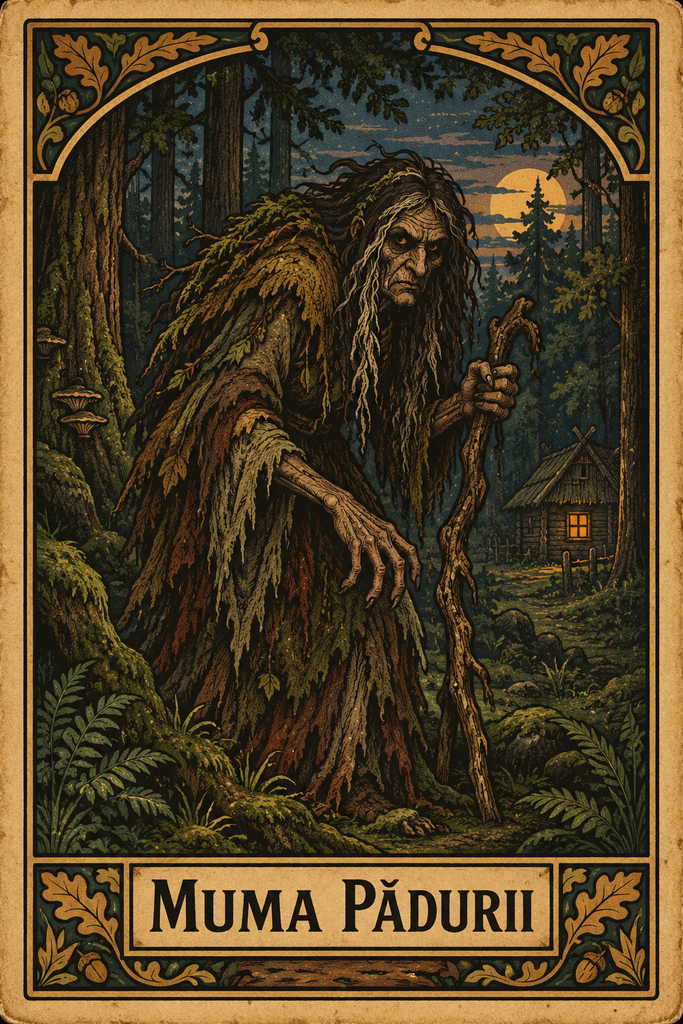
Muma Pădurii, the Forest Mother, is a supernatural old woman who roams Romania’s forests. Traditional descriptions give her long tangled hair, a bent body, ragged clothing, and sometimes enormous size. She can change into animals, shrink enough to enter tree hollows, or grow as tall as the trees. Some stories place her in a wooden hut deep in the forest, where she cares for trees from youth. She frightens travelers and may leave those she strikes paralyzed or terrified.
Traditional stories also give Muma Pădurii children of her own, who supposedly keep her from sleeping. She sometimes enters houses and steals babies’ sleep so her own children can rest. People could repel her with the sign of the cross or offer her bread to escape unharmed. Emily Gerard recorded a gentler Transylvanian version in 1885, calling the Forest Mother friendly toward lost children.
Solomonari (Transylvania and Maramureș)
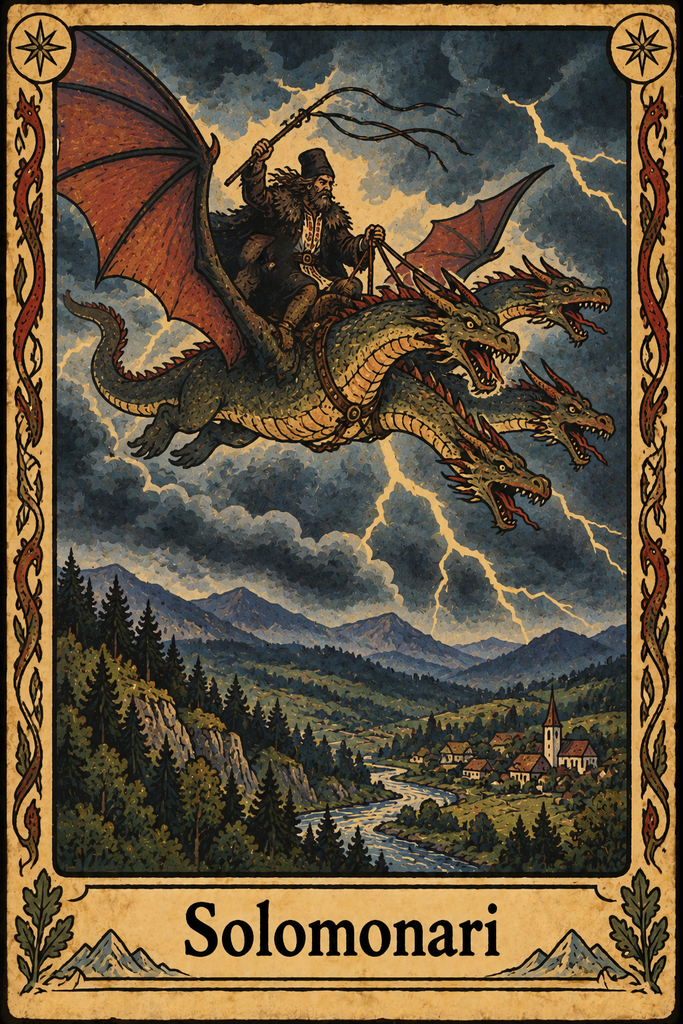
Solomonari are weather sorcerers in Romanian folklore, especially associated with Transylvania, Maramureș, and neighboring regions. Traditional accounts say they can summon or divert rain, storms, and hail. Some stories describe them as ragged, wild-looking men carrying a magic book, staff, reins, or whip. They command flying balauri, dragon-like creatures that carry them through storm clouds.
Some traditions say apprentices spend seven years underground learning magic, animal languages, and the secrets of nature. The Devil teaches ten students in one version, then keeps one as payment. That student becomes a Solomonar and rides a balaur, a multi-headed dragon, to direct storms and hail. Emily Gerard recorded a related Transylvanian “Scholomance” tradition in 1885. Her account placed the dragon beneath a mountain lake south of Hermannstadt, now Sibiu.
Vârcolac (Across Romania)
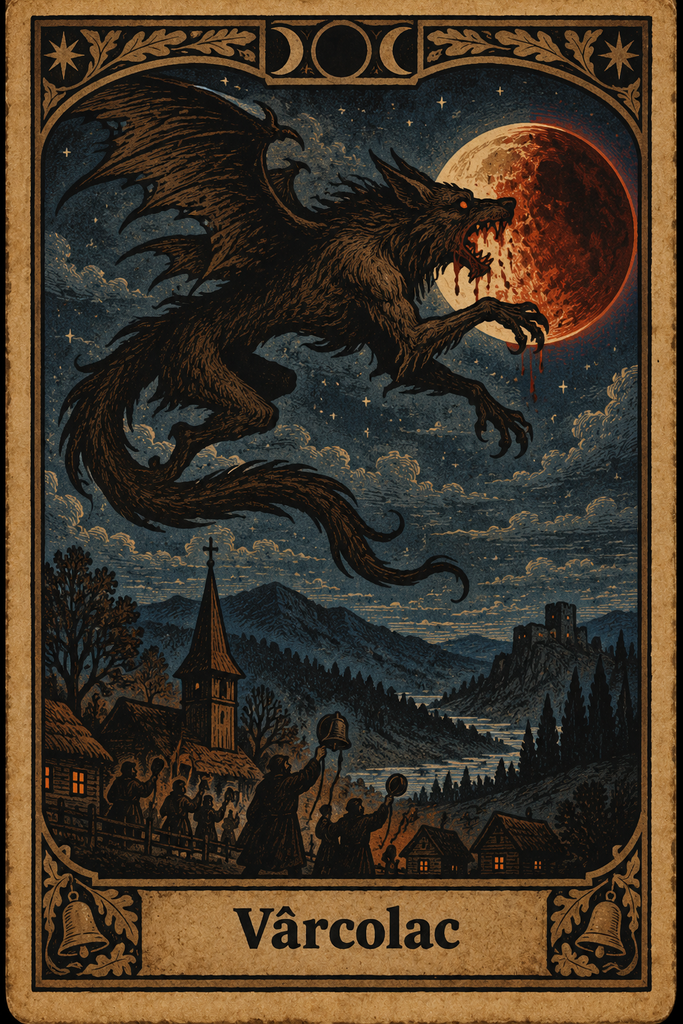
Vârcolaci are supernatural beings in Romanian folklore that attack the sun and moon. Traditional accounts describe them as wolf-like, dog-like, or sometimes dragon-like creatures moving through the sky. During eclipses, they bite pieces from the sun or moon, darkening them as they feed. Some stories say they turn the moon red with its own blood. Other traditions say unbaptized children may become vârcolaci after death.
During eclipses, people beat metal objects, rang bells, fired guns, and recited charms to frighten them away. A Transylvanian Museum of Ethnography study also records living vârcolaci among ordinary villagers. Their souls supposedly leave their sleeping bodies and rise into the sky to attack the sun or moon. Tradition warned against disturbing the sleeper because the wandering soul might fail to return to its body.
Zburătorul (Across Romania)
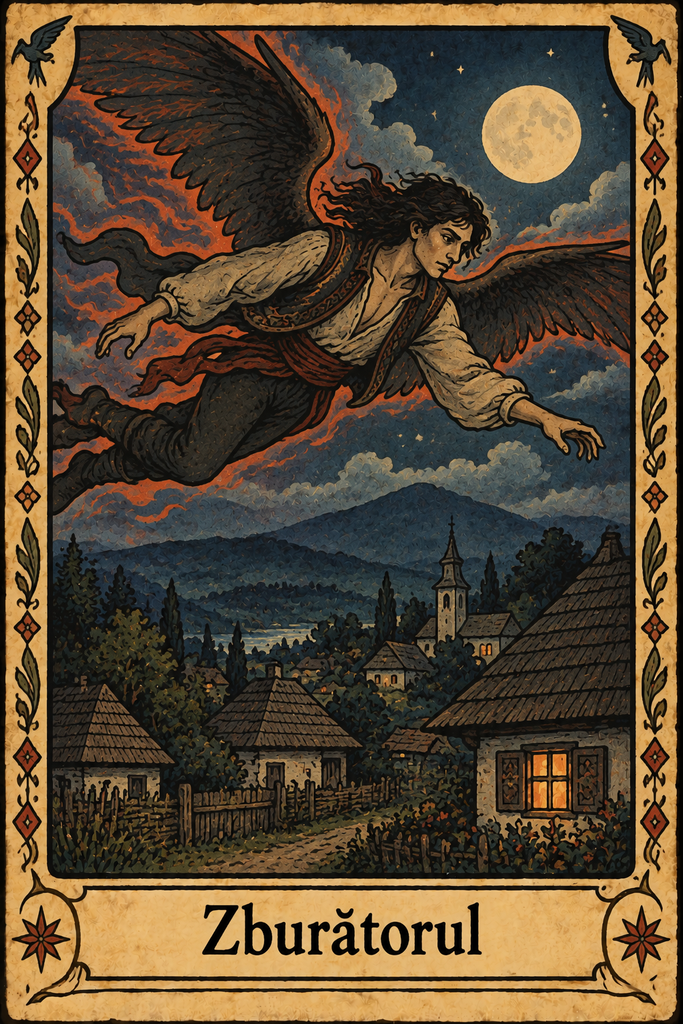
Zburătorul, literally “the Flyer,” is a nocturnal spirit in Romanian folklore that visits young women. Dimitrie Cantemir described him in Descriptio Moldaviae around 1716. Cantemir called him a handsome young ghost who visits women at night, especially newlyweds. Other traditions show him as a winged man, serpent, dragon, or fiery shape crossing the night sky. His visits can leave women weak, restless, bruised, and suffering from mysterious lovesickness.
People used charms and ritual remedies to drive Zburătorul away or help women after his visits. Folklore studies also describe invisible attacks, kisses, bites, and the exhaustion that follows them. Ion Heliade Rădulescu brought the legend into Romanian literature with his 1844 poem Zburătorul. Mihai Eminescu later drew on the same figure in Călin and other poetry.